| Author |
 Replies: 7 / Views: 4,735 Replies: 7 / Views: 4,735 |
|
|
New Member
Philippines
20 Posts |
Hi! Its been a year since I last posted something here, anyway I hope you can help me out with this one. I'm not sure if this coin is real since I can only find one overlap in the edge. From what I understand there should be two overlaps 180 degrees apart. I tried my best to look for the other one but I don't see it. here is the coin weight - 26.85 G 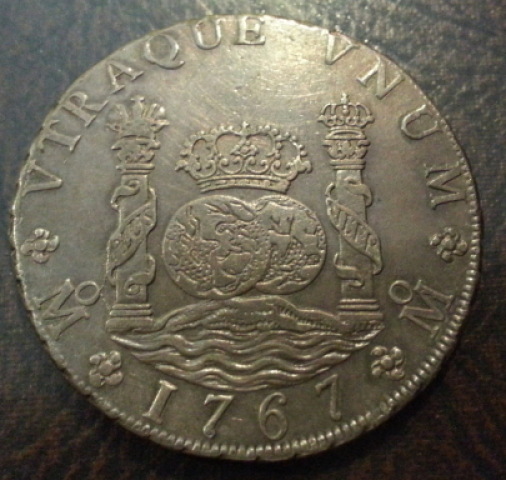 I think there is a die break on top of the Mexico mint insignia. 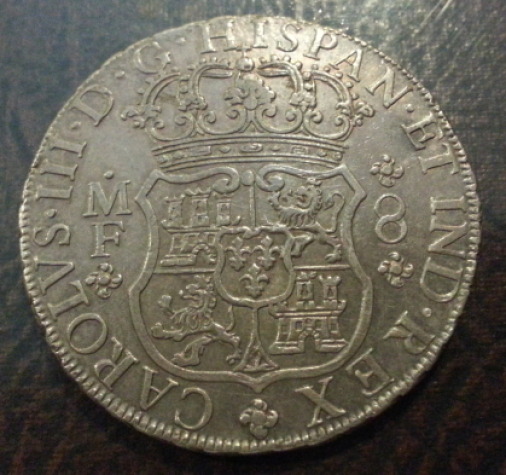 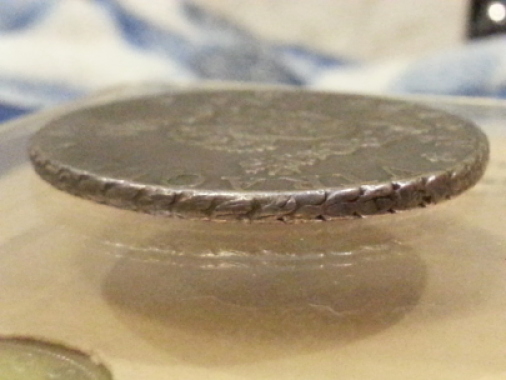 here is the first overlap in between R and A in VTRAQ 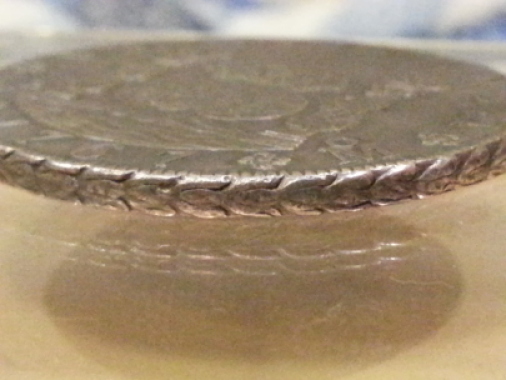 and this should be the part where the second overlap is present. (180 degrees apart) 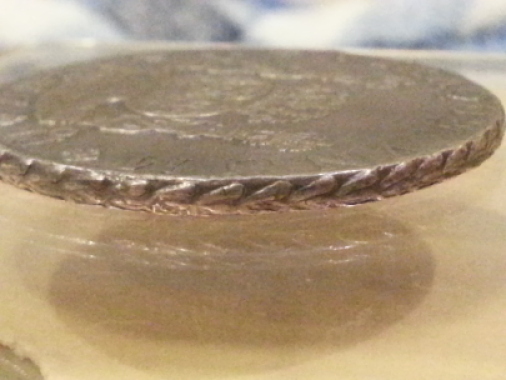 a picture of the edge where there are misaligned tulips imprinted. Is this normal? Thanks in advance! |
|
|
|
Pillar of the Community
Hong Kong
1270 Posts |
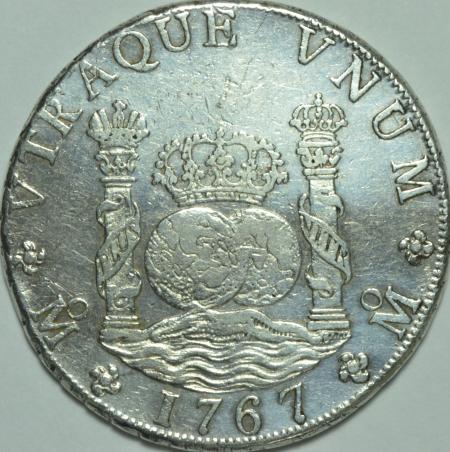
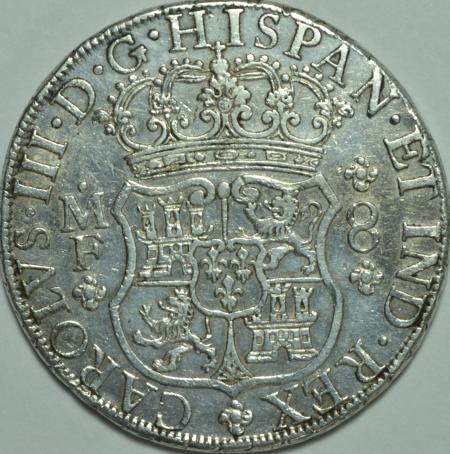
Nice coin, it looks okay to me. I have one of the same year, I will show here if I have time. My coin is 38.1-38.2mm in diameter, what is yours, Beriner1. I had also measured the S.G. of my coin, it is 10.201, a right value for this type. Henry
|
|
Pillar of the Community
United States
5362 Posts |
The design of the edge itself does not look good.
With very little else to go on but the edge design and the overlap which does look wrong I would suggest you have one of the silver forgeries made in the past 20 years.
I have an almost complete date set of modern forgeries of this series and some are very well done in silver. A few of them sold several times as real before I got them.
|
|
Pillar of the Community
Hong Kong
1270 Posts |
|
|
New Member
 Philippines
20 Posts |
Hi wonghihi!
Very nice coin! I wish I could get one as nice as your specimen. The problem here in the philippines is that there are a lot of fake coins circulating in the market. It's very hard to acquire a real one.
Hi swamperbob!
Thank you very much for the input. Is it possible for you to post a sample pic of the side of a real dosmundos 8 reales? I'll use it as reference for deciding genuine coins from fake ones. And also if possible some tips to always keep in mind in getting dosmundos 8 reales coins.
Thanks
|
|
Pillar of the Community
Hong Kong
1270 Posts |
I amend my last observation and agree Beriner1's specimen is fake. The edge is very typical to be a counterfeit as seen in many posts of this forum. The following one is an example. https://goccf.com/t/133160&whichpage=1 |
|
New Member
Philippines
20 Posts |
Thanks for the link wonghihi, I've learned a lot from that past post. It's now very clear how wrong the sides of my coin are.
|
|
Pillar of the Community
United States
5362 Posts |
Beriner1 If I posted a picture of a real Dos Mundos 8R it would produce more confusion and VERY LITTLE valuable information.
The reason for this is simple. These coins were NOT identical year to year.
Most collectors are too young to even recall when you went to banks to get rolls of new pennies to hunt for mint mark variations and die chips. Even in the 1950's the US mints added mint marks by hand to dies so that there were hundreds of subtle varieties available for 1 cent each. Perfect for me as a pre-teen with a limited income.
Today we are all used to "antiseptic" dies made without the human touch that are all identical and produce identically BORING coins.
Columnarios come from a different era when dies were made letter by letter by a human being who could and did make errors.
The working dies were hand made ONE-BY-ONE from individual punches made from standard matrix blocks. Depending on the press size available - the amount of surface that could be imprinted on the die at one time varied.
Between 1730 and 1880, there was a massive advance in coining technology. In 1730 die punches were small and hand set say ONE letter. The die was cut mostly by hammering or pressing these punches into the die face. Many of the smaller linking elements and fine details were added by hand creating infinite variety. By 1880 most dies were made from master hubs - master dies that made a COMPLETE working die. Hand engraved elements were rare.
The process of application started at the center and worked outwards because of the upwelling of the die face metal caused by each individual successive punch. Anyone familiar with die setting knows that when any punch is applied to a metal surface the pressure causes the adjacent metal spread and to RISE. Working perimeter to center would produce horrible distortions by the time you reached the center and make the die hard to surface for striking. The same problem occurs if you move in one direction around the die perimeter radially. So the words on the die were not cut in spelling order. It is usually done by gradually dividing the perimeter arc into ever diminishing segments. This checkerboard pattern done on a radial and concentric ring layout produces the least distortion in the surface elevation of the portions of the coining die.
The only deviation from this pattern seems to be "master elements" of the design like the outlines of the coat of arms. These were clearly applied in many cases AFTER the central elements were impressed. The outlines interrupt the sides of the castles for example. I have seen other tines when paws cross on top of the shield lines. So all observations should be rather fluid within the general range of legitimate possibilities.
Over time bigger screw presses and then horse powered presses allowed larger and larger punches to be impressed at one time into the steel die face. Partial hubs replaced individual hand set punches and then full hubs replaced partial hubs.
It appears that by 1769 0r 1770 a partial hub was used at Mexico City - many of the central elements are fixed in relation ot one another and the height variation in details visible on full strike high grade coins is finally gone.
In 1772 the Portrait was introduced as a single punch. A "King punch" as Riddell refers to it.Details were often engraved on the portrait but after 1772 the outline of the Portrait is fixed.
Therefore to be sure of any coin you need to know for EACH year and MINT - what was the individual punch size and what variation is allowable?
The next question is where are the records?
The answer is there are no written records that describe this process for each year. So how do you tell?
The coins themselves are the records.
Comparing coins year to year from 1730 to 1880 allows for a development of a progression of how the dies were made.
If you have been following the process I have been briefly outlining, by now you should realize that the only things that remain the same coin to coin are the small details that fit on ONE punch. Everything on the punch will be identical - shape, spacing and orientation.
Conversely larger more overall designs are composed of more than one punch and they will vary. For example the position of letters may vary in relation to the parts of the shield or pillars.
Overall design control was dependent on the matrix design which positioned key elements over the face of the design. Key element positions vary less than the features that occur between matrix points. With some coin designs the key points become obvious.
For one easy example - look at the VNUM in relation to the crown on the right pillar that appears to be a key point for die setters (gravers). The date is centered under the globes and the mint marks are set near the pillar bases.
In the earlier years there is more variation in spacing and more errors of omission occur. By 1770 the dies are far better errors are less frequent.
For Columnario's EACH individual letter was ONE punch. The design of a lion or a castle is one punch. These remained the same as long as the matrix block was not changed. But over time the matrix block DID CHANGE.
So where do you get this information.
A book like Gilboy's "Columnario's" is a good start but he does not document EVERY date.
To do the job right you need multiple photographs of original coins for EVERY date in the series that can be enlarged and compared side by side with whatever coin you are currently reviewing. Does it match punch style and are variations within a probable range.
This is why I am always very suspicious of major errors. They are really rare and chances are far greater that a coin is a forgery when you have a coin that DEVIATES from standard form.
I say multiple originals (preferably certified by PCGS or NGC or ANACS) so that you can compare originals too. You can see if two different punch sets were in use that year.
as well as what range of spacings prevailed.
The printed book for this process is not in my opinion the future of numismatics. The digital database of coin photos that can be enlarged and compared side by side is far better for this purpose. In fact, a database that can be brought up on an iPad or IPhone at a coin show or in a dealers shop could eliminate a LOT of concerns.
The best way to assemble a complete set of photos is by watching Heritage and Stack's Auction sites. Their archives of photos are a treasure trove for most individual series of coins.
Some one must be saying what a lot of work. It is but it needs to be done sooner rather than later.
The one area where Stacks and Heritage are deficient is in the area of counterfeits. Referring to Heritage archives will let you determine if your coin is real or not but if it is not real that database will not tell you if you are looking at a valuable counterfeit or a worthless forgery.
I am hoping that our new book on Portrait counterfeits can be brought into the 21st century as an e-Book that can be accessed on line with constant up dates as new counterfeits are located and classified.
THEN collecting will become a safer endeavor.
|
| |
Replies: 7 / Views: 4,735 |
|










 Posted 03/27/2013 8:30 pm