| Author |
 Replies: 17 / Views: 12,189 Replies: 17 / Views: 12,189 |
|
Pillar of the Community
United States
6428 Posts |
Hello all,
This is only slightly related to coins, but I'm hoping we have some forum members with knowledge of silver processing.
I have some pure silver that I'm trying to cast into small ingots. It turns out that molten silver absorbs oxygen from the air and when it hardens the oxygen comes bubbling out. In the process the cast ingot becomes cratered with holes and voids. Does anyone know a simple way to prevent this problem, so I can make nice smooth ingots? Maybe there's a flux material that can be added to the melting crucible that will prevent oxygen pick-up?
I would appreciate any input, and thanks!
|
|
|
|
Pillar of the Community
United States
7123 Posts |
you could try flooding the pour with a neutral gas like carbon dioxide.
Metalman
|
|
Pillar of the Community
Czech Republic
803 Posts |
No idea how to help you out, other than create an oxygen-free enviroment, but just want to point-out that what you have described is one of the tell-tale signs of a cast forgery in coins.
|
|
Pillar of the Community
 United States
6428 Posts |
Thanks Metalman,
I'm hoping there is another way. My equipment consists of a muffle furnace, a clay crucible, a graphite mold, and some tongs. I don't have a way of blanketing the crucible with inert gas inside the furnace. It appears that the oxygen is already absorbed by the time the silver is melted. I did try playing a "reducing flame" from a torch over the mold after pouring, but that didn't help.
I read on-line that I can float a graphite disc on top of the silver inside the crucible to reduce oxygen pickup; I'll try that if I can find a disc of suitable size.
Any other ideas floating around out there?
(By the way, I read that this oxygen release from cooling silver is called the "silver spit". That's a pretty good description of how it looks!).
|
|
Pillar of the Community
United States
1952 Posts |
you can also try using electrodes and plate a piece of silver instead of melting it.
you can do that with a few chemicals your silver and a battery charger. I don't know that exact chemicals but my Father runs a plating shop and I can get it if you want to go that route.
Gary
|
|
Pillar of the Community
United States
7123 Posts |
I seem to remember something about adding wood of some type to prevent the absorbtion of oxygen ,, but I would have to go back a few years in memory to come up with where I read that ,, and my memory isn't what it was before my heart attack a few months ago .
I think the principle is that the carbon (charcoal ) from the wood floats to the top sealing off the oxygen ?
Metalman
|
|
Valued Member
United States
208 Posts |
Be careful with pure oxygen and flames... I'd say do it in a vacuum.
|
|
Valued Member
United States
376 Posts |
Several years ago I made pendants from silver and just before I poured the silver in the mold I sprinkled Boric acid on it. it cleaned the impurities from it and the casts came out without bubbles. You may want to try that.
madspec
|
|
Pillar of the Community
United States
2600 Posts |
Jaobler, you might try going to a jeweler with this question. Particularly one who makes jewelry. They would obviously know the way around this problem.
Jim
|
|
Pillar of the Community
United States
6428 Posts |
Thanks Madspec, the boric acid approach might be practical. Can you answer a few questions about your technique? 1) Did you add the boric acid to the crucible before melting? I would think this is how you would have to do it, to protect the silver from absorbing oxygen. 2) About how much boric acid was needed for, say, each ounce of silver? 3) What was the purity of your silver? 4) Approximately how hot was your furnace? 5) Did the boric acid residue wash off easily? Jim1953, I'll try calling a few jewelers next. As you say, they should know! FYI, here are top and bottom photos of an ingot, with a GW dollar added for scale. The top surface forms a foamy-looking crust when the metal hardens (I partially pounded this one flat, but you can still see the porous texture). The bottom forms large crater-like voids. It's a pretty cool effect, but I want smooth ingots. 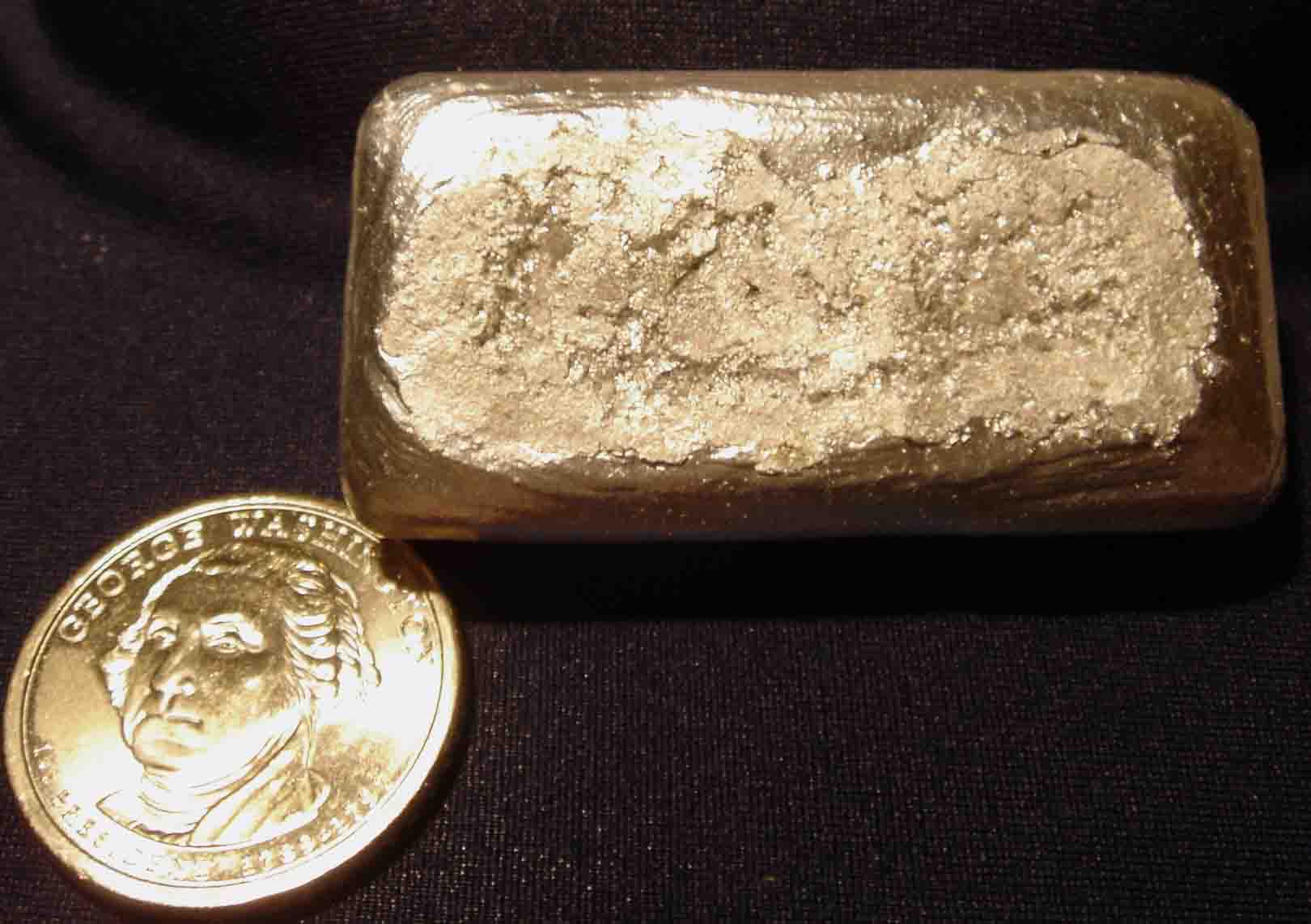 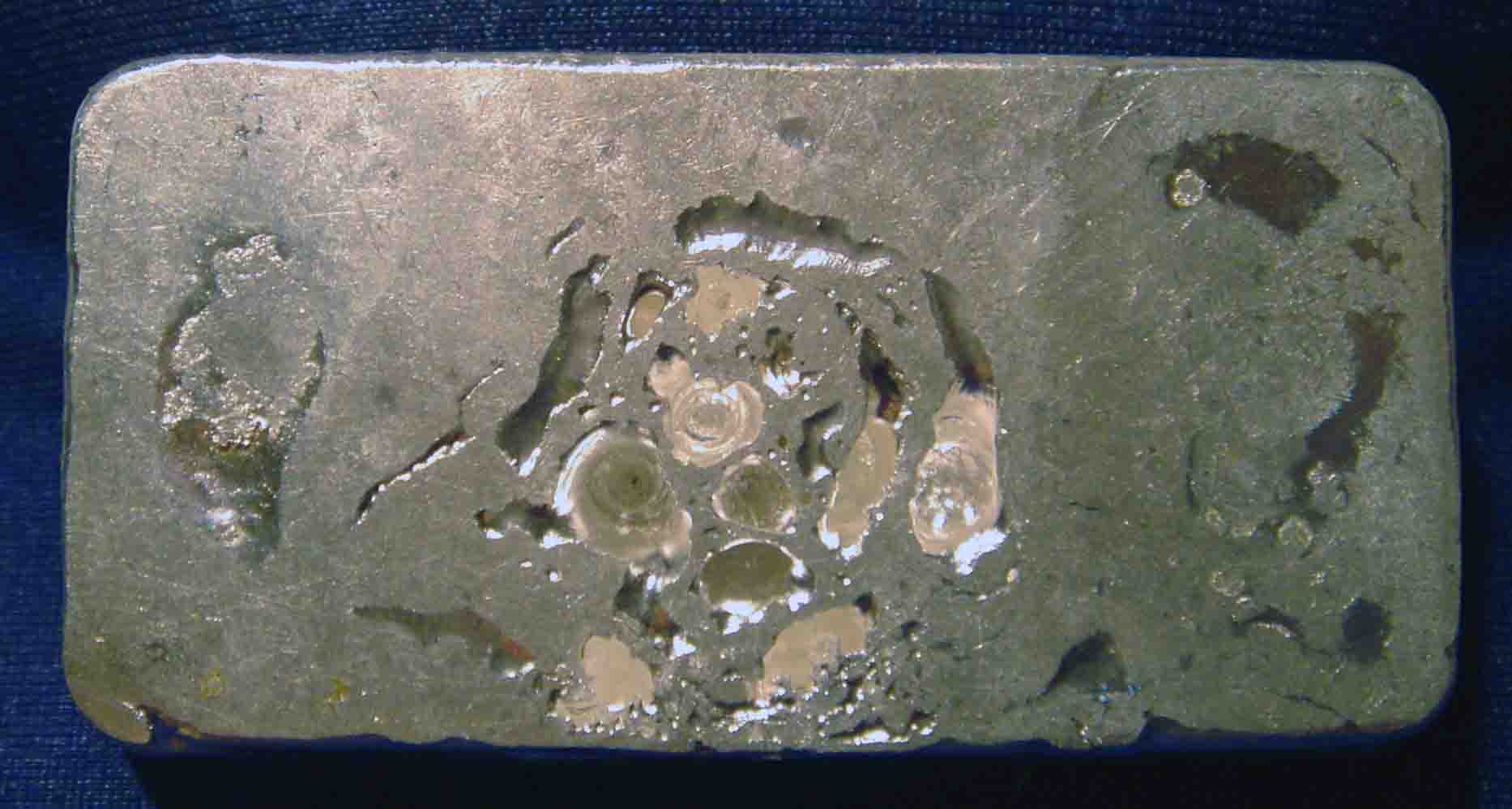 |
|
Valued Member
United States
376 Posts |
I was using .925 silver shot for casting, where did you get the .999 silver for casting? If you are melting down rounds or
bars there is where you are getting some of the impurities and running into problems.
What are you pouring the silver into,ie what is the mold made of? Is the mold hot or cold when you pour the silver?
You put sprinkle the boric acid on top of the molten silver JUST before you pour into the mold.
all the boric you need is a pinch, what you can pinch between thumb and finger
I did not use a furnace, I used a torch
The boric acid does not leave a residue.
From what I see in the pictures you have a lot of impurities, as the left side of the bottom photo
that is a definate glob of impurity, the boric acid should get that out.
Also since you are using a furnace get a propane torch and cover the silver with the flame just prior to and during pouring
as this will dissipate some of the oxygen.
Let me know if this helps
Madspec
|
|
Pillar of the Community
United States
6428 Posts |
Hey Madspec, thanks for all the details! I'll try to implement your suggestions.
To respond to your questions:
I refined this silver years ago from alloys of silver with tin and palladium. I chemically separated the silver, melted it in a graphite crucible and made silver shot by pouring the molten metal into distilled water. I believe the purity is > 99% but it certainly isn't 99.9%.
I have a graphite mold which I believe is suitable for silver or gold casting. I've used it at room temperature and I've also tried pre-heating it to maybe 200°C before pouring. If anything, the ingots came out better at room temperature.
I'll keep playing around with this project and report back when I have an update.
|
|
Valued Member
United States
376 Posts |
I have never cast in graphite, I always used either Cuttle Bone, or sand casting. The cuttle bone is mostly for smaller jewelry pieces, I have a link below on sand casting, it is pretty descriptive except I always sifted the sand even finer as the finer it is the better piece you will make. http://www.ganoksin.com/borisat/nen...-casting.htmLet me know. Madspec |
|
Valued Member
United States
90 Posts |
You might try carving a block of
wax into the size of a small ingot, then
putting it in plaster, sucking the bubbles out of the plaster
in a vacuum and then burning out the wax in the oven.
Then melt your silver in a centrifugal casting crucible and
throw it into that ingot using a centrifugal caster. Don't know if it will work or not, but lost wax casting might work.
|
|
Pillar of the Community
United States
6428 Posts |
Update: I remelted an ingot after placing it in the crucible and sprinkling maybe half a teaspoon of boric acid on top. The silver did not "spit" after pouring it into my mold and the top of the new ingot looks much better. However, there are still lots of voids on the bottom; see photos. Part of my problem may be that my furnace at maximum setting doesn't get much above the melting point of silver. I think the metal starts hardening the instant it hits the mold. If I can get it hotter before I pour the result might be better. The boric acid does leave a greenish, glassy residue on the silver. I was able to remove it by boiling the ingot in a "pickling" solution of water, sodium bisulfite, and hydrochloric acid. If I can just get rid of the bottom voids, I'd be ready to call this project a success. 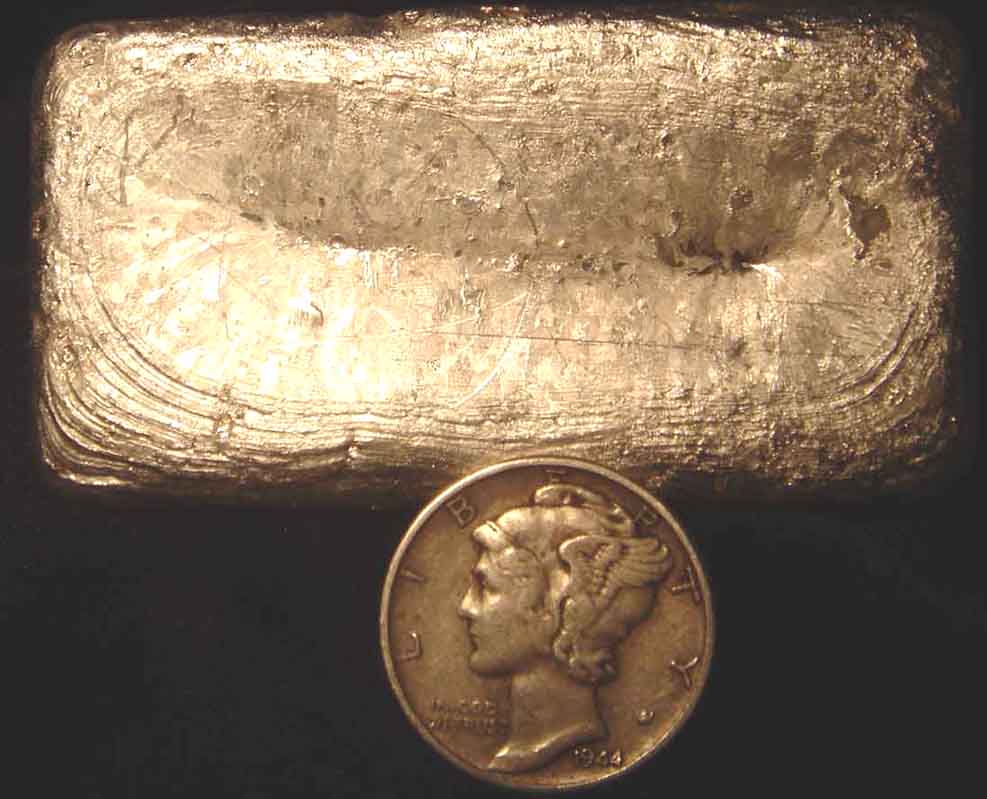 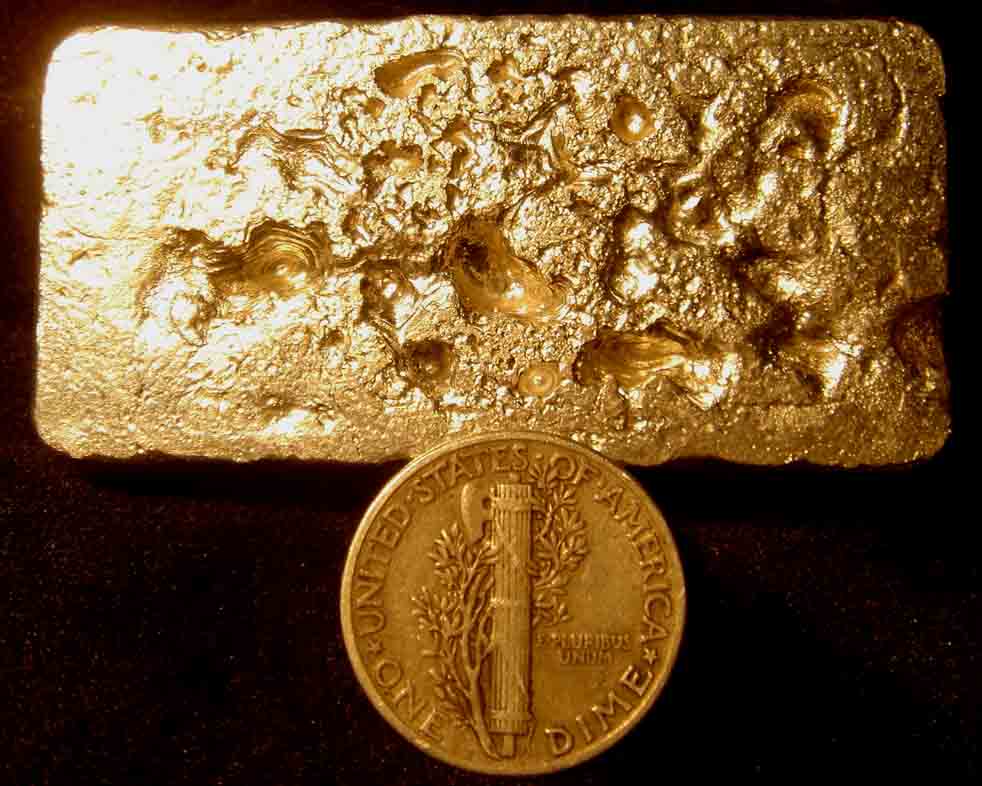 |
|
Pillar of the Community
Australia
9755 Posts |
Many years ago, when I was casting my own projectiles for pistol shooting, I was told to put Bees wax into the lead to help remove the impurities. I don't know if this would help with Silver. Steve  |
| |
Replies: 17 / Views: 12,189 |







 Posted 05/08/2007 1:31 pm





