| Author |
 Replies: 12 / Views: 2,015 Replies: 12 / Views: 2,015 |
|
|
Moderator
 Canada
10477 Posts |
This is almost exactly like an older thread, that was locked... https://goccf.com/t/118497I picked this up at the ONA recently, from a dealer's 'junk bin'. The coin is noticeably thicker, and had no evidence of underlying elements, like a plated coin. A scratch test on the rim revealed nothing. The weight is considerably more, at 3.53 grams. So I coughed up a dollar and bought it. 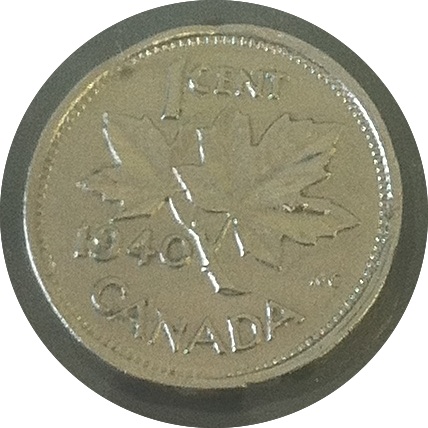 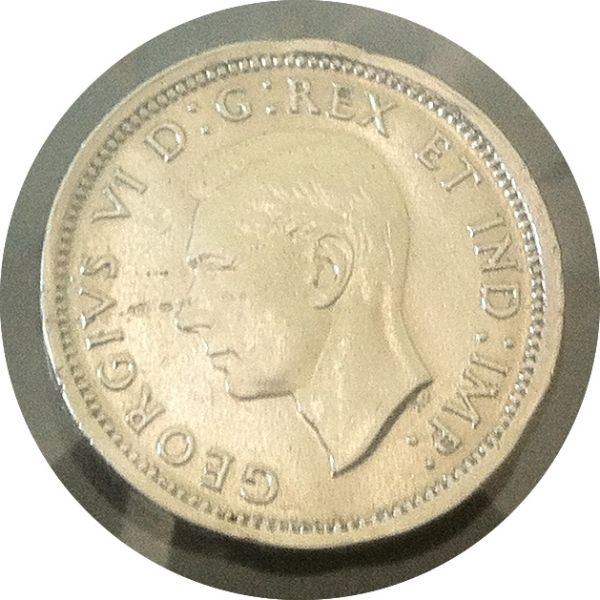 So, I brought it into the lab today at work, and put it in the XRF. 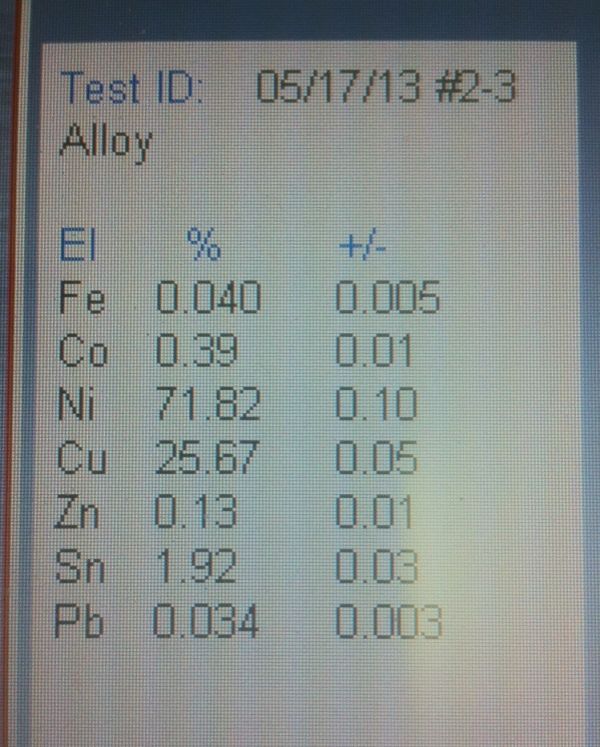 Almost the opposite of your coin smallcentguy? It is a head scratcher compared to your 1942 cent, it looks the same except this 1940 looks like it has been cleaned/polished. I would have expected a 75% Cu and 25% Ni - not the other way around... a mystery coin produced during the war, no doubt. This one will go nicely into my collection, right next to the 1967 Cu-Ni strike...  https://goccf.com/t/103826 https://goccf.com/t/103826PS - to a certain lurker, who likes to cut and paste online forum information into Canadian Coin News columns, I will remind you at this time that these images and data are my intellectual property, and cannot be reproduced without my permission. "Discovery follows discovery, each both raising and answering questions, each ending a long search, and each providing the new instruments for a new search." -- J. Robert OppenheimerContent of this post is licensed under a Creative Commons Attribution-NonCommercial 3.0 Unported License. See: http://creativecommons.org/licenses...0/deed.en_USMy eBay store
Edited by SPP-Ottawa
05/17/2013 3:11 pm
|
|
|
|
Pillar of the Community
United States
1764 Posts |
This alloy does not make sense - looks like a modern nickel plated coin. http://en.wikipedia.org/wiki/Nickel...nadian_coin)Weight is off for a cent struck on a nickel planchet. Interesting = trace cobalt linked to the excessive nickel percentage (as expected). John Lorenzo United States |
|
Moderator
 Canada
10477 Posts |
Try doing some research on alloy analysis by XRF. This is not an analysis of the surface of the coin - I have a quantitative SEM at my disposal, if I wanted to analyze only the surface. The X-rays penetrate the coin to some considerable depth, in fact I use XRF to "see" through plated coins to determine their internal alloy composition.... Secondly, it is not struck on a nickel planchet. One cannot place a nickel planchet inside the collar of the 1-cent dies. It is a larger planchet and the collar would have to be disengaged entirely, and the coin would be broadstruck. You are right though - looks can be deceiving, and most people would dismiss this coin, as a modern Ni-plating job and not a legitimate off-metal error (which it is). That is why it only cost a dollar... Sometimes, I love my lab toys...  "Discovery follows discovery, each both raising and answering questions, each ending a long search, and each providing the new instruments for a new search." -- J. Robert OppenheimerContent of this post is licensed under a Creative Commons Attribution-NonCommercial 3.0 Unported License. See: http://creativecommons.org/licenses...0/deed.en_USMy eBay store
Edited by SPP-Ottawa
05/17/2013 3:57 pm
|
|
Pillar of the Community
Canada
785 Posts |
I also have one from 1940 that is holed. What do you think these are? Could they be made by the Canada mint? Funny I also found mine in a junk bin a couple months back.
|
|
Pillar of the Community
United States
1764 Posts |
Since the coin weight does not match and the realization that the X-Ray beam is probably going down between 10-100 um into the coin this does not eliminate the possibility of a nickel plated copper coin. You must taken into account the weight and diameter. Since you indirectly verfied its a copper planchet due to its smaller diamater and its weight is not near nickel weight it appears its a cent plated with nickel alloy. The Zn, Pb and Sn coming from the underlying copper and the cobalt from the plated nickel. If you cut this coin open and do a microstructure analysis with a SEM/ESD you would visually see the two layers FIRST before the two alloys were analyzed <BG>. Your coin has also the characterstics of a recent study I did recently with the U.S. Coin Error Leading authority Mike Diamond on copper plated clad errors in a recent Coin World. John Lorenzo United States |
|
Moderator
Canada
10477 Posts |
Quote:
Since the coin weight does not match and the realization that the X-Ray beam is probably going down between 10-100 um into the coin this does not eliminate the possibility of a nickel plated copper coin. Well, you underestimate the power of my X-Ray tube... but for arguments sake, just how thick of Ni-plating are we talking about here? Quote:
Since you indirectly verfied its a copper planchet due to its smaller diamater and its weight is not near nickel weight it appears its a cent plated with nickel alloy All I verified is that it was struck in collar. This coin is quite a bit thicker than a normal cent planchet, but the same diameter. Note that the Royal Canadian Mint was striking coins for other countries since 1937. All that really tells me is that whatever this material is, it was feed through the blanking machine for 1-cent strikes. Quote:
The Zn, Pb and Sn coming from the underlying copper and the cobalt from the plated nickel. If you cut this coin open and do a microstructure analysis with a SEM/ESD you would visually see the two layers FIRST before the two alloys were analyzed. I am game! A sacrifice for science - but I am NOT going to cut the coin in half, but since it was worn down to VF grade anyway, I decided to take a file edge to the rim, and I made a deep V-shaped groove in the rim at the bottom (parallel to rim), and filed down below 1 mm depth - reminds of 'tongue and groove lumber' now. There was no change in material colour. To be sure (because freshly filed copper can be pretty bright, I then stuck some Dellers Darkener into the groove, so if there was fresh copper there, it would darken up - nothing). The coin is also moderately to strongly magnetic... how much nickel plating would that require? I will take this coin into the SEM lab next week, and do a quantitative analysis from the bottom of my freshly filed groove. Quote:Your coin has also the characterstics of a recent study I did recently with the U.S. Coin Error Leading authority Mike Diamond on copper plated clad errors in a recent Coin World. So what? My coin also has characteristics of other studies I did with Canadian error coins and have published with leading authorities on Canadian errors. In other words, please explain how this has relevance? I am a scientist, so use logic and the scientific method to make your point. Having already damaged my coin, I remain convinced - I will let the SEM have the last word. "Discovery follows discovery, each both raising and answering questions, each ending a long search, and each providing the new instruments for a new search." -- J. Robert OppenheimerContent of this post is licensed under a Creative Commons Attribution-NonCommercial 3.0 Unported License. See: http://creativecommons.org/licenses...0/deed.en_USMy eBay store
Edited by SPP-Ottawa
05/17/2013 8:53 pm
|
|
Moderator
Canada
10477 Posts |
Not easy to convince myself to do this... but all in the name of science... This is the rim (imagine the coin standing on edge). 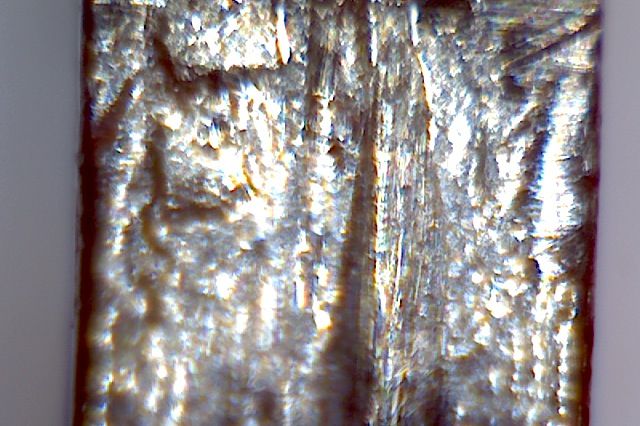 "Discovery follows discovery, each both raising and answering questions, each ending a long search, and each providing the new instruments for a new search." -- J. Robert OppenheimerContent of this post is licensed under a Creative Commons Attribution-NonCommercial 3.0 Unported License. See: http://creativecommons.org/licenses...0/deed.en_USMy eBay store
Edited by SPP-Ottawa
05/17/2013 8:52 pm
|
|
Bedrock of the Community
Australia
21792 Posts |
Was the RCM, in 1940, like the U.S. Mint, executing orders for foreign coins? Like the rest of us, the approx. 75% Ni 25% cu throws me a bit as well. I don't know of ANY issued for circulation coin anywhwere in the world, that has this sort of composition. This leads me to a rather exotic speculation for it's existence. Perhaps this coin was made from an experimental flan, and probably less than 5 examples were struck off. All examples should have been destroyed, this one being an escapee, and maybe unique. |
|
Moderator
Canada
10477 Posts |
For the 1967 1-cent Cu-Ni coins, I always suspected that was a back door job, because I know of several that exist, most of them all around the Ottawa area, and that year also saw the double and triple struck 50c and dollars.
A good number of my Canadian errors, were not likely production errors per say. That said, it makes it even harder to try and figure out what the heck was happening back then... maybe Rick Mercer's grandfather did a tour of the mint in 1940...
"Discovery follows discovery, each both raising and answering questions, each ending a long search, and each providing the new instruments for a new search." -- J. Robert OppenheimerContent of this post is licensed under a Creative Commons Attribution-NonCommercial 3.0 Unported License. See: http://creativecommons.org/licenses...0/deed.en_USMy eBay store
Edited by SPP-Ottawa
05/17/2013 9:07 pm
|
|
Bedrock of the Community
Australia
21792 Posts |
I would guess that finding definitive information on such pieces would be a hard thiong to do, obviously because the Mint would not be forth coming on such information, if no documentation exists.
I have seen other examples of 'deliberate' mint errors, made by mint employees.
You may never get an official answer.
|
|
Pillar of the Community
Canada
1984 Posts |
That is a cool one!! There seem to be a few of these wartime off metal coins around--as well as a few known test/pattern strikes. I continue to think that the people at the mint were playing with various alloys as they thought about changes to coinage during the war, resultng in the tombac issue of 1942.
|
|
Bedrock of the Community
Australia
21792 Posts |
If you are going to experiment with a nickel copper alloy (as opposed to a copper nickel alloy), the RCM would seem an obvious candidate for such experimentation. At the time Canada was the leading producer of nickel, and therefore nickel would have been more readily available to the RCM than any other mint. It resulted in pure nickel issues in later years. |
|
Pillar of the Community
Canada
1354 Posts |
Does this coin in hand look like it was plated with a bronze or gold? Hard to tell by the picture.
|
| |
Replies: 12 / Views: 2,015 |
|










 Posted 05/17/2013 3:51 pm


