










 Posted 05/30/2013 3:02 pm


Quote:
This class of object is typically known as a "Chinese charm" - although they could just as easily be from Korea or Japan as from China proper.
This class of object is typically known as a "Chinese charm" - although they could just as easily be from Korea or Japan as from China proper.
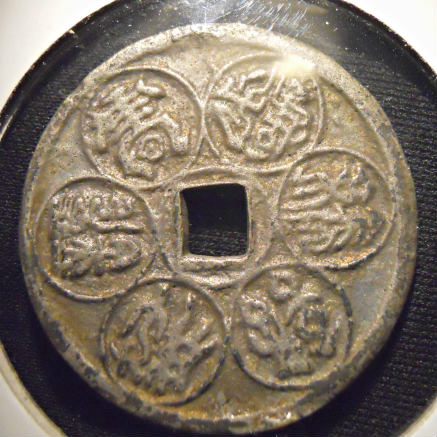
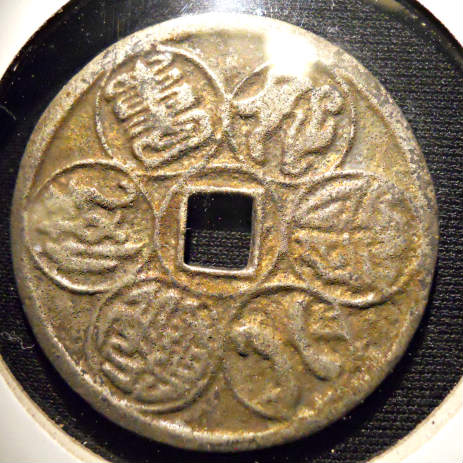
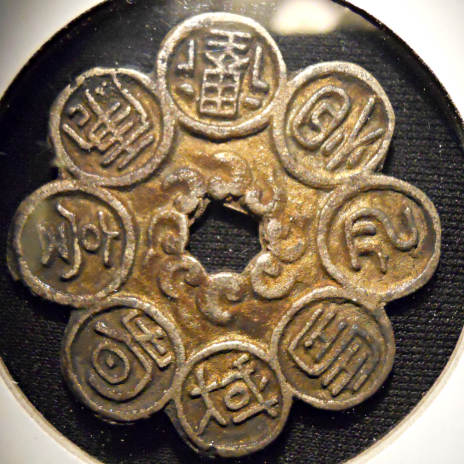
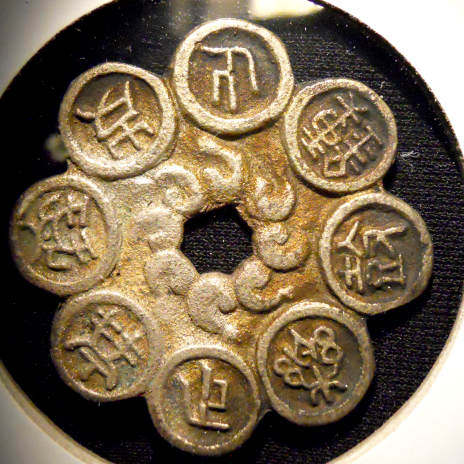
They are both Korean charms.
The inscriptions are written in ancient Chinese seal script which is difficult for me to read. There may be mistakes with my translation.
The inscription on the first charm is 好话说读好书 which translates as "speak good words and study good books".
The inscription on the other side is 做好人行好事 which means "be like a good man and do good deeds".
The inscription on the second charm is 寿域春亭康衢烟月. This can translate as "long life is within the bounds of the Spring Pavillion, misty moonlight shines on the bustling street scene".
I know that the "misty moonlight shines on the bustling street scene" is taken from an ancient Daoist text known as the "Liezi".
The phrase usually refers to the wish that rulers will be concerned with the peace and prosperity of the common people.
I do not know the original source for the expression "Long life is within the bounds of the Spring Pavillion".
I found one Chinese source that says 寿域 can also refer to "a tomb prepared during a man's lifetime; the Golden Age".
Therefore, I am unclear as to the meaning of this expression.
The other side of the charm has the inscription 琴ç'Ÿ友之e'Ÿe¼"乐之. (Unfortunately, some Chinese characters cannot be displayed on this website. The Chinese pronunciation of this inscription is qin se you zhi zhong gu le zhi. I do not know the Korean pronunciation.)
This can translate as "with the qin and the se be friendly to her, with the bells and the drums make her happy".
The qin and se are musical instruments.
This is usually understood to be a description of a wedding but the extended meaning is the hope for love and harmony for the couple.
This expression comes from the ancient Chinese book of poetry known as the Classic of Poetry (Book of Songs).
For those interested, I have written an article entitled "Zithers and Grasshoppers" on a Chinese charm with the "qin and se" theme.
Gary


