| Author |
 Replies: 12 / Views: 2,279 Replies: 12 / Views: 2,279 |
|
|
New Member
United States
21 Posts |
how can I know whether a particular coin is naturally or artificially toned? this is really important to me, I prefer naturally toned coins, those coins that have never been dipped or recolored, they are the real antiques.
|
|
|
|
Pillar of the Community
United Kingdom
856 Posts |
That's a difficult question to answer IMHO. Assuming we're talking about silver, since cleaned copper never looks quite natural afterwards, most coins in my experience eventually go a pinkish grey and ultimately black. In between you can get hints of gold and sometimes blue.
There are however some coins (British silver from Queen Victoria's reign for example) that take on some more pleasing colours, such as a bluish tone when looked at from a certain angle.
However very few coins I've seen take on the rainbow colours some people admire. While it's possible US silver tones or has been stored slightly differently from British coins, I have to say I find that difficult to understand. So my general view is that anything that stands out with multiple hues without fancy photography or tilting the coin to maximise the effect is artificial.
However, there's an art to telling whether a coin has been helped tone and really experience is needed to do so. I have contacts who are much better at it than I am and pick up subtle signs of dipping or artificial toning (AT), whereas I often struggle. Possibly there are lists of signs of AT to look for (I've seen people talk about toning around letters being a give away in some cases). But really I suspect you need to look at lots of coins, ideally with someone experienced to guide you, to learn properly.
Most of my coins haven't been cleaned. A couple have been dipped at some point. And one or two have possibly been helped to tone, but actually I still find them acceptable.
In the end, more than has it? or hasn't it? maybe it's whether you can live with the coin in question or not that matters?
|
|
Moderator
 United States
23522 Posts |
Tom answered this with eloquence.
Nobody can tell for sure. Some examples are more egregious than others - generalizations can be made to that extent - but if the issue is a close call, no accurate decision can ever be made. Even worse, "natural" toning progressions differ by not only the specific alloy involved, but the Mint wash process and even the nature of the storage thereafter before they leave the Mint.
Takeaway? Note, I've offered no specific examples whatsoever. That's the point. What's "wrong" for the coin you're looking at now might be "right" for the next. Bust Halves don't tone like Morgans. Morgans don't tone like Barber issues. And darn near any coin can be forced to tone "appropriately" if you're good enough at it.
That's why I don't do "toners."
|
|
New Member
 United States
21 Posts |
yes, it seems like there is kind of "acceptable" extent of artificial toning, that keeps both elegance and antiquity of the coin. and that acceptable degree is individual in terms of coins; what is acceptable for some coin is not acceptable for another.
|
|
Bedrock of the Community
United States
20753 Posts |
And worse yet is exactly what is AT and NT? If you leave a coin on a countertop in your kitchen by accident and it starts to tone, is that AT? If you put a coin on top of your stove and leave it there while cooking but didn't do it purposely and it tones, is that AT or NT? You drop a coin in the dirt in your yard, find it in a year and it is all toned, is that AT or NT? And many coins that do get toned may well have gotten that way by accident or someone purposely made them that way. It always seams that most people consider a coin AT if done fast. Many also say if done over a period of time it is NT. I've seen coins that appeared to be AT and they turned out to be NT.
|
|
Rest in Peace
United States
10625 Posts |
I think what it bowls down to is either intentional or unintentional toning.
|
|
New Member
United States
21 Posts |
yeah, and obviously most of the people interested in numismatics are inevitably involved in unintentional toning. it's something that might occur accidentally in everyday life.
|
|
Moderator
United States
23522 Posts |
Quote:
yeah, and obviously most of the people interested in numismatics are inevitably involved in unintentional toning. it's something that might occur accidentally in everyday life.
If I'm not careful, it happens on my desk. |
|
Rest in Peace
United States
10625 Posts |
 I've learned to not drink red wine while looking at coins.  |
|
Pillar of the Community
United States
8533 Posts |
I don't know if using a laser is AT or NT....  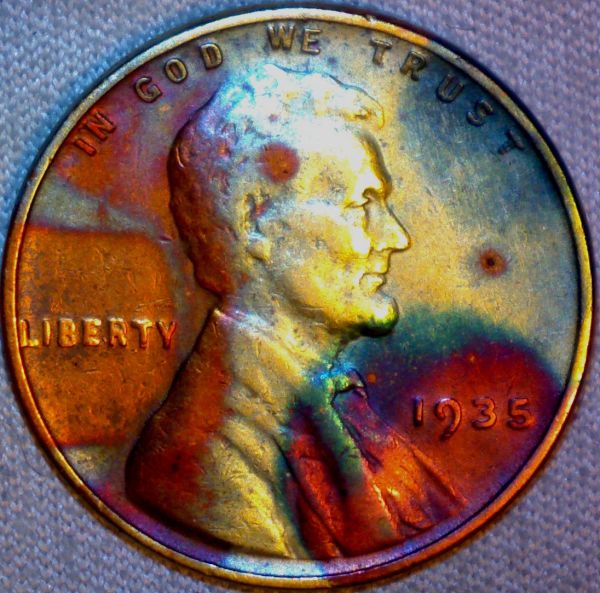 Oregon coin geek.....*** GO BEAVS ! ! ! ***
|
|
Rest in Peace
United States
10625 Posts |
|
|
Pillar of the Community
United Kingdom
856 Posts |
Quote:
I don't know if using a laser is AT or NT.... AAAhhh! My eyes!  OK, I don't know if this helps at all. But here are a few pics of 17th century silver that's toned. I suspect that purity and storage can both affect how coins tone, but these are from my collection. 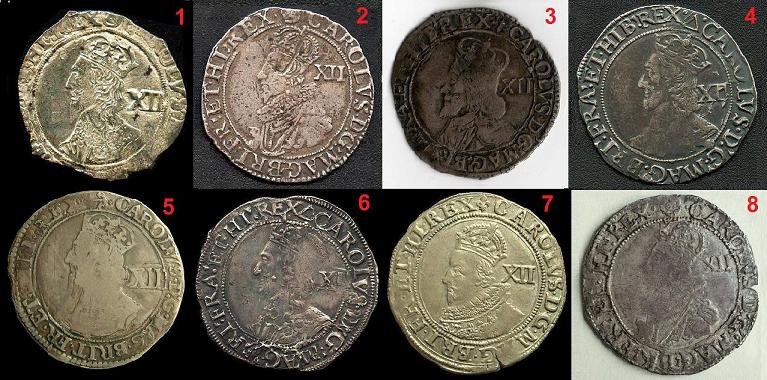 #1 Has been 'museum cleaned' (dipped) and is pretty much (apart from some of the edges having been clipped off for the silver!) as it left the mint. #2 Is naturally toned from an old collection. It has the pinkish grey toning typical of these types of coins. #3 and #4 are similar, but showing the progression from grey through chocolatey brown to velvety black. #5 I believe this coin has been dipped and is starting to re-tone naturally. Such coins I find often have a 'yellowish/gold' tone to them. This one has rather uneven tone, but due to its rarity I put up with it. #6 I'm unsure about this. It's one of the few coins I own that had bluish/pinkish toning and though I find it attractive I do wonder if it has been helped a bit? #7 Another coin I believe to have been dipped and starting to retone. #8 The odd lustre to this coin makes me think it too has been dipped, but it has a bluish silver toning. Again, rarity means I'm putting up with it. So. A range of colours and effects, some natural and some .. maybe less so. That said, two - if not three - coins in the top row are from old enough collections I can imagine them being passed around collectors after dinner. The brandy is being sipped and the cigars smoked, the coins are being handled and breathed upon. Is that natural (pretty much any coin that was in a collection prior to 1970 will likely have been exposed to cigarette smoke)? Or not? Personally I think it's whether I can live with a coin or not. If I think it may have been .. played with .. at some time or other (and given most coins that have been found hidden or buried may well have been cleaned or more), but it's still a nice coin, well maybe that's OK. Better than signs of abrasive cleaning anyway! Edited by Tom Goodheart
06/22/2013 12:44 pm
|
|
New Member
United States
21 Posts |
|
| |
Replies: 12 / Views: 2,279 |
|










 Posted 06/19/2013 8:42 pm


