| Author |
 Replies: 6 / Views: 1,472 Replies: 6 / Views: 1,472 |
|
|
Pillar of the Community
United States
689 Posts |
Officially there were 34 Maravedis or as Pradeau states Maravedies per real. In Mexico they bumped it to 44 per real for a while. I've even heard of 35 per real.
The denominations of maravedis are incremental in 1, 2, 4, 8, 16. This seems odd because a half real would be 17 maravedis, a quarter real would be unknown in terms of the copper coinage.
Was a 16 maravedis considered as half a real? That seems odd because it would provide a premium to the fiat copper. I do not understand this apparent mis-match.
Could anyone explain or point to a reference?
|
|
|
|
Moderator
 Australia
17037 Posts |
European predecimal coinages are indeed confusing. Suffice to say that for practical purposes, places such as Spain did not have one unified monetary system, but three - one of silver, one of gold, one of copper, with very little ready interchangeability between the systems. People rarely had need to mix the various kinds of money together in one transaction. So questions such as "What fraction of a real of silver is this copper coin worth" rarely came up; the only people who needed to know this stuff were the accountants.
As for the rather unusual ratio of "34:1", it was established by Ferdinand and Isabella and, believe it or not, their system was a radical simplification of the currency system used in Spain prior to this, where "maravedi" seems to have had several different definitions simultaneously.
Don't say "infinitely" when you mean "very"; otherwise, you'll have no word left when you want to talk about something really infinite. - C. S. Lewis
|
|
Pillar of the Community
 United States
689 Posts |
|
|
Pillar of the Community
France
1591 Posts |
Here is a Felipe IV 17 maravedis minted in Madrid in 1643 :  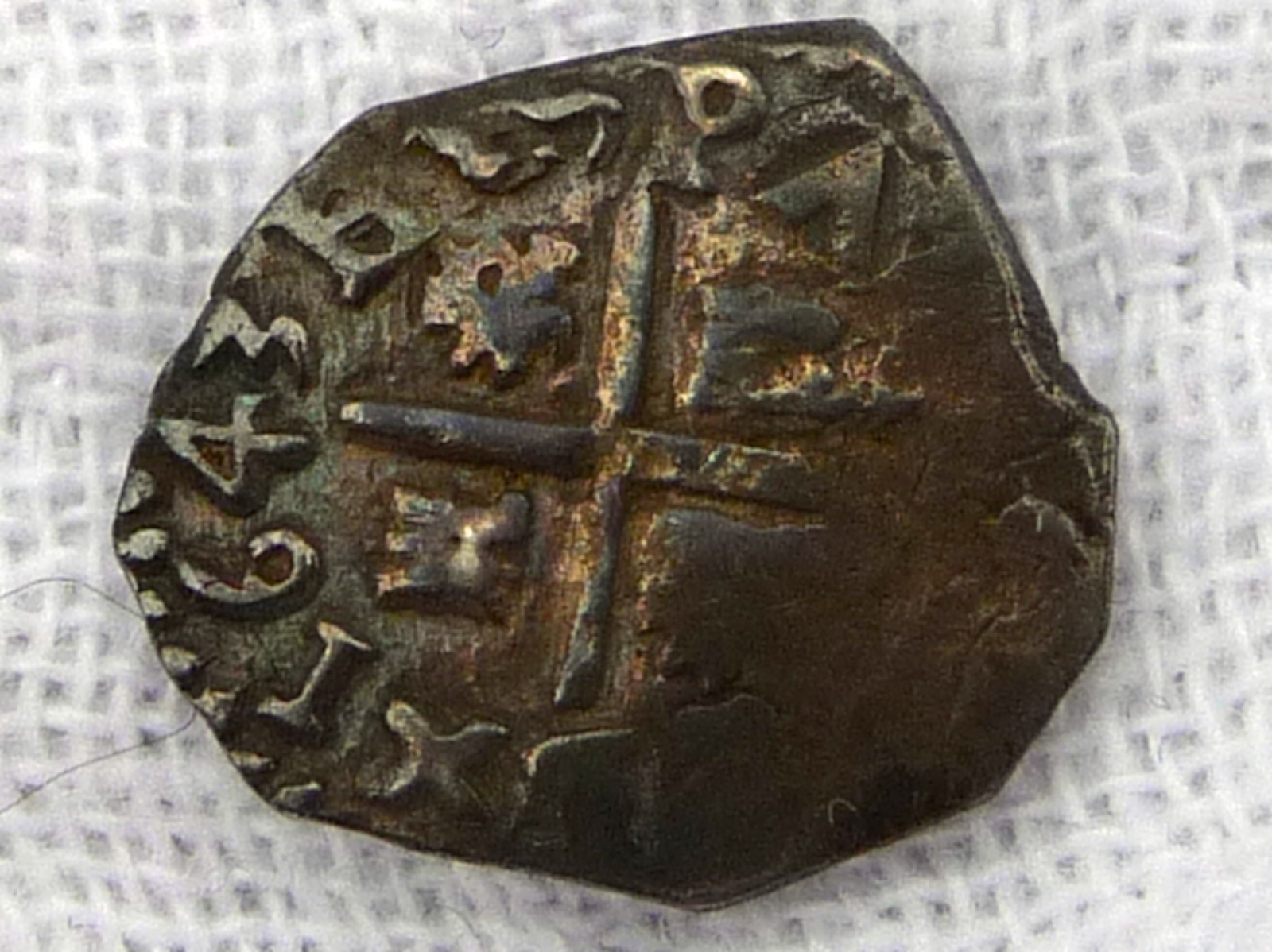 Indeed, I never figured out how those were exchanged for silver ... Moreover, there was the big devaluation / invaluation period, where their value did change many times in a short period. Edited by MathieuMa
07/06/2013 02:52 am
|
|
Pillar of the Community
United States
3229 Posts |
 Cool filipe! |
|
Pillar of the Community
United States
883 Posts |
The Spanish system was nominally binary, with 1-2-4-8-16-32 being the normal progression in gold & silver units, but it seems they just goofed when it came to the copper. Not that it mattered too much, because the "official" valuations of each metal in terms of the others had a tendency to float. I was reading some old monetary tracts recently, & they described how, when a "plate fleet" had just arrived in Spain, there was plenty of silver, but it was overvalued in terms of gold, so that gold would flow in from all over Europe to bring silver out at a profit. When it wasn't the season for treasure ships to arrive, in general, the Spanish people refused to exchange silver for gold at the official rate, but only with a premium. This reflects the fact that smaller denomination coins were typically more needed in trade.
|
|
Pillar of the Community
United States
883 Posts |
If you have the ANA reprint volume ("Selections from the Numismatist", 1961) on "Modern Foreign Currency", there's an article entitled "Numismatic Tattooing", beginning page 116, which illustrates just how bad the situation really was during the reign of Philip IV. One representative paragraph : "The premium for the exchange of copper into silver was fixed at 50% by decree on September 7, 1641. Another decree on October 27th of the same year, sent from Madrid, ordered that the pieces of money, of two and four maravedises, from the Segovia mint be counterstamped and those of two pass at six and those of four pass at twelve." |
| |
Replies: 6 / Views: 1,472 |
|




 Posted 07/05/2013 11:17 pm





