| Author |
 Replies: 18 / Views: 2,606 Replies: 18 / Views: 2,606 |
|
Valued Member
United States
286 Posts |
I have several coins that were subjected to environmental contamination. Below is a typical coin: 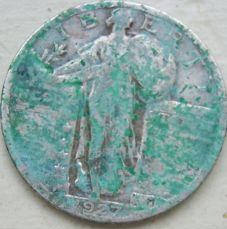 I am looking for a safe method to remove the green without damage. Also, wondering what the contamination is? It is not PVC damage. Advice appreciated. Thanks! |
|
|
|
Valued Member
 United States
286 Posts |
Here's the reverse: 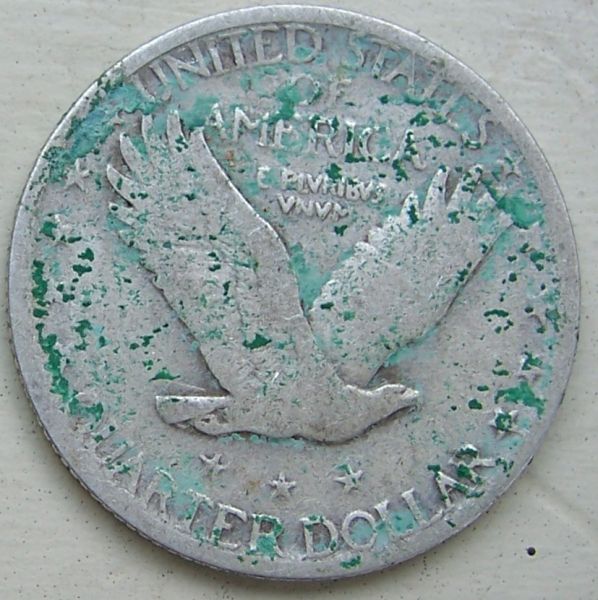 |
|
Rest in Peace
United States
1943 Posts |
I would try acetone first.
|
|
Valued Member
United States
286 Posts |
Tell me how you use acetone and what it is supposed to remove. Also, does it damage the coin from a collectors viewpoint.
|
|
Valued Member
United States
286 Posts |
Here is another one with a different type of damage and, I suspect, reqiring, different approaches: 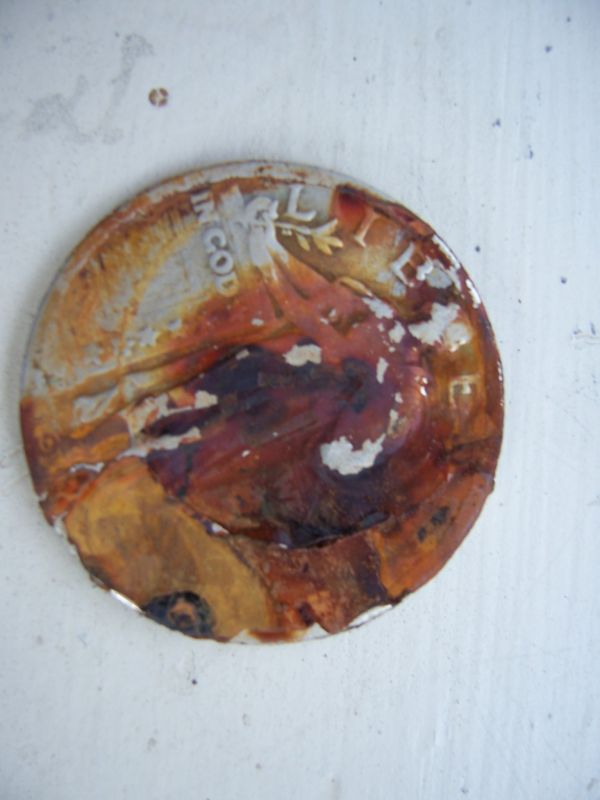 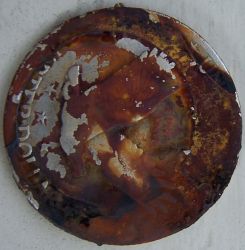 Appreciate advice. |
|
Pillar of the Community
United States
570 Posts |
Acetone on the PVC damage (green stuff), will not hurt your coin. Search previous posts in the search bar for tips on how to use this stuff safely. The second coin looks like it was sitting in water for awhile or a burn victim  . I don't think this one will be helped by acetone much less anything else that will not harm the coin. |
|
Moderator
 United States
23522 Posts |
My guess is you're looking at coins which were victimized by Katrina or something similar. Your detail image of the reverse of the SLQ shows a "thickness" to the corrosion which I wouldn't expect to see it it were due to PVC. I have the sinking feeling these coins have been in contaminated salt water, and there's not going to be a whole lot you can do for them. As regards acetone, if you want to give it a try (it won't hurt anything): https://goccf.com/t/140721That'll be a start. |
|
Valued Member
United States
286 Posts |
Not PVC or salt water. They were buried for 70 years. The brown one has, likely, rust from a can it was in, soil, and some paper from it's roll. The green one - don't know, but not PVC.
|
|
Valued Member
United States
286 Posts |
SsuperDdave - thinks your procedures really help. Your before pictures appear to have only a little green. Mine are much heavier with the green. Sone of it even makes a powder. I put them in a roll and then took them out and a powder came out. They were in a baking powder can, buried for 70 years.
Anyone on the other contamination? I will also, post a dime from the find that is gold toned on the obverse and on the reverse - one tiny green spot.
|
|
Valued Member
United States
286 Posts |
I haven't been able to upload the dime yet but will. The obverse is nicely toned, but what caused the toning is unknown - less of what is on the browned quarter? The reverse has a couple of green spots -much smaller and no tendency to powder. The reverse of the green quarter was originally covered heavier and some came off.
|
|
Valued Member
United States
286 Posts |
Here's the dime. 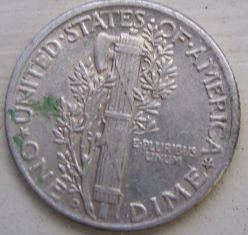 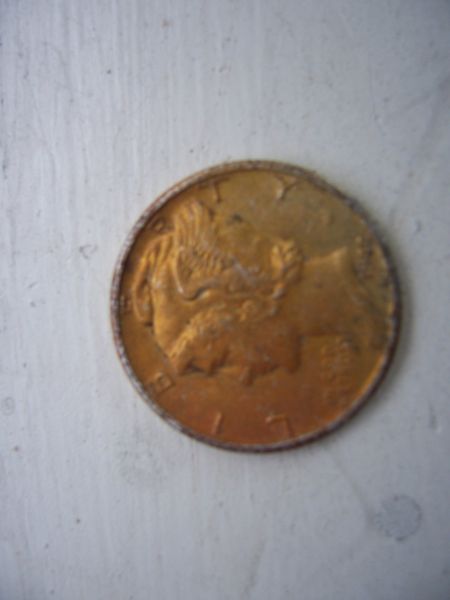 Looking for experts! |
|
Valued Member
United States
286 Posts |
The picture of obverse of the dime is poor.It looks like a nicely toned dime. How one side toned and the other got the green spots is a mystery.
|
|
Moderator
United States
23522 Posts |
The SLQ doesn't look like PVC, but the Dime could be. If that's PVC on the Quarter, it's destroyed. The coin I posted was definitely a PVC infestation; with your description of your coins, I doubt PVC was involved - just whatever happened to be in suspension in the soil.
Let's await some members who are more experienced with this type of corrosion. It's the 4th of July weekend; I doubt we'll see many regulars before Monday.
|
|
Valued Member
United States
286 Posts |
Isn't PVC polyvinyl chloride? I don't think that's likely. I know there was soil (whatever was in it), paper rolls, metal cans, water seeped in, possibly baking soda or baking powder residue in the cans, pennys, nickles, dimes, quarters, and silver dollars all from 1870 to 1945.
Hopefully some others have seen this.
Does acetone need to be in a glass container?
|
|
Bedrock of the Community
Australia
21789 Posts |
The PVC in album pages are interesting stuff.
I have seen red Unc. bronze coins survive for 20 years or more in this material.
I have also seen red Unc bronze coins turn black under the same conditions.
PVC album pages are made of soft PVC; that is, they have and oily plasticiser in the plastic to make them flexible.
It is this oily substance that slowly gasses out over a period of years and that is what, in most cases, affects the coins.
That being the case, the problems caused by the gassing out of the plasticiser can be, in most cases, alleviated by a good acetone bath.
However, the blackened coins are usually beyond the redemptive qualities of acetone, and will remain black.
In this case, there has been an inorganic toning caused by the presence of a chlorine or oxygen based chemistry that surrounds the coin.
A bath in organic acetone will not affect this sort of toning.
The best approach is to use non PVC album pages for your collection in the first place.
These pages will last much longer, and so will the coins.
If a coin has been buried or has been in a salt water environment, damage is usually result, and other cleaning methods have to be found to improve the presentation of the coin. There are many methods employed to improve the appearance of ancient coins, but in alomost all cases, the best ones are cleaned by professionals before they appear on the market.
|
|
Bedrock of the Community
United States
19997 Posts |
The green spots are verdigris. Traces of baking soda (sodium bicarbonate) along with air and water reacted with the copper in these coins to form verdigris. It appears to be quite heavy and removal will most likely result in pitting. Complete removal is unlikely even with acid. VERDI-CAREâ„¢ would remove the light to moderate areas but I doubt it would fully remove the verdigris in this case. Verdigris becomes much tougher to conserve when nickel, silver, zinc and tin contribute to the chemical make-up.
The second coin appears to have a ferrous (iron) residue, most likely from the container. I have seen collectors remove some of that with an EDTA solution. However, you have to VERY careful with EDTA as it will etch the surfaces easily if you over-soak.
|
| |
Replies: 18 / Views: 2,606 |







 Posted 07/06/2013 6:29 pm





