| Author |
 Replies: 7 / Views: 1,565 Replies: 7 / Views: 1,565 |
|
|
Pillar of the Community
United States
3499 Posts |
|
|
|
|
Pillar of the Community
United States
1801 Posts |
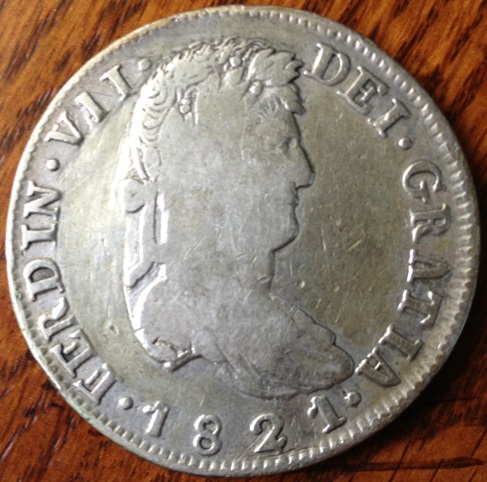
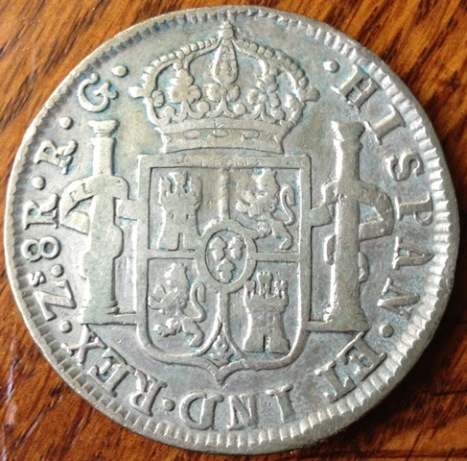
These royalist coins are certainly interesting. Without coin in hand I would not give you a definite opinion however several things
about your coin bother me in the photo.
Weight, way below standard (however not a deal killer on a royalist coin)
The portrait, the "mouthless" Ferdinand VII always scares me because so many turn out to be fakes.
The denticles on the coin don't appear to run all the way to the edge of the coin.
Zacatecas produced large numbers of 8's in 1821 and 1822 but so did the counterfeiters. Riddell listed at least 5 different Zs either counterfeit or low standard examples in his study published in 1845.
|
|
Pillar of the Community
United States
1962 Posts |
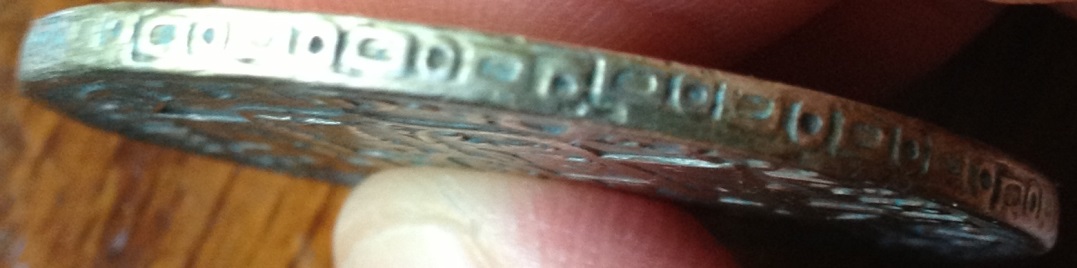
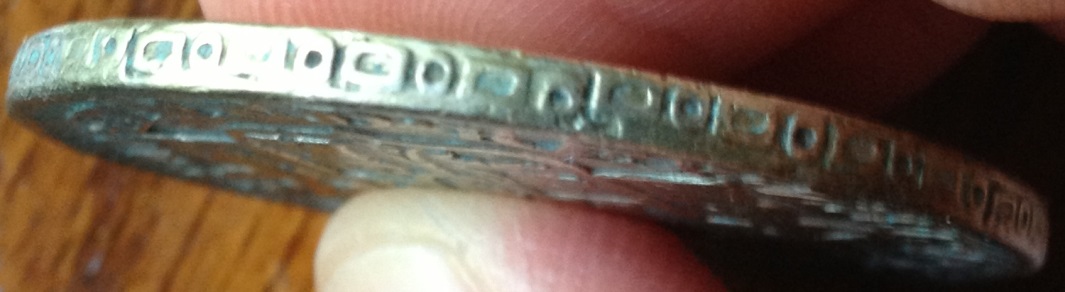
Crude detail, blobbish strike, odd rims... whole appearance is atypical of any purported genuine 1821 Zs I've seen. No way that can be a "regal" issue... how old of a fake is a question for Bob.
|
|
Pillar of the Community
 United States
3499 Posts |
jfransch & realeswatcher- Thanks for hte input! I am glad to get some info about this coin. While I thought that the detail was not that great before I bought this coin, I just assumed it was due to the fact that many royalist strikes were fairly crude. My coin does sound of silver, and it certainly seems to have been struck with machinery from around the first half of the 19th century. This in concert with the fact that this coin is from an older collection (and I think that this coin was purchased by the previous owner about 30 years ago) leads me to believe that this may be a contemporary counterfeit.
But, yes, I would certainly love to hear Swamper Bob's thoughts on my coin.
|
|
Pillar of the Community
United States
1760 Posts |
I will check the draft ANS GNL book tonight if this coin is plated unless Bob chimes in on this thread. It appears? as a debased silver Class 2 China piece (mid-late 19thC) from the yellowish/greenish (copper & zinc at high levels) coloration (If this is the true color of this coin - in hand?) and low weight.
I am starting to look (XRF Analysis) at the Mexican War of Independence Issues starting with the 1811-1822 Chihuahua cast/overstrike issues to be published in the next quarterly journal issue of the MNA. Even with these issues the silver content is normally good and not debased. But at this point questions like this are only beginning to be answered - in my opinion. It seems with the initial cast coinage of 1811 some can be regal edged and some plain edged - as all show good Au/Pt/Ag levels. In 1811 only the regal edge (circle & squares) may have been applied a little late as an anti-counterfeiting measure. I have yet to see a plain edge 1812 or 1813 cast piece with good Au/Pt/Ag levels. So plain edge 1811 cast should NOT be considered contemporary counterfeits if of good weight from my study/analysis.
John Lorenzo
United States
Edited by colonialjohn
07/09/2013 09:21 am
|
|
Pillar of the Community
United States
1760 Posts |
I checked but could not find a Plate Match. This does not of course signal rarity. It does have the appearance, fabric and weight of a typical Class 2 Debased Ag alloy CC8R.
|
|
Pillar of the Community
United States
3499 Posts |
colonialjohn- Thanks for the help and input! I do appreciate your efforts at hunting down the particular type of contemp. counterfeit. Although I did buy it thinking that it was a real, although crudely-made, loyalist 8R, I would still be happy to find out that I have an interesting (and hopefully rare) contemp piece.
|
|
Pillar of the Community
United States
1760 Posts |
Swamperbob normally chimes in on these type of posts - he may be on vacation and/or busy with the final editing of the book. Realize in the future if you wish to acquire more CC8R's that silver plated CC8R's if a Sheffield Birmingham type (Class 1) are worth more than debased silver types (Class 2). Most people can tell a modern fake (Class 3) from the contemporary types of the late 18th & 19thC's. The Sheffields on circlualted examples normally show the inner core debased alloy (i.e., normally brass and sometimes copper) around the edges and high points of the coin. For AU and sometimes UNC pieces the silver fall-out is almost always on the edges and rim areas (if at all).
JPL
|
| |
Replies: 7 / Views: 1,565 |
|










 Posted 07/08/2013 12:10 pm





