| Author |
 Replies: 10 / Views: 2,531 Replies: 10 / Views: 2,531 |
|
|
Pillar of the Community
Hong Kong
1270 Posts |
Hi members, I have zero concept about medallic issue of coins so I post two questions here hoping that you can help me to understand it better. First, is medallic issue NCLT, that is, they are for commemorative purpose ONLY? Second, for those silver coins of medallic issue, if the specification of that medallic issue is the same as the circulating coins, could they be used as a normal currency? e.g. the Belgium 50 Anniversary of Independence 5 Francs Conjoined head, the weight and silver contents have no difference to the 5F at the same period, could it be used as a normal currency? Below is one of my medallic issue specimen, as there is a word "SOUVENIR" on the coin, it is obvious that it is for commemorative purpose rather than circulation. Is that true? 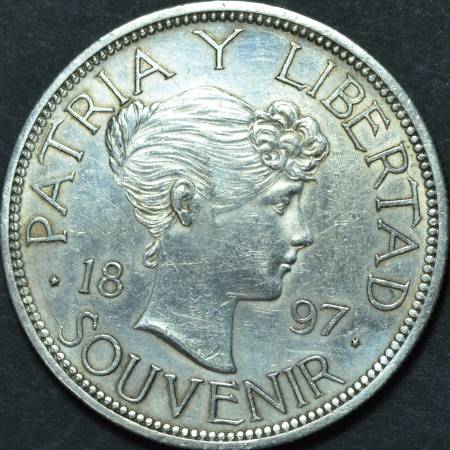 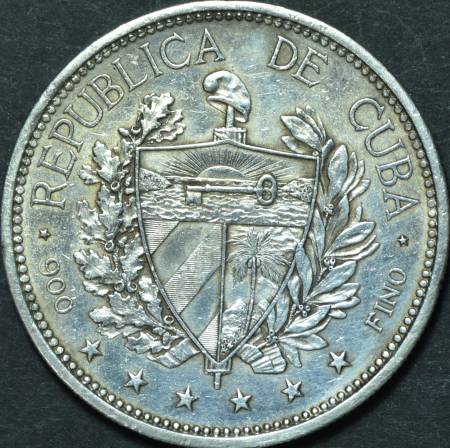  |
|
|
|
Pillar of the Community
United States
4212 Posts |
|
|
Moderator
 Australia
16978 Posts |
Coins described as "Medallic issues" in the Krause catalogues are not "legal tender", therefore not NCLT and not even technically "coins". They are coin-like medals, often privately issued but sometimes issued by the government mints as mint medals. But because they are "coin-like", they are often listed in the Krause "Unusual World Coins" catalogue.
Your Cuban piece is listed in UWC, as KMX# M2. Likewise, the Belgium piece you describe is listed in UWC as KMX# 8.
As for whether or not they could be used as currency, it depends in part on whether or not they actually do come from the date indicated. The Cuban coin was almost certainly struck long after 1897; I cannot say for sure if the Belgian one was actually made in 1880, but it probably was. So the Cuban one was never usable as money, but the Belgian one could well have been. But neither of them were legal tender, and would probably have been rejected by the banks if you attempted to deposit them.
Don't say "infinitely" when you mean "very"; otherwise, you'll have no word left when you want to talk about something really infinite. - C. S. Lewis
|
|
Pillar of the Community
 Hong Kong
1270 Posts |
Thank you Sap. Then if these medallic issues could not be used as a normal currency, why didn't have them made as medals, silver medals of same silver content? If it really was, I suppose there wouldn't be any confusion by the money users.
|
|
Pillar of the Community
United States
807 Posts |
The Cuba "Souvenir Peso" is, so I recall, generally thought to have started as a model for an actual coinage.
Some "medallic issues" did circulate as money, particularly "proclamation pieces" in Bolivia â€" some issues of the SCWC actually include the "Melgarejo" pieces as a denomination! They had so much political turmoil there that a good fraction of the planchets available for coins were used instead for striking these medals, & since they were the same in metallic content, people used them indiscriminately with "actual" coins.
|
|
Pillar of the Community
Belgium
506 Posts |
Quote:
e.g. the Belgium 50 Anniversary of Independence 5 Francs Conjoined head, the weight and silver contents have no difference to the 5F at the same period, could it be used as a normal currency? The medal you mention was minted in front of the public on the 188o world exhibition and sold for 5,50 Fr (at a 10% premium). Because of its low mintage (6714) it is quite valuable. Most 5 Franc coins minted shortly before sell for less, a few for much less. These medals have not circulated as currency, yet some of the 1853 & 1856 medals have circulated as their coin equivalents (though they weren't meant to). |
|
CCF Master Historian of Commemorative Coins
United States
12517 Posts |
The 1897 Cuba "Souvenir" piece you've shown was struck as a fund raiser for the Cuban Junta working in exile in New York City. This group was not recognized in any way as the official government of Cuba, but it was recognized as a leading opposition group working to remove Spain from Cuba and to establish a "free and republican government in Cuba." The original design for the piece featured a portrait of Lady Liberty wearing a wreath on her head and the denomination "Un Peso." The Junta was advised by legal counsel that the design was too similar to US coinage and might cause problems with the US Treasury Department. The Junta was also reminded that it was not the recognized government of Cuba and that it had no authority to strike coins for the country. As a result, the designs were changed to what we see today. One note, the Junta promised to redeem the souvenir pieces for $1.00 when the war with Spain was over and the new government of Cuba was established. The pieces were struck under contract by Gorham Manufacturing Company of New York. The medals were struck in Philadelphia, PA and Providence, RI in July and August of 1897. A total of 10,000 pieces were minted; they were sold for $1.00 (plus postage). The striking of the pieces required multiple dies due to breakage. As a result, there are three main types of the Souvenir "Peso," with varieties reported. Whether these pieces are true coins or medals has been debated for many years. I believe that the current "majority opinion" considers them to be coins, but I consider them to be more of a token. I base my view on the fact that they were not struck by an entity that had authority to strike coins for Cuba but they were sold with the potential to be redeemed for legal tender. Hope that helps! Collecting history one coin or medal at a time! (c) commems. All rights reserved.
|
|
Pillar of the Community
Hong Kong
1270 Posts |
 Useful information, thank you Gwyde. |
|
Pillar of the Community
Hong Kong
1270 Posts |
Many thanks for sharing your knowledge, commems. |
|
Pillar of the Community
United States
807 Posts |
That would put them on a footing with "Kossuth Notes", then.
|
|
Valued Member
Germany
194 Posts |
The Cuba Souvenir Peso is a medal by any definition. They are sometimes catalogued (especially in auctions) among Cuban coins due to the fact that many, if not most, collectors include them in the series. Probably due to their "official look" and the fact that they are not commemorating a certain event. World Crown collectors would include them just because they are crown-size and fit well, design-wise, with other coins of the era. And because earlier collectors and cataloguers have included them in their collections and catalogs. It's simply a matter of habit.
The Belgian pieces are early examples of what later would become circulating commemoratives. Legal tender status was less an issue at the time of their production, because it was the silver content that mattered. So if one authority refused to accept them, or if a store would only want to receive them at a discount, there would be other places that were willing to take them at 5 francs. The only reason that prevented this and similar medals from truly circulating along with the regular 5 franc pieces was the fact that there were only few of them, and most were kept as a memento.
Again, these pieces are nowadays collected and catalogued by some along with the coins out of pure habit. It's like the hen and the egg. People collect them, so they get included in the catalogs. They're in the catalogs, so collectors want them. They are scarce, but not unobtainable, so they make the ideal collectible. I am sure that if there existed only 100 of them, they would never have developped this "coin-like" status with collectors - and would sell for much less, as medals usually do!
The simple reason why in this case and others (the proclamation pieces of the Spanish empire or the mint visit medals of France, for example) coin planchets were used is their ready availability from regular coinage operations and the fact that the presses were adapted to strike them, so it was much easier to prepare the dies and the machinery and strike larger numbers (larger numbers compared to other medals, that is).
|
| |
Replies: 10 / Views: 2,531 |
|










 Posted 07/26/2013 10:25 am


