









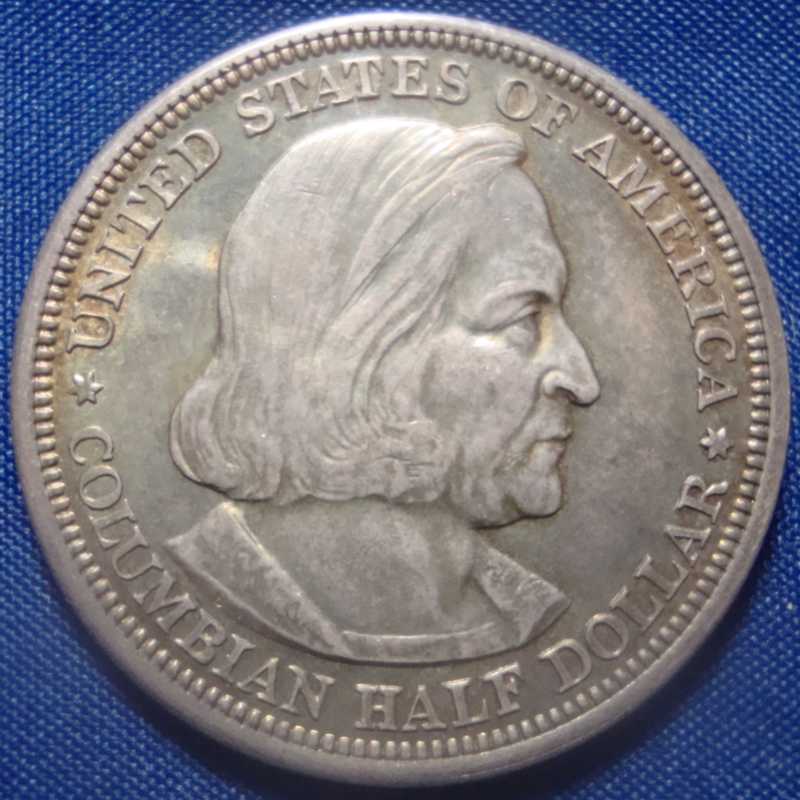
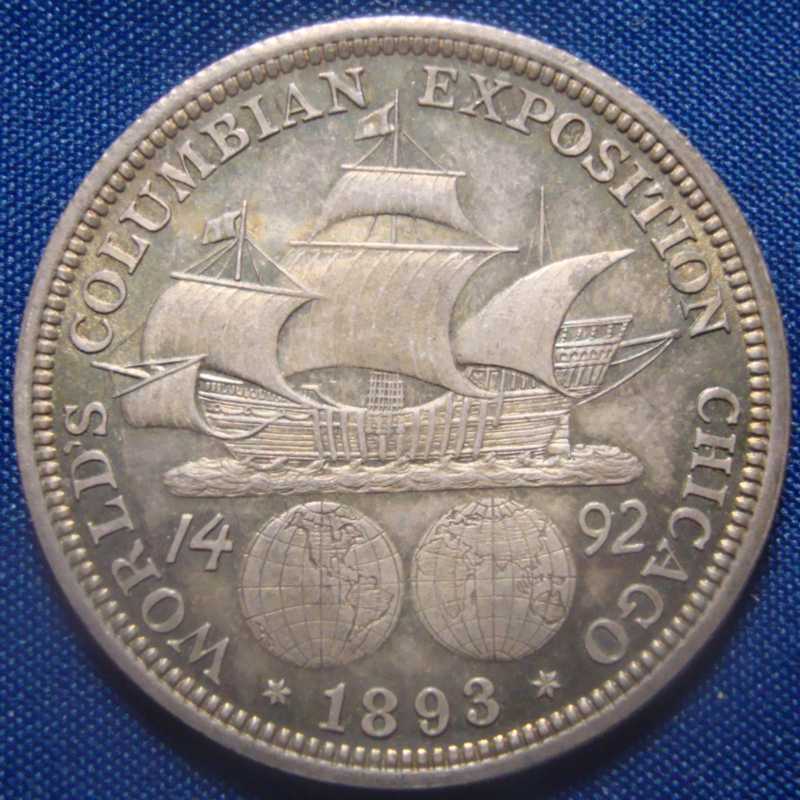
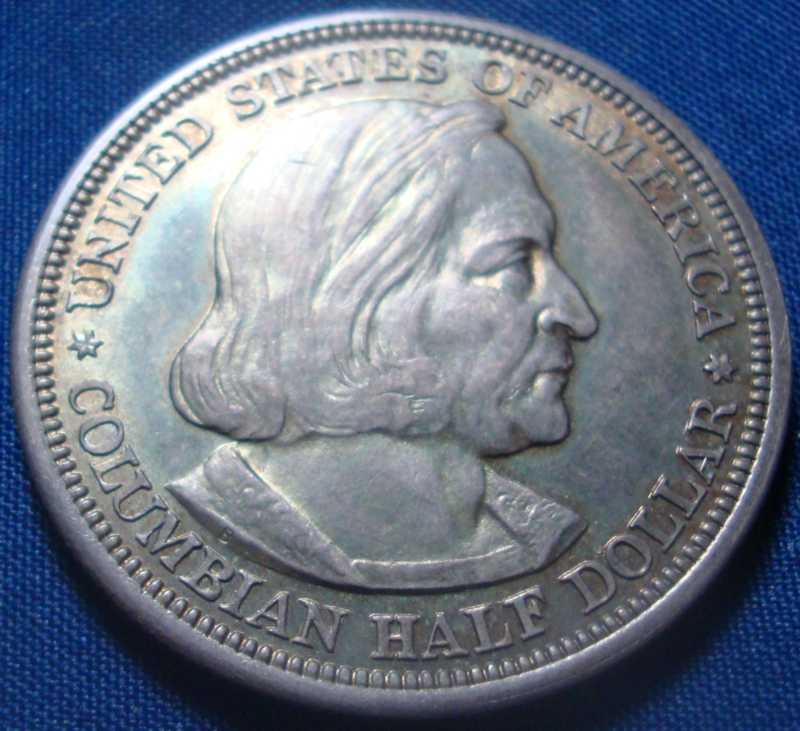
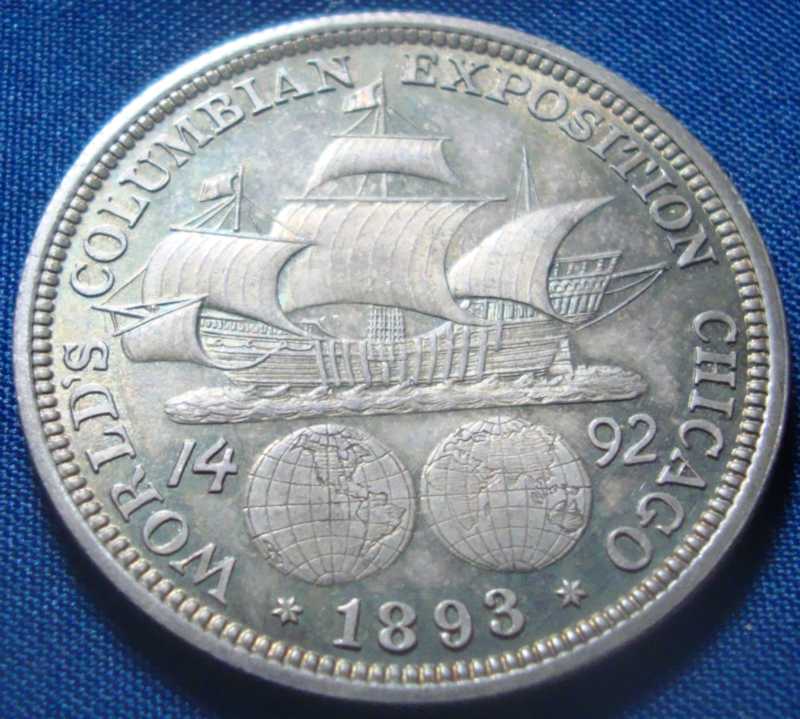
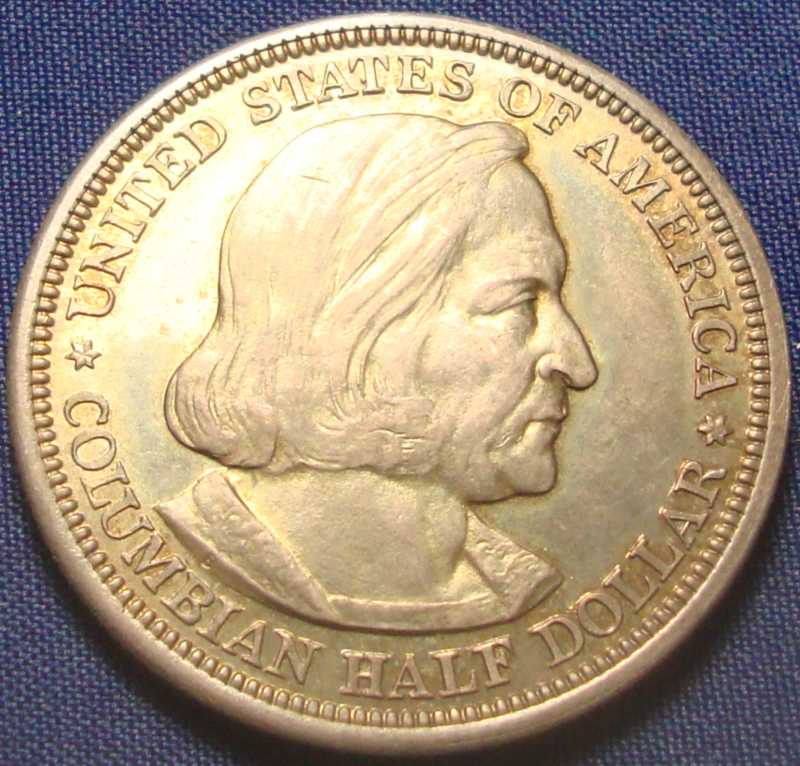
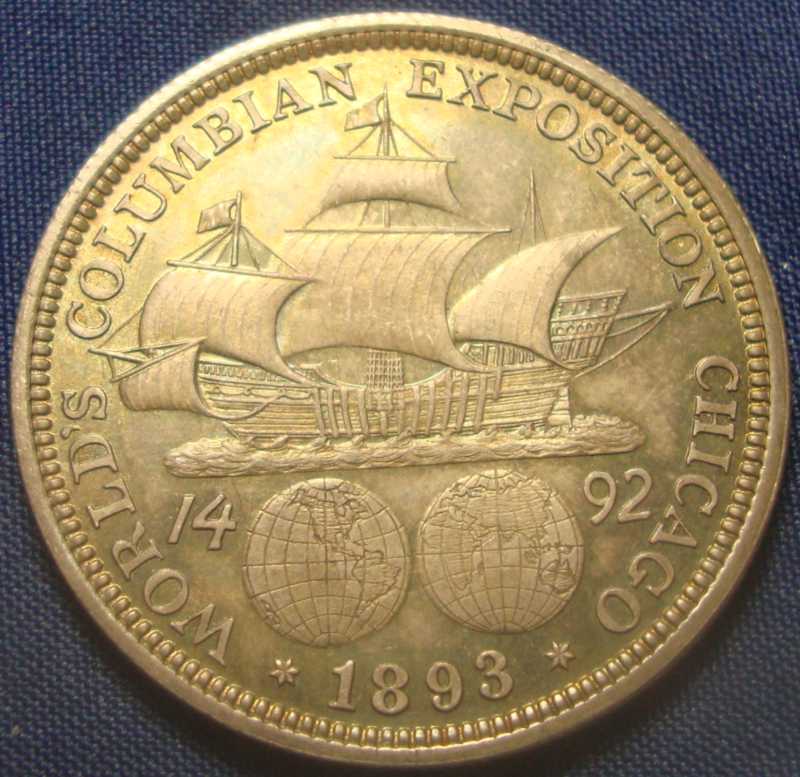
 ). It is an 1893 with beautiful iridescent blue toning and a strike stronger than I have ever seen (and I've seen quite a few of these since I'm named after the guy). The surfaces are mirror proof like and nothing like the MS ones I've had in the past. My question is two fold - What type of grade would you attach to this one and do you think this could be one of the very few proofs that were struck to be used as gifts to dignitaries? I'm providing several photos but with my setup it's impossible to convey the true beauty of this Commemorative and its surfaces. Paleoguy


 Posted 07/29/2013 5:12 pm


While awaiting David's thoughtful insights, I offer the following observations...
It might just be the lighting used for your images, but I don't see a coin with the expected proof characteristics.
As a comparison, have a look at these images of a certified 1893 proof Columbian half-dollar: http://stacksbowers.com/auctions/Au...LotID=323432
When I compare your coin to the StacksBowers coin, I see more design detail in Columbus' hair, the ship's sails and the globes. However, as you have your coin in hand, you'll be better able to compare the strike characteristics of the two coins.
Also, from the images, the coin appears to have wear on the obverse highpoints and either wear or strike softness on the reverse in the ship's sails. While wear doesn't eliminate the possibility of the coin being a proof strike, I believe the level of detail in the sails does.
I'm no expert on 1892-93 Columbian proofs, just offering an opinion.
It might just be the lighting used for your images, but I don't see a coin with the expected proof characteristics.
As a comparison, have a look at these images of a certified 1893 proof Columbian half-dollar: http://stacksbowers.com/auctions/Au...LotID=323432
When I compare your coin to the StacksBowers coin, I see more design detail in Columbus' hair, the ship's sails and the globes. However, as you have your coin in hand, you'll be better able to compare the strike characteristics of the two coins.
Also, from the images, the coin appears to have wear on the obverse highpoints and either wear or strike softness on the reverse in the ship's sails. While wear doesn't eliminate the possibility of the coin being a proof strike, I believe the level of detail in the sails does.
I'm no expert on 1892-93 Columbian proofs, just offering an opinion.
Collecting history one coin or medal at a time! (c) commems. All rights reserved.


