Had an impromptu Monday off, with lovely weather, so the wife let me take her on a drive into the country, to a place I'd been meaning to visit, 18 miles west-south-west of Philadelphia; the ruins of Ivy Mills, the 18th century factory that supplied the paper for the currency of the colonies from Massachusetts to the Carolinas, as well for the Continental Currency (that I talked about in a 4th of July post:
https://goccf.com/t/153105).
Founded by Thomas Willcox along the west branch of the Chester Creek in 1729, it soon supplied paper for Benjamin Franklin's printing business, Franklin and Hall. Passing to Thomas' son Mark Willcox in 1767, it became the sole supplier of paper for Pennsylvania and Delaware colonial currency. Once the Revolution loomed, Franklin's designs for the notes of the Congress of what was to be the United States were printed on Ivy Mills paper, with the blue silk threads and mica flakes to foil counterfeiters.
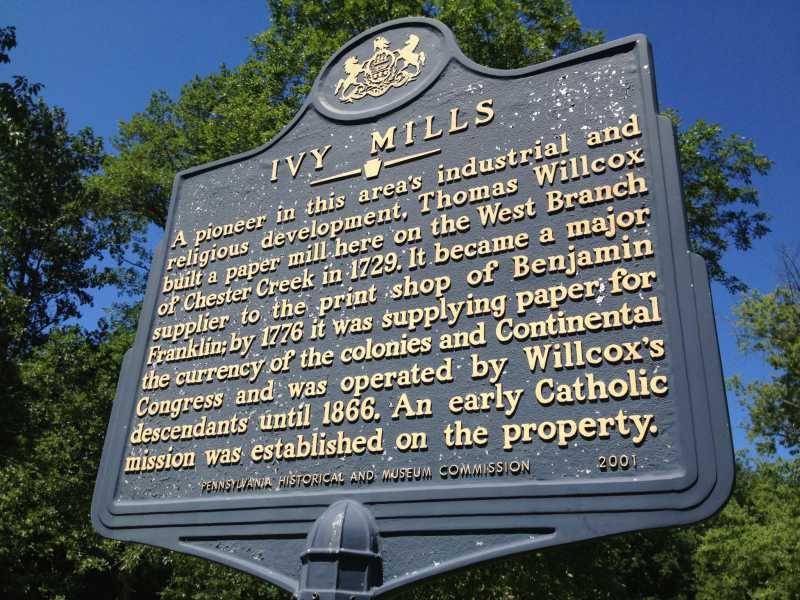
It's hard to imagine this beautiful landscape of quiet woods and rolling hills, as featured in the paintings of nearby artist Andrew Wyeth, was home to a major industry. Ivy Mills kept making the stock for bank notes, paper money, even fractional currency and notes for nations in Europe and South America, until 1866, when machines finally supplanted the handmade product the Willcox family had supplied for nearly 140 years.
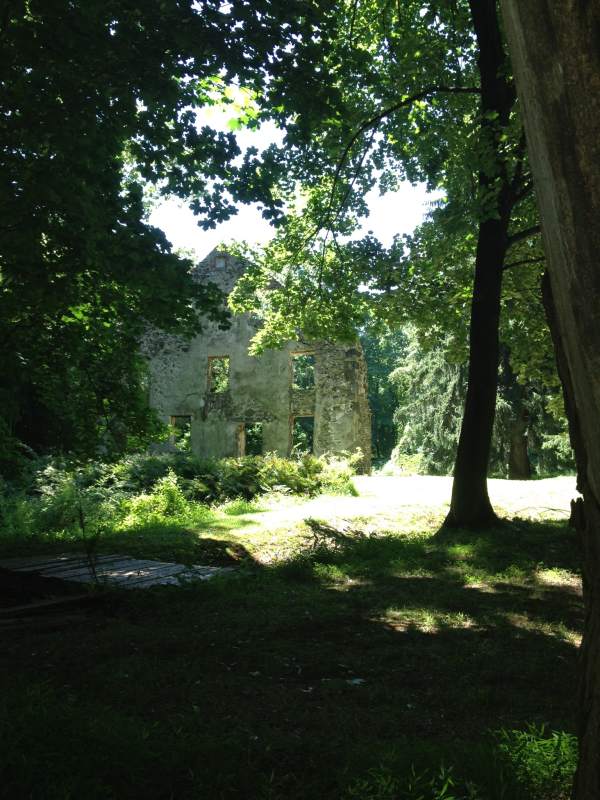
After the first century in business, the original mill (and the ivy on its walls (brought from Devonshire, England by Thomas Willcox) which gave it its name, were replaced in 1829 by the structure seen here in ruins today. The whole complex, including the lovely Willcox mansion that stands across Pole Cat Road from the mill, were almost lost to the bulldozers in the 90's, but were saved by the efforts of... Mark Willcox. He's the ninth generation of the Willcox clan, and is making a go of creating a Conservation Area, and an event location for weddings and the like.
Here's a history of the place from a Willcox descendent in 1911, for anyone who wants a truly exhaustive history of the place that made so much of what went under the ink of our most treasured bills and notes.
http://books.google.com/books?id=l9...=0CEgQ6AEwCw






 Posted 08/05/2013 9:59 pm





