| Author |
 Replies: 10 / Views: 1,396 Replies: 10 / Views: 1,396 |
|
|
Pillar of the Community
United Kingdom
3626 Posts |
Can anyone tell me where to start looking to find out who this is? 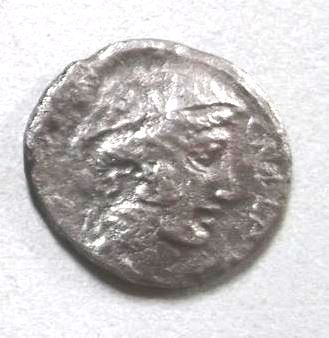 |
|
|
|
Pillar of the Community
United Kingdom
2121 Posts |
Seomthing like this perhaps:- Cn. Plancius, denarius Obv:â€" Head of Diana Planciana right, wearing petasus. Rev:â€" Cretan goat right; bow and quiver behind Minted in Rome B.C. 55. Reference(s) â€" RSC Plancia 1. RRC 432/1. Syd 933 My Example:-  |
|
Pillar of the Community
 United Kingdom
3626 Posts |
Thanks, it is part of a lot, can't work out which reverse belongs to this, they all look a bit mangled!
|
|
Pillar of the Community
United Kingdom
3626 Posts |
This is coin number 6 from the lot with the elephant. Marid identified it as Plancius as above. These are the pics, I think this coin is OK. 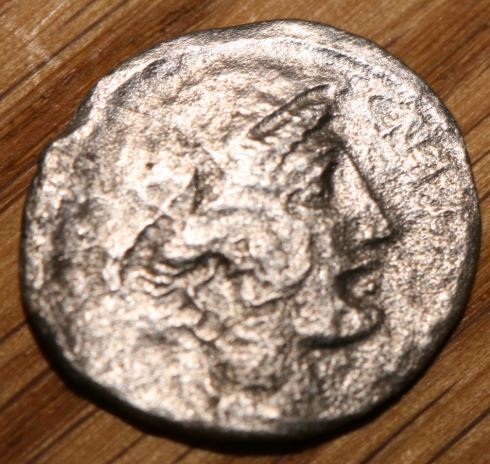 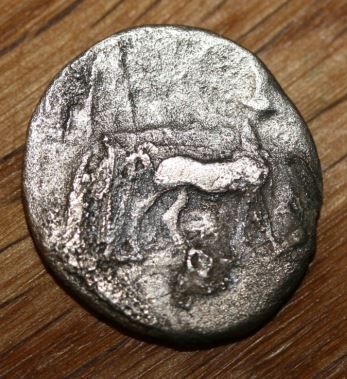 |
|
Pillar of the Community
United States
3498 Posts |
The 'object' at the feet of the horse looks suspicious to me .... I don't know.
It may be a sprue mark
|
|
Pillar of the Community
United Kingdom
3626 Posts |
I will get the blade out tomorrow and have a proper look. Off out on the razz tonight.....
|
|
Pillar of the Community
United Kingdom
3626 Posts |
I think you are right. The dark area is raised with the light circle on top. Another fake, but a cracking example for the collection. I have learned a lot from this batch, I am glad I didn't spend a lot!
|
|
Bedrock of the Community
Australia
21792 Posts |
Some rather inventive strategies have been used conceal the fact that an ancient coin is a fake:
Put the fake in a lapidary's stone tumbler for a short time, then into an acid bath for a short time.
The acid bath is an old favourite for the faker, because quite often, freshly dug up genuine ancient silver coins require this same treatment. pH control is essential with genuine coins, so that the gunk is attacked preferentially.
|
|
Pillar of the Community
United Kingdom
3626 Posts |
Interesting Sel. I don't know anything about detecting or what to do with fresh dug silver. I didn't realize that there was so much to it!
|
|
Valued Member
United States
51 Posts |
|
|
Bedrock of the Community
Australia
21792 Posts |
I would definitely leave the treating of freshly dug up ancient silver coins with acid to the museum professionals.
I know I haven't the experience to attempt such cleaning strategy.
Let THEM take the risk. They are supposed to know what they are doing, but occasionally they DO loose coins with this treatment.
It also helps to explain why ancient silver coins that come freshly onto the retail market can occasionally look so silvery white.
|
| |
Replies: 10 / Views: 1,396 |
|










 Posted 09/29/2013 5:10 pm


