Coin Community Family of Web Sites Join Thousands of Coin, Bullion, & Money Collectors
Shop for APMEX Bullion on eBay!Vancouvers #1 Coin and Paper Money Dealer Join Thousands of Coin, Bullion, & Money Collectors 300,000 items to help build your collection! Specializing in Modern Numismatics Coin, Banknote and Medal Collectors's Online Mall Royal Canadian Mint products, Canadian, Polish, American, and world coins and banknotes.


Username:
Password:
Save Password
Forgot your Password?


This page may contain links that result in small commissions to keep this free site up and running.

Welcome Guest! Registering and/or logging in will remove the anchor (bottom) ads. It's Free!

How Can You Tell If It's Uncirc, Cameo Or Proof?

To participate in the forum you must log in or register.
Author Previous TopicReplies: 6 / Views: 4,732Next Topic  
Valued Member
Superhal's Avatar
United States
315 Posts
 Posted 10/06/2013  12:34 am Show Profile   Bookmark this topic Add Superhal to your friends list Get a Link to this Message Number of Subscribers
I went through my copper pennies yesterday, and I found a bunch in really good shape. I'm thinking they might be uncirc or even proof examples. On many of the pre-82 pennies, just having an S mintmark isn't enough.

Also, I have a few coins that look a lot nicer than regular proofs. I'm suspecting they might be cameo, but when I found out what the definition was (first few strikes on a new die) I figured there must be some other way to tell.
Pillar of the Community
WheatBack's Avatar
United States
2850 Posts
 Posted 10/06/2013  12:45 am  Show Profile   Bookmark this reply Add WheatBack to your friends list Get a Link to this Reply
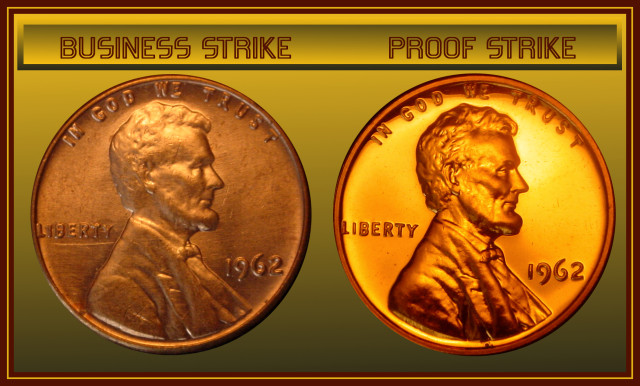
Comparison between a regular uncirculated cent and a proof cent:
How-Can-You-Tell-If-It's-Uncirc,-Cameo-Or-Proof?

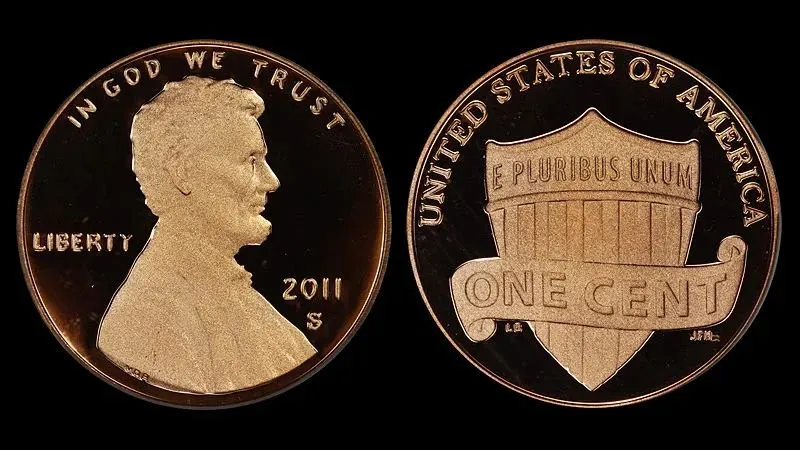
An example of a cameo proof: (Notice lincoln is blast white while the rest of the coin has a reflective surface)
How-Can-You-Tell-If-It's-Uncirc,-Cameo-Or-Proof?
Pillar of the Community
Broseph's Avatar
United States
979 Posts
 Posted 10/06/2013  12:52 am  Show Profile   Bookmark this reply Add Broseph to your friends list Get a Link to this Reply
Lets get some definitions to start, then we can get on the same page.

Uncirculated means basically the condition it is after the mint made it, not having scratches or marks. As in, it didn't get circulated.

Proof: special process done to make high quality coins for collectors. Higher quality planchets (blanks to make coins with) sometimes more pressure in striking I believe, and other things that someone more knowledgeable can point out. Basically quality over quantity processing

Cameo: Basically that mirror finish that proof coins are famous for. The more mirror like, and the deeper the contrast between the frosted parts of the coin, the deeper the cameo.

That being said, pictures are usually necessary for helping in situation like this. Post some good pics and people here will tell you exactly what you have! :)
Pillar of the Community
Broseph's Avatar
United States
979 Posts
 Posted 10/06/2013  12:54 am  Show Profile   Bookmark this reply Add Broseph to your friends list Get a Link to this Reply
On the top picture, you can really see the quality by looking at Lincoln's hair in the proof vs the business strike. Beautiful!
Valued Member
Superhal's Avatar
United States
315 Posts
 Posted 10/06/2013  01:31 am  Show Profile   Bookmark this reply Add Superhal to your friends list Get a Link to this Reply
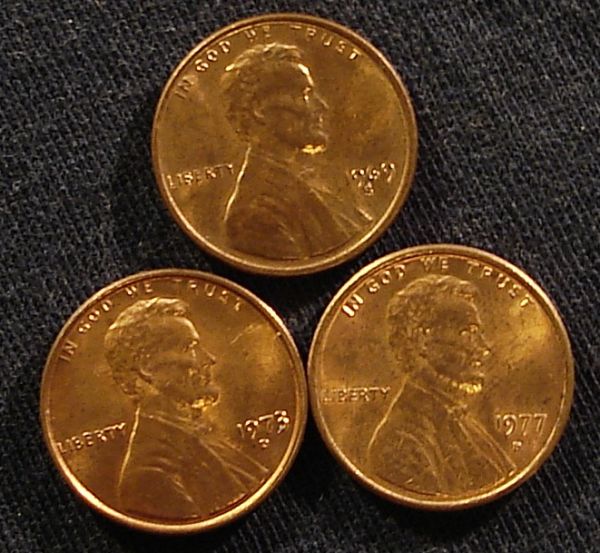
Here they are:

How-Can-You-Tell-If-It's-Uncirc,-Cameo-Or-Proof?

Btw, it looks like a different date font from 73 to 77, that's normal?

So cameos can be found in any proof set right?
Edited by Superhal
10/06/2013 02:15 am
Bedrock of the Community
sel_69l's Avatar
Australia
21786 Posts
 Posted 10/06/2013  08:15 am  Show Profile   Bookmark this reply Add sel_69l to your friends list Get a Link to this Reply
Not all proofs have polished fields and cameo details, although that is almost 100% the case, with modern coins of all countries, which are made for collectors, sometimes in their hundreds of thousands.
Laser etching is commonly used to produce the cameo effect, although acid etching and sandblasting have been used in the past. In any of these processes some of the original detail is lost, even if it is very slight.

18th century proofs were quite often never intended to be sold to collectors, but were retained by the Mint for quality control and record purposes. It was common for fewer than 10 of them to be produced.
These sorts of proofs are very rare, and are sometimes difficult to distinguish from pristine condition coins that were to be issued for circulation.
They were first strike coins from fresh dies and struck using selected blanks. No attempt was made to polish the dies or blanks. There was also no attempt to cameo finish the details, which would have been very slightly degraded in the process.
Pillar of the Community
Broseph's Avatar
United States
979 Posts
 Posted 10/06/2013  11:31 am  Show Profile   Bookmark this reply Add Broseph to your friends list Get a Link to this Reply
Unfortunately I don't see anything special about the coins, though maybe its the pictures. Keep in mind back then, the S mint coins from san francisco were not all proof coins. They business strikes as well:

http://www.coincommunity.com/us_sma...memorial.asp
  Previous TopicReplies: 6 / Views: 4,732Next Topic  

To participate in the forum you must log in or register.


Disclaimer: While a tremendous amount of effort goes into ensuring the accuracy of the information contained in this site, Coin Community assumes no liability for errors. Copyright 2005 - 2026 Coin Community Family- all rights reserved worldwide. Use of any images or content on this website without prior written permission of Coin Community or the original lender is strictly prohibited.
Contact Us  |  Advertise Here  |  Privacy Policy / Terms of Use

Coin Community Forum © 2005 - 2026 Coin Community Forums
It took 0.25 seconds to rattle this change. Forums