| Author |
 Replies: 12 / Views: 1,718 Replies: 12 / Views: 1,718 |
|
|
Pillar of the Community
Australia
1874 Posts |
I have this coin that I think is from Prussia. I think the date is 1775 and the mint mark is E Does anyone know what the denomination of this coin is? 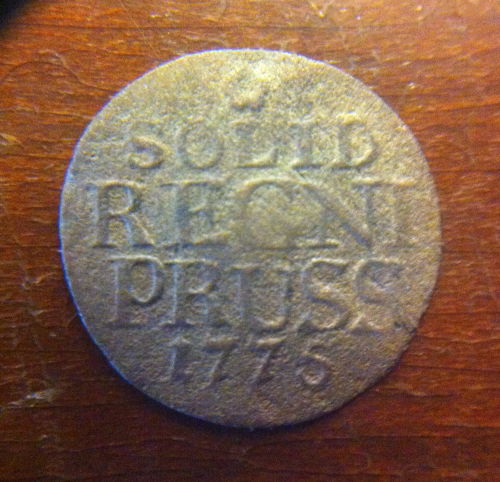 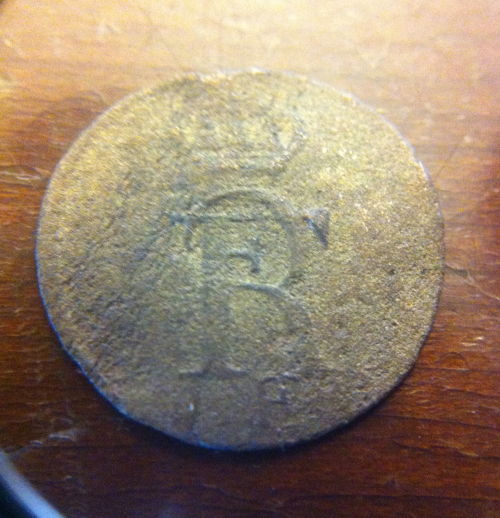 |
|
|
|
Moderator
 United States
14463 Posts |
it looks like a Prussia Solidus
Krause C# 6b
|
|
Pillar of the Community
Belgium
2895 Posts |
|
|
Pillar of the Community
 Australia
1874 Posts |
|
|
Pillar of the Community
United Kingdom
739 Posts |
|
|
Pillar of the Community
Australia
1874 Posts |
ok so they might all be the same coin, just people call them different names?
|
|
Moderator
Australia
16898 Posts |
Correct; "solidus" is the Latin name, "schilling" is the German name.
Don't say "infinitely" when you mean "very"; otherwise, you'll have no word left when you want to talk about something really infinite. - C. S. Lewis
|
|
Pillar of the Community
Australia
1874 Posts |
Sap, do you know what the KM number is because the different websites list different numbers.
KM# A295.1a
KM# 6b
|
|
Pillar of the Community
United Kingdom
739 Posts |
Flippy it is C#6b not KM. Here's Sap's post from 2012 Quote:
The numbers are catalogue reference numbers for specific types of coins; each type gets its own number. They are the closest thing you'll find to a universal numbering system as most world coin collectors know (or can easily find out) what they mean, though there are two competing sets of catalogue numbers you might find for world coins. Each country has its own set of catalogue numbers.
Numbers with "Y" in front of them are Yeoman numbers, used for coins dated after 1850 in the Yeoman "Modern World coins" and "Current Coins of the World" catalogues. Sometimes still used in conjunction with this system are "C" numbers, devised for the old Craig "Coins of the World" catalogue (covering the period 1750-1850). These numbers have been in use since the 1960s.
"KM" numbers are used in the Krause Standard Catalogues, and range back to the 1600s. However, The Krause system is newer (begun in the 1970s) and for some countries, the Krause editors have not yet invented their own system and Yeoman and Craig numbers are still used in the Krause books. China is an excellent example of this. |
|
Pillar of the Community
Australia
1874 Posts |
Thankyou very much Sap, rooneydog, Petrus and Fuzzy317 for all of your help.
|
|
Pillar of the Community
Belgium
2895 Posts |
one more question : is your coin silver or copper?
|
|
Pillar of the Community
Australia
1874 Posts |
I am not sure but it looks more like silver than copper
|
|
Moderator
Australia
16898 Posts |
As I stated in the post rooneydog quoted, Krause catalogues use the Y and C numbers where they have not yet invented their own numbering system. Older Krause catalogues list this coin as C# 6b. Personally, I prefer to call it "KM/C 6b" to make it clear I'm using the Krause interpretation of the Craig numbers and that Krause may re-number the series any day now. This re-numbering has indeed now happened for the Prussian series; newer editions of the catalogue (and the NGC website flippy linked to above) call this coin KM A295.1a.
Finally, I note that NGC has the "fineness" number out by two decimal places. It should be "0.0521", not "5.208". These coins are made of billon, almost no silver in them at all.
Don't say "infinitely" when you mean "very"; otherwise, you'll have no word left when you want to talk about something really infinite. - C. S. Lewis
|
| |
Replies: 12 / Views: 1,718 |
|







 Posted 11/22/2013 5:51 pm





