










 Posted 12/22/2013 06:00 am


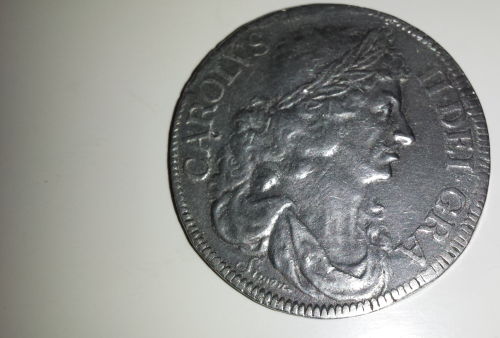
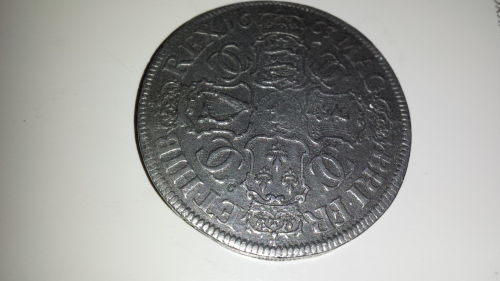
The 1663 "petition crowns" of Thomas Simon are an extremely famous rarity in the English coinage series. Genuine examples are worth tens of thousands of pounds and only a couple dozen are known to exist. They all have recorded provenances and the odds of an unrecorded one just popping up someplace are astronomically low. Dealers are going to assume any such coins are fake unless they can prove otherwise.
In this case, the proof isn't hard. Two things stand out to me: the details on your coin are very "mushy", typical of what you might expect to see from a cast replica rather than a struck coin.
Second, the edge. Your edge appears to be plain; at least, I can't see any marking on it. All the genuine coins have an inscription, either the "petition" in two lines of teeny tiny writing (THOMAS SIMON MOST HVMBLY PRAYS...)" or the even rarer Latin inscription (REDDITE QUAE CAESARIS... meaning "Render unto Caesar").
In this case, the proof isn't hard. Two things stand out to me: the details on your coin are very "mushy", typical of what you might expect to see from a cast replica rather than a struck coin.
Second, the edge. Your edge appears to be plain; at least, I can't see any marking on it. All the genuine coins have an inscription, either the "petition" in two lines of teeny tiny writing (THOMAS SIMON MOST HVMBLY PRAYS...)" or the even rarer Latin inscription (REDDITE QUAE CAESARIS... meaning "Render unto Caesar").
Don't say "infinitely" when you mean "very"; otherwise, you'll have no word left when you want to talk about something really infinite. - C. S. Lewis

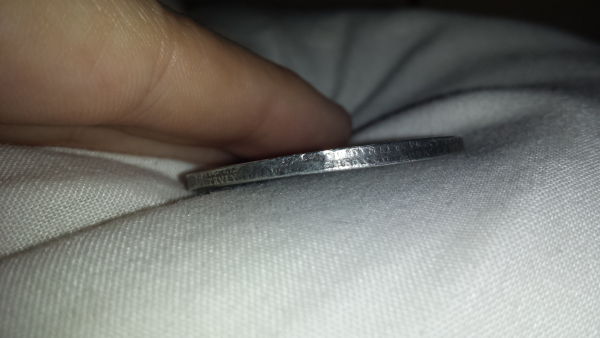 the coin is not as bright as the picture shows mind looks more dull in colour also been wiped down to show everything upmore also has a C stamped on back is this c means counterfit put there by someone to prove it is perhaps so someone else can.t be conned.


