


Coin Community Family of Web Sites Join Thousands of Coin, Bullion, & Money Collectors
Royal Canadian Mint products, Canadian, Polish, American, and world coins and banknotes. Specializing in Modern Numismatics Royal Estate Auctions - $1 Coin AuctionsVancouvers #1 Coin and Paper Money Dealer 300,000 items to help build your collection! Join Thousands of Coin, Bullion, & Money Collectors Coin, Banknote and Medal Collectors's Online Mall


Username:
Password:
Save Password
Forgot your Password?


This page may contain links that result in small commissions to keep this free site up and running.

Welcome Guest! Registering and/or logging in will remove the anchor (bottom) ads. It's Free!

Latest Acquisition: 1562 Elizabeth I Sixpence (Milled)

To participate in the forum you must log in or register.
Author Previous TopicReplies: 5 / Views: 4,516Next Topic  
Valued Member
EarlyMilledCoins's Avatar
United States
147 Posts
 Posted 01/31/2014  4:30 pm Show Profile   Bookmark this topic Add EarlyMilledCoins to your friends list Get a Link to this Message Number of Subscribers
Just got this today!

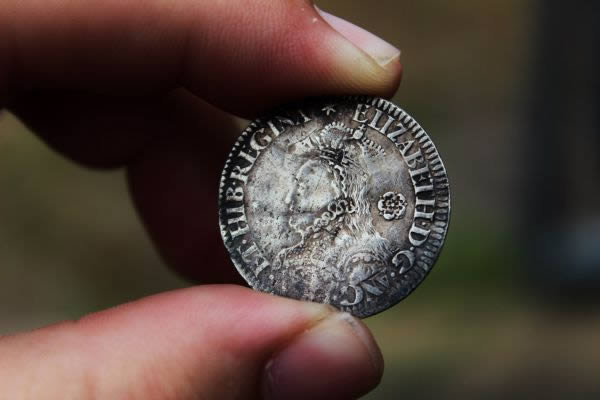
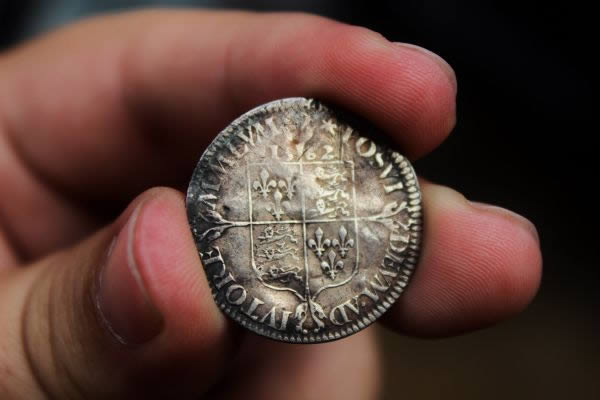
Elizabeth I 1562 Sixpence (milled issue)
Mint mark: 'Star' (Tower mint, 1560 - 1566)
2.93g, 26mm. Crowned bust of Elizabeth (facing left) with decorated dress and small rose. Obverse: ELIZABETH DG ANG FRA ET HIB REGINA. Reverse: Quartered Royal Arms over long cross with date (1562) POSVI DEVM ADIVTOREM MEVM.

The earliest machine known for producing coins is the screw press, invented by Leonardo da Vinci in the 15th century, powered by a water mill. With the arrival of machine-driven and struck coins also came new technology and techniques for stamping the coin's edge with a reeded or milled edge or impressed with designs. The presence of reeding shows that the coin's edge has not been shaved or clipped. The new edging processes for coins impeded them from being clipped into smaller pieces as did happen when coins were hammer-struck. Hence, milled edges were originally designed and intended to show that none of the metal had been shaved off the coin. Earlier, coins were shaved or clipped to almost half of their minted weight by unscrupulous persons and it is from this phenomenon that we derive the phrase "clip artist" to mean a thief. This form of debasement in Tudor England led to the formulation of Gresham's Law, so named after Sir Thomas Gresham. The earliest milled coins produced in England date from the early 1560s, but milled coinage did not entirely replace hammered coinage until 1662.

Latest-Acquisition:-1562-Elizabeth-I-Sixpence-Milled

Latest-Acquisition:-1562-Elizabeth-I-Sixpence-Milled
Pillar of the Community
thedollarman's Avatar
Canada
4911 Posts
 Posted 01/31/2014  4:35 pm  Show Profile   Check thedollarman's eBay Listings Bookmark this reply Add thedollarman to your friends list Get a Link to this Reply
Nice coin and thanks for the history lesson.
Feel free to call me Will.
Valued Member
EarlyMilledCoins's Avatar
United States
147 Posts
 Posted 01/31/2014  5:44 pm  Show Profile   Bookmark this reply Add EarlyMilledCoins to your friends list Get a Link to this Reply
Thanks. I was also wondering if I got a good deal? I paid $195
Edited by EarlyMilledCoins
01/31/2014 5:53 pm
Valued Member
Badger Mint's Avatar
United States
324 Posts
 Posted 01/31/2014  5:59 pm  Show Profile   Bookmark this reply Add Badger Mint to your friends list Get a Link to this Reply
Does this piece have a reeded edge?
Pillar of the Community
philadelphian's Avatar
United States
3253 Posts
 Posted 01/31/2014  9:22 pm  Show Profile   Bookmark this reply Add philadelphian to your friends list Get a Link to this Reply
Some of the earliest coin "mills" in America, notably the Vermont Mint in Rupert, and Machins Mill in Newburgh, NY, were located on streams, and I had always assumed they must have used a water-powered screw.
Pillar of the Community
publius's Avatar
United States
807 Posts
 Posted 01/31/2014  10:09 pm  Show Profile   Bookmark this reply Add publius to your friends list Get a Link to this Reply
At the time of William III's great recoinage, as Ruding describes, clipping was to the point that the coins paid into the Exchequer weighed about 40% what they should, & there were in circulation "half crowns wanting seven and sixpence", that is, requiring three others like them to bring them up to the legal weight. Mind, the coins paid in taxes were probably the worst of the lot, but still it's frightening.

Roller-presses operated by water were used at Segovia, & hammer presses run from a water wheel were used at Avesta in Sweden. But, although the rolling mills used for making strip were often worked by water (as at Paris, the Monnaie du Molin), working screw presses from a common source of power does not appear to have caught on until Boulton & Watt harnessed them to steam.

Meanwhile, I'm on the war-path again to purchase my own screw press.
  Previous TopicReplies: 5 / Views: 4,516Next Topic  

To participate in the forum you must log in or register.


Disclaimer: While a tremendous amount of effort goes into ensuring the accuracy of the information contained in this site, Coin Community assumes no liability for errors. Copyright 2005 - 2026 Coin Community Family- all rights reserved worldwide. Use of any images or content on this website without prior written permission of Coin Community or the original lender is strictly prohibited.
Contact Us  |  Advertise Here  |  Privacy Policy / Terms of Use

Coin Community Forum © 2005 - 2026 Coin Community Forums
It took 0.27 seconds to rattle this change. Forums