| Author |
 Replies: 18 / Views: 2,921 Replies: 18 / Views: 2,921 |
|
New Member
Estonia
2 Posts |
1819 large cent with odd diamond shaped indentations on backside. Something valuable or just damage? 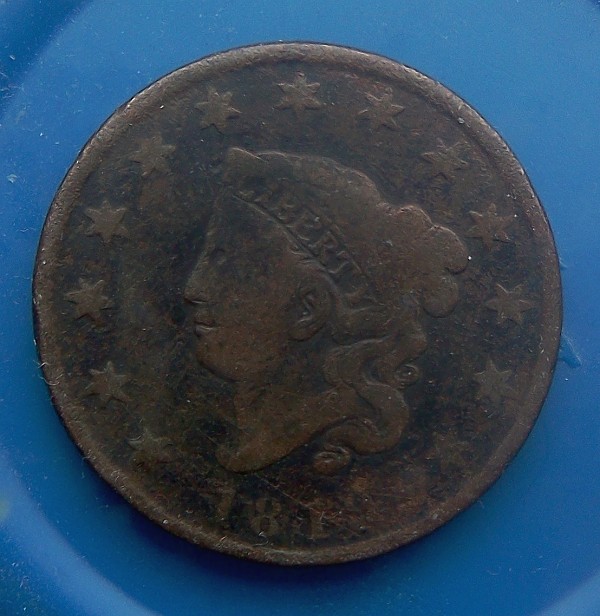 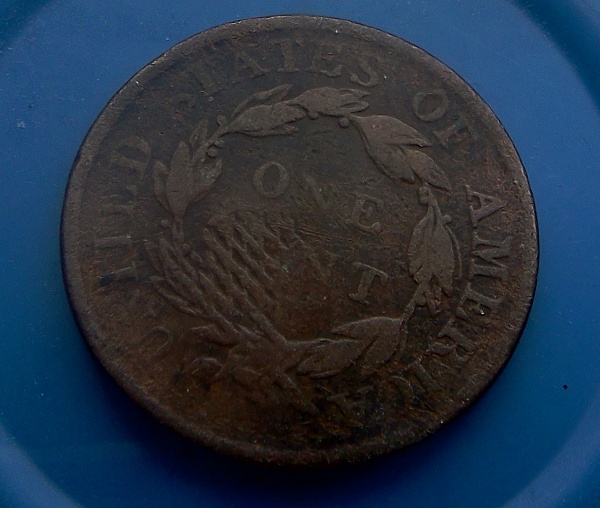 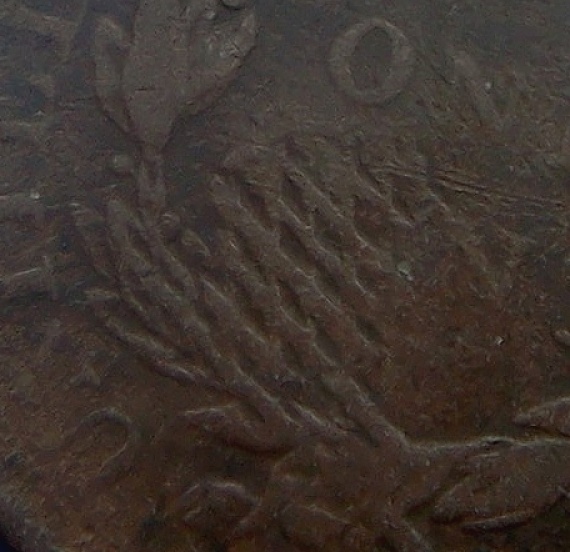 |
|
|
|
Bedrock of the Community
United States
36953 Posts |
I've never seen anything like that. I'm stumped on this one.
|
|
Moderator
 United States
16694 Posts |
It looks die related to me. The pattern remains consistent.
swcoin.ecrater.com
|
|
Pillar of the Community
United States
3253 Posts |
Very cool. The raised meshwork pattern doesn't look like something caught between the die and planchet, but rather, something that had already caused incuse damage to the reverse die, and perhaps ended its life shortly after a very few of these coins would have been minted. I think this Newcomb-9? Obverse and reverse dies were unique to that variety.
|
|
Pillar of the Community
United States
1554 Posts |
Post mint damage, cut a LC with a sharp object and it raises the metal on both sides of the cut, as the coin wears in circulation the cut disappears and whats left is the 2 raised sides melding into one raised line/cut.
Edited by 1893S
03/23/2014 5:27 pm
|
|
Pillar of the Community
United States
3253 Posts |
But a mesh pressed into a large cent would leave raised diamonds, not incuse.
|
|
Moderator
United States
16694 Posts |
The "diamonds" are to consistent to be PMD. swcoin.ecrater.com
|
|
Pillar of the Community
United States
1554 Posts |
There are many hand tools that could displace the copper in this cent in this fashion, I'm thinking a file like tool, leaving the copper metal raised and not incuse. The damage wouldn't necessarily be displaced down into the coin but most likely to the sides
|
|
Pillar of the Community
United States
3253 Posts |
A file. I guess that could have done it.
And the incuse portions of the pattern seem to create voids in the coin's devices, such as the leaves and letter C. Damage to the surface of the die would likely have spared the devices.
Edited by philadelphian
03/23/2014 9:34 pm
|
|
Moderator
United States
23522 Posts |
Welcome to Coin Community, Lustre. I am utterly fascinated by this one, and as yet unwilling to commit to any certainty regarding how it came to be. An experiment: Take a compass or (preferably) a divider, and carefully adjust it to perfect vertical when observing from the side. A divider by nature should do this. Set one leg on one of the "hollows" in the waffle, and one leg on the field of the coin. I think the field southwest of the O on ONE - below and right of the large leaf, the darker area - would be the most consistent location for the second leg. With the coin on a flat surface, if your divider can rest in those two places and still appear perfectly vertical - meaning the field and the place inside the waffle are at the same level - I think a strong argument can be made that the waffle was originally on the die. If the divider is not level, further thinking is necessary. Either way, Occam's Razor says that we have to assume PMD is the cause. I'm not yet ready to embrace that assumption, though. |
|
Moderator
United States
16694 Posts |
It could have been a vice or similar device pressed (hard) into the coin but one can only assume there would be a similar pattern on the obverse as well.
swcoin.ecrater.com
|
|
New Member
 Estonia
2 Posts |
The experiment with a caliber was inconclusive - the caliber too big, the hollows too shallow.
But if you look at the area at northwest of "N" on the coin, the indentations
appear to be pressed deeper than the surrounding plain. Also IMHO the mesh pattern is
definitely the result of pressing (or hit by a powerful blow) and not cutting.
|
|
Pillar of the Community
United States
3453 Posts |
Could it have been a strike through a piece of cloth? The diamonds and lines are not uniform and kind of remind me of some sort of twine. Edit:  to CCF! Edited by CoinsKelly
03/24/2014 06:54 am
|
|
Pillar of the Community
United States
6370 Posts |
It's not a vice, or we'd see damage in the exact same place on the obverse. The fact that it is raised stumps me. Maybe a peice of foreign material (mesh, something hard) came in between the die and the coin, pressed into the die instead of the coin, and became dislodged soon after a few more coins were struck, thus giving this raised pattern seen here. That is just a hypothesis. I don't see how Newcomb would have missed this one. Another posibility is that is also a piece of copper mesh melded to the coin. In that case, it may be PMD. |
|
Pillar of the Community
United States
6370 Posts |
"Could it have been a strike through a piece of cloth? The diamonds and lines are not uniform and kind of remind me of some sort of twine."
If it was mesh contemporary to the coin, how uniform do you expect it to be in 1819?
|
|
Pillar of the Community
United States
3453 Posts |
I do not the mesh/cloth would have been uniform back then so that is why I am leaning towards something that happened during the minting process. The picture does not look like PMD to me.  |
| |
Replies: 18 / Views: 2,921 |






 Posted 03/23/2014 2:27 pm





