| Author |
 Replies: 38 / Views: 8,347 Replies: 38 / Views: 8,347 |
|
|
|
Pillar of the Community
 United States
4433 Posts |
Counterfeits and altered pieces, like originals, make for excellent study and learning tools. Your contribution, smallcentguy, sure makes for an interesting twist to this thread.
|
|
Pillar of the Community
United States
840 Posts |
The last three photos are of a genuine 1825.
well done. Terrific find. Absent a genuine for comparison one has
no reference to determine the authenticity of the counterfeit. When
compared to the genuine, there is no mistaking the two.
doug
|
|
Pillar of the Community
United States
4433 Posts |
The Haxby book has pictured a choice example, and that was my comparison piece.
|
|
Pillar of the Community
Canada
1984 Posts |
Here is another fun piece while we are on the topic. This piece has had the "0" removed from the date, no doubt in preparation for the insertion of a "5". Traces of the old "0" are still there. 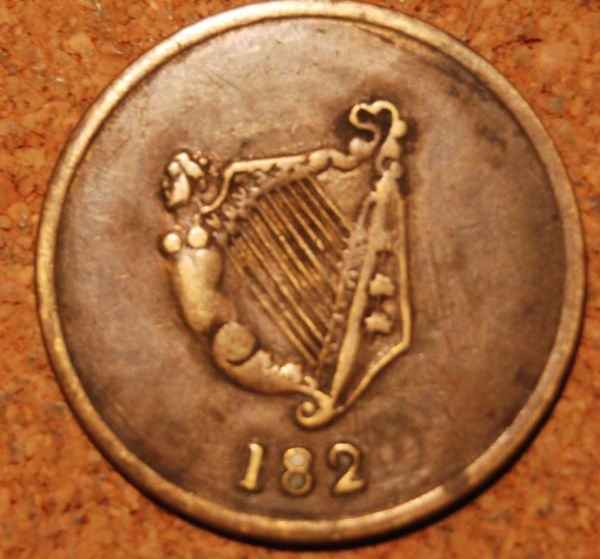 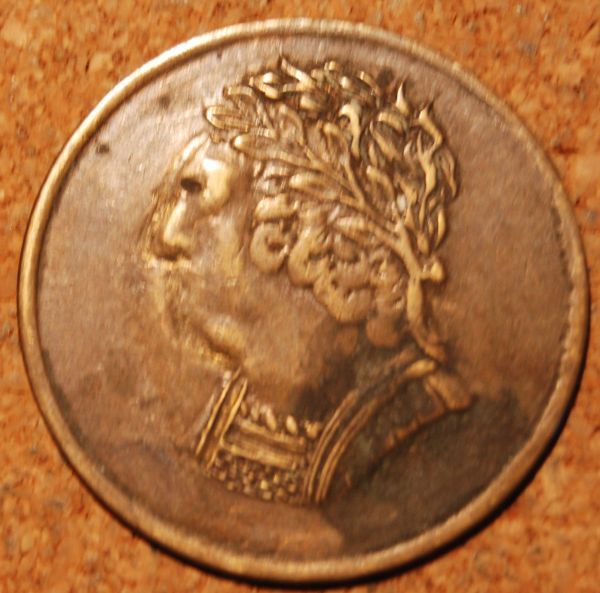 |
|
Pillar of the Community
United States
840 Posts |
One wonders how many unsuspecting victims fell prey to such forgeries.
I believe there are probably more forgeries than genuine.
doug
|
|
Pillar of the Community
Canada
3234 Posts |
So by us viewing the "fun forgeries" here, are we looking at a 1920 token that was struck without denticles (for the other years),..?
... and is in the process of being turned into the known rarity of 1825?
Did the other years also have the 10 strings "as the standard strike" from those other years?
BTW ..thanks for the interesting education here...
|
|
Pillar of the Community
United States
840 Posts |
Aside of the 1825, the only date is 1820. The 1920 has either eight, nine, or ten harp strings.
To the best of my knowledge, only the 1825 had a beaded (denticled) rim.
doug
|
|
Pillar of the Community
United States
4433 Posts |
The 1825's have nine harp strings. I see that there was NO pic of the 1825 in my edition of the Cross book on Canadian colonial tokens. That surprised me, yet it helped me comprehend just how rare this token is. Haxby illustrates a VF or better 1825, and all diagnostics are sharp.
I'm still awaiting word on that 1989 auction ...
|
|
Pillar of the Community
United States
840 Posts |
The 8th edition of Charlton's Canadian Colonial Tokens has a photo of
the 1825 on page 157 (LC-60A1). Howbeit a small photo, the beaded rim,
the harp strings, the date nearer the rim, and the thinner bust can be
readily identified.
The same stock photo was also used on
Page 139 of the 2nd Edition,
Page 152 of the 3rd Edition,
Page 152 of the 4th Edition,
Page 152 of the 5th Edition,
etal
doug
|
|
Pillar of the Community
United States
4433 Posts |
I just bought a copy of the Haxby book, so I'd have a more inclusive and recent reference on Canadian tokens. The token books stateside, Rulau's, made it a point to cite within whose collections, rare tokens resided. Not so in Canada, eh?
|
|
Pillar of the Community
United States
4433 Posts |
I received some info from an outside source on my questions. An 1825 B&H token realized $4,800, in the 1989 Hoare auction. Here's a lot description: 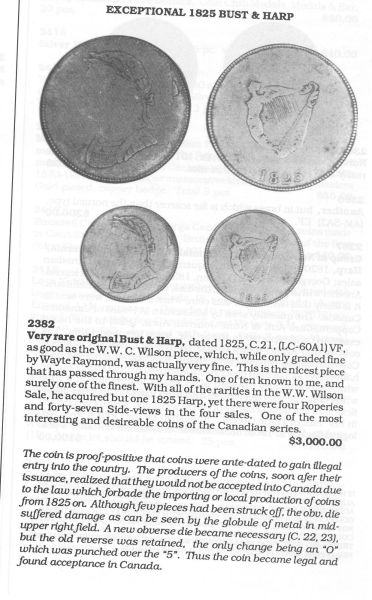 It's interesting to me that there is but one appearance of the 1825 in a generation, now. The same appears true for the 1820/5. Edited by ExoGuy
04/04/2014 4:41 pm
|
|
Pillar of the Community
Canada
1152 Posts |
Here's an altered date 1825 on ebay that I feel could be beneficial if anybody is still interested:   |
|
Pillar of the Community
Canada
937 Posts |
Sitting at $119.55 USD right now...
|
|
Pillar of the Community
United States
4433 Posts |
Genuine ones have sold for around $5,000 in recent years. Down the line, I expect that more than one collector will regret buying this piece. IMHO, it should be relegated to the "black cabinet."
|
|
Pillar of the Community
Canada
937 Posts |
|
| |
Replies: 38 / Views: 8,347 |






 First Page


 Posted 03/29/2014 3:43 pm


