| Author |
 Replies: 8 / Views: 4,191 Replies: 8 / Views: 4,191 |
|
|
Valued Member
301 Posts |
Please what do you think about this coin it's normal or there is one error.? 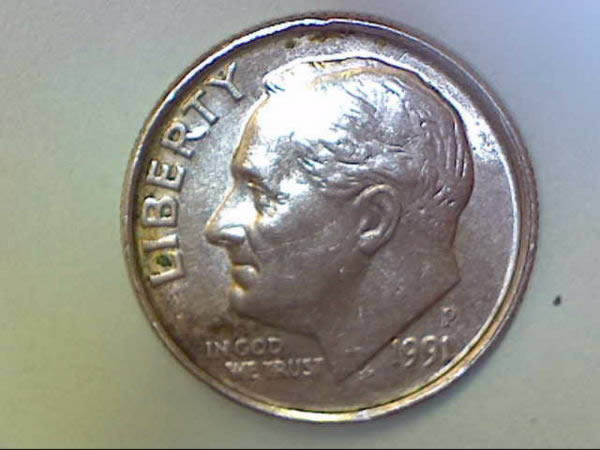 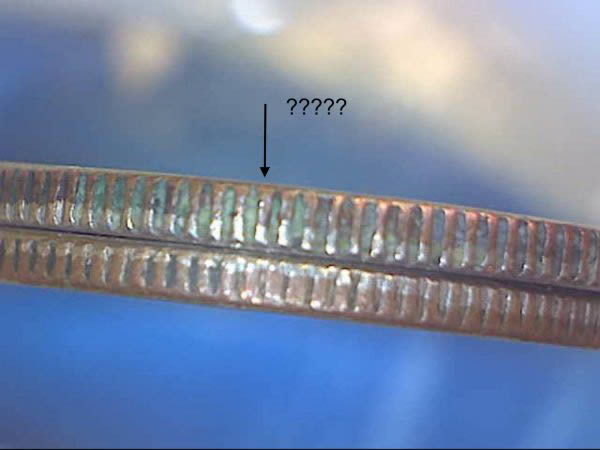 |
|
|
|
Pillar of the Community
United States
1804 Posts |
Newbie here...
Is the second pic (2) coins?
One is thicker than the other?
Interesting ....
|
|
Bedrock of the Community
United States
62064 Posts |
Looks like the 1991 has finned rims. It looks like a legit error from what I can see. If it were PSD the reeding would be gone. The 1991 edge is the top coin correct? I've seen this on some 1997-1999 cents years ago. In your hand they felt thicker, but the weight was normal. The rim was setup stronger. They were as thick rimmed as the proof coins. So this may be the cause of the finning on your coin? 42 Edited by coop
04/01/2014 12:47 am
|
|
Valued Member
 301 Posts |
Thank's Coop for your input, I d'ont have balance to weighed
weight but for me the weight is normal.
|
|
New Member
United States
4 Posts |
I have the exact same coin! Same thickness, same year, same mint mark. I have a scale so I plan on weighing it tonight...
|
|
New Member
United States
4 Posts |
So an uncirculated US Dime weighs 2.268 grams - fact.
Last night I weighed multiple dimes to get an average weight of a circulated dime (since wear and age will lower the overall weight by a little) out of 10 Dimes total (ranging from 1965-current) Any dime pre 2000 weighed between 2.19-2.22, Dimes after the year 2000 weighed 2.24-2.27 when I weighed the 1991 thick edge dime it weighed 2.29 grams. I'm very new at coin collecting so I don't know if this is an error or just different. Any ideas would be appreciated!
|
|
Bedrock of the Community
United States
94367 Posts |
|
|
Rest in Peace
10197 Posts |
Amccoy, first  to the forum, next time start a new thread with pix of your coin referencing to this old thread. If indeed it is similar to the coin referenced here it is as Coop explained, a larger upset of rim. The coin making process in short: Blanks are pressed out of flat metal plate stock. They then go through a process called "Upsetting" , cleans coin, makes the rounded edges and slight increase in edge(rim) which is then called a planchet. If the upset is higher, when the coin is pressed between the dies, the metal of the higher upset edge is moved further along the retaining collar(up and down here) making a thicker rim. This is a pre-strike planchet flaw, not a striking error per se, but a mint error nonetheless. This can also happen on an over-pressure strike too. Hope this helps. Here's a 25c clad planchet: 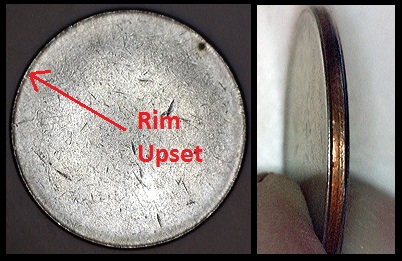 Edited by Crazyb0
11/27/2017 4:40 pm
|
|
Bedrock of the Community
United States
62064 Posts |
The upset mill forces the edge to form a rim by slowly making the channel narrow and turning the blank.  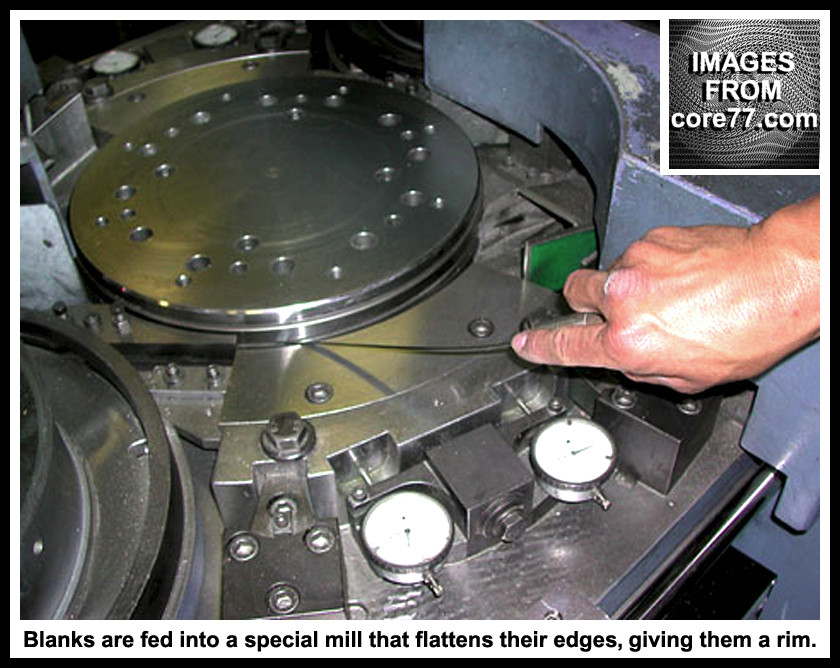 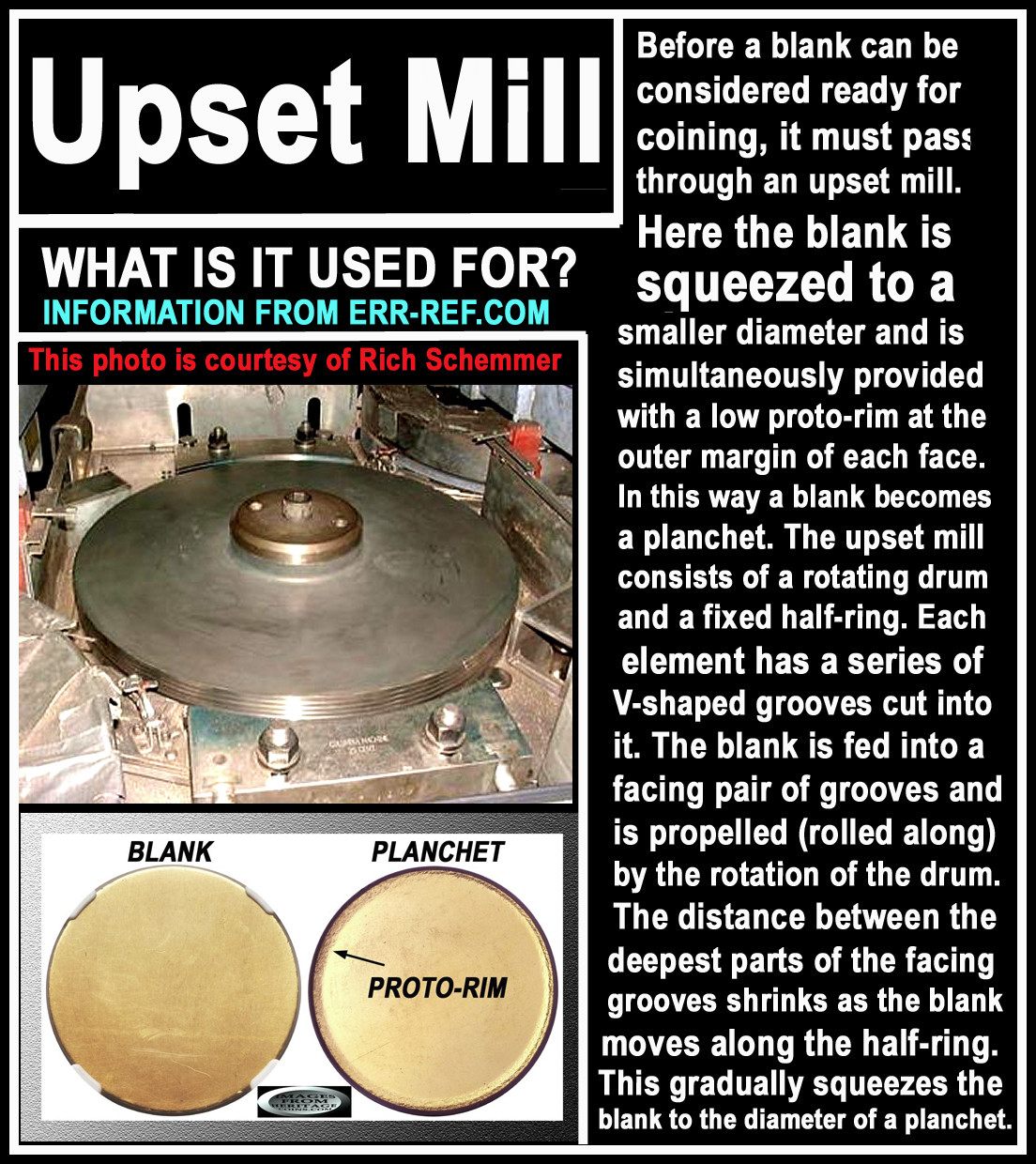 The rim being higher will make the coin feel thick, but the faces are normal in thickness. Just the edges feel thicker and the weight is normal. |
| |
Replies: 8 / Views: 4,191 |
|










 Posted 04/01/2014 12:46 am


