LOUPE SHOOTOUTThere have been a number of discussions on this forum and others asking for recommendations on the best loupe to use for coins. Almost universally the Zeiss 3/6/9x and the Eschenbach 5x come up as most recommended. For the last couple years, I've been using enlarging lenses as loupes, so I usually chime in with the recommendation of a Nikon 50mm or 75mm, depending on the magnification needed. This recommendation usually falls on deaf ears, as most folks have no idea what to make of it. So, I decided to make a comparison among a few low to mid power (3-6x, with one 9x) loupes plus some enlarging lenses that can be used as loupes to show why I recommend them.
LIST OF THE CONTENDERSZeiss Aplanatic-Achromatic DoubletThis is an expensive (~$125) loupe that seems universally loved by those who own them
Lomo 6x DoubletThis is an inexpensive (I paid $10) loupe with decent performance
Eschenbach 5x AchromatAnother expensive (~$75) loupe with a strong following
Nikon 50mm f/4 EL-NikkorAn inexpensive (~$25 used) enlarging lens. The aperture of f/4 gives a fairly narrow field of view when used as a loupe
Nikon 50mm f/2.8 EL-NikkorAnother inexpensive (~$35 used) enlarging lens. The large f/2.8 aperture gives a wide field of view similar to the loupes in this shootout
Nikon 75mm f/4A low-price (~$50 used) enlarging lens. The f/4 aperture gives a workable field of view due to the longer focal length
PHOTO OF THE CONTENDERS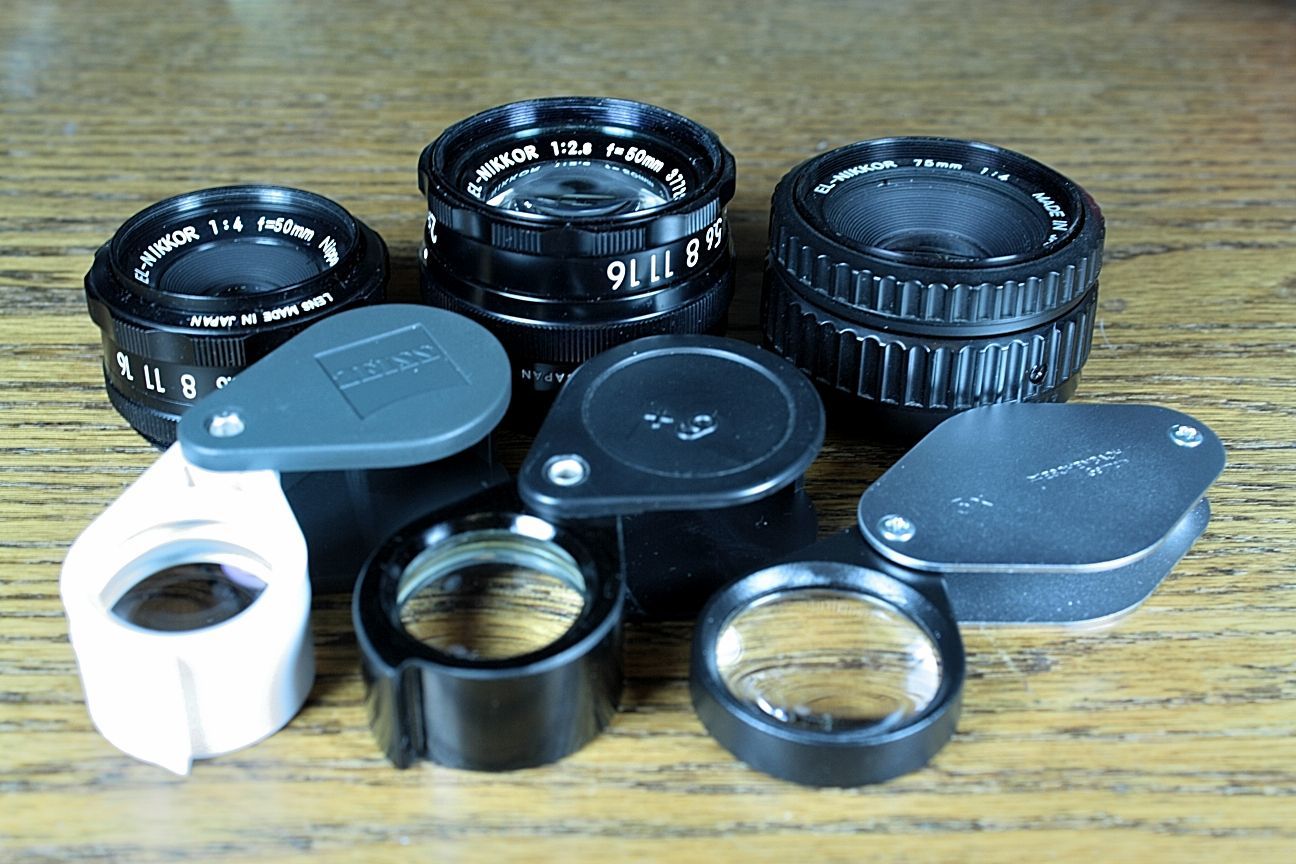 SOME NOTES ON MAGNIFICATION
The shorter the focal length of a lens, the higher its ability to magnify an image but also the shorter its working distance. The Magnification Power of a lens of focal length FL is:
M = 250mm/FL +1
This formula assumes the lens is held close to the eye, which is pretty typical of how loupes are used to view coins.
So a 50mm enlarging lens, used as a loupe, has magnification of 250/50 + 1 = 6x. It will magnify like a 6x loupe. Similarly, a 75mm enlarging lens will magnify by 4.3x.
Some magnifiers are specified in Diopters rather than Focal Length or "Power". The Diopter rating of a lens is:
D = 1000mm/FL
So a 50mm enlarging lens is rated at 1000/50 = 20 Diopters. Given the Diopter rating, the Magnification is:
M = D/4 + 1
DETAILS OF THE SHOOTOUTFor the shootout, I used a 1956-D RPM#4 Cent as the test vehicle, centering the images around the Date and Mintmark area. The images were taken with a Canon XS camera using a Canon 18-55mm lens in manual mode. The test lenses were held at their normal working distance from the coin, and the camera height above the coin adjusted such that the view would be similar to what the eye would see in this configuration. Working Distances were:
Nikon 50mm f/4: 37mm
Nikon 50mm f/2.8: 30mm
Nikon 75mm f/4: 50mm
Zeiss 3/6/9x: 70/35/20mm
Eschenbach 5x: 45mm
Lomo 6x: 35mm
IMAGES TAKEN WITH THE LOUPESImages are of the overall view seen by the lens, plus crops of the mintmark area.
ESCHENBACH 5X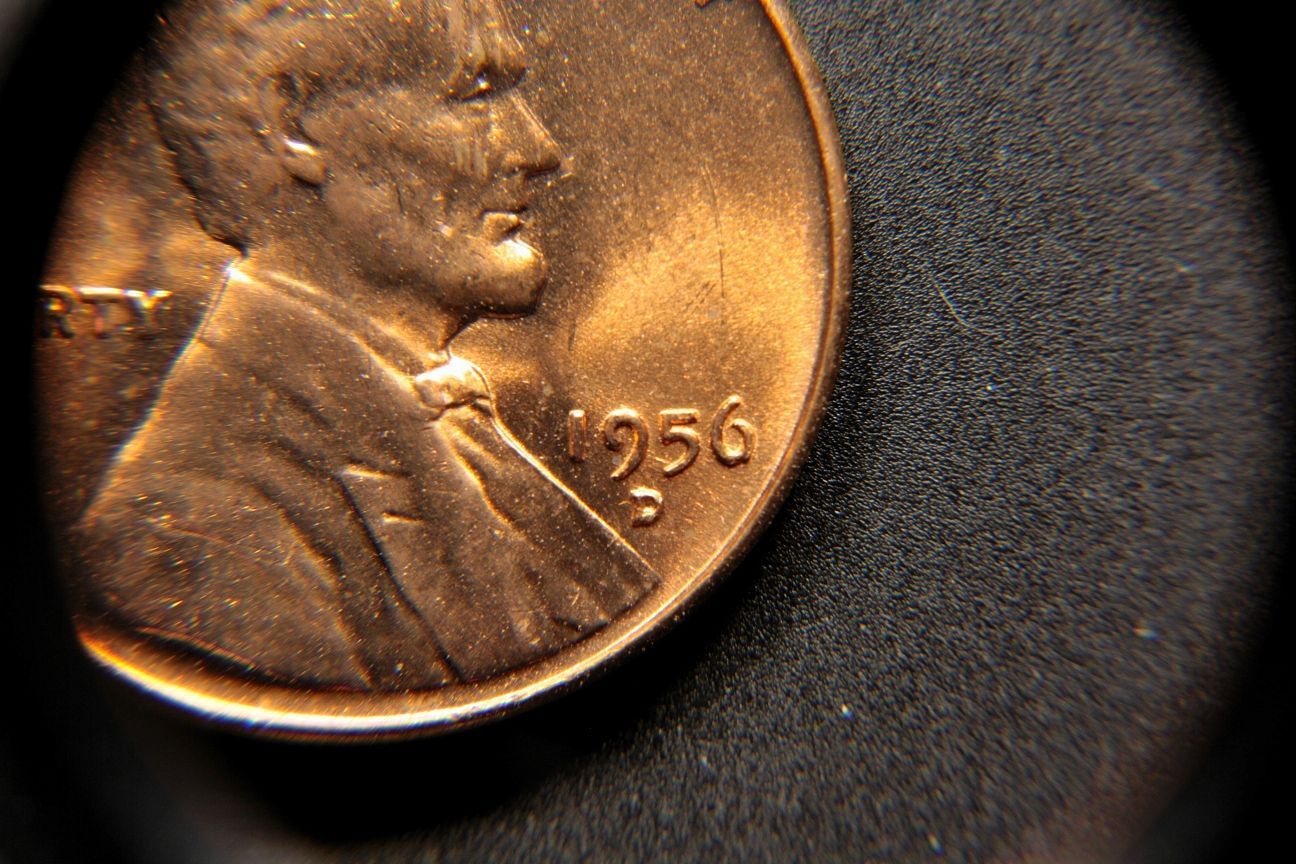
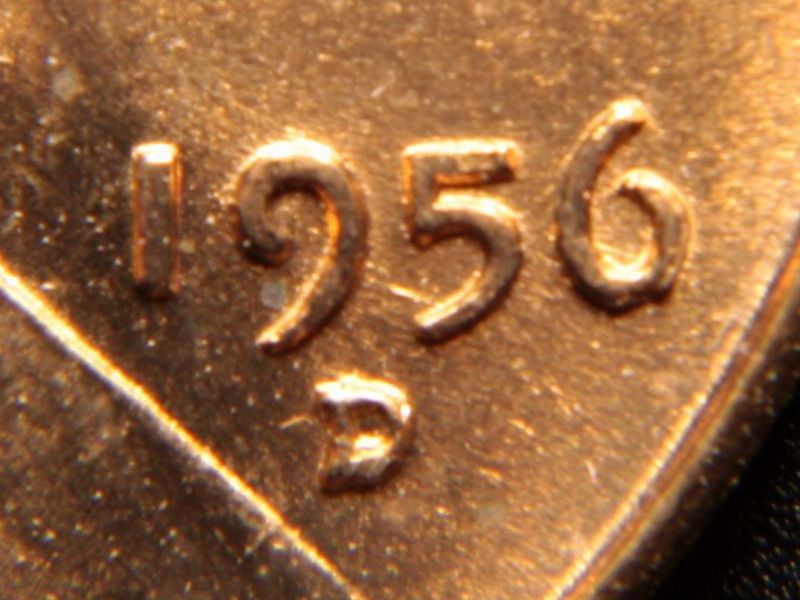 LOMO 6X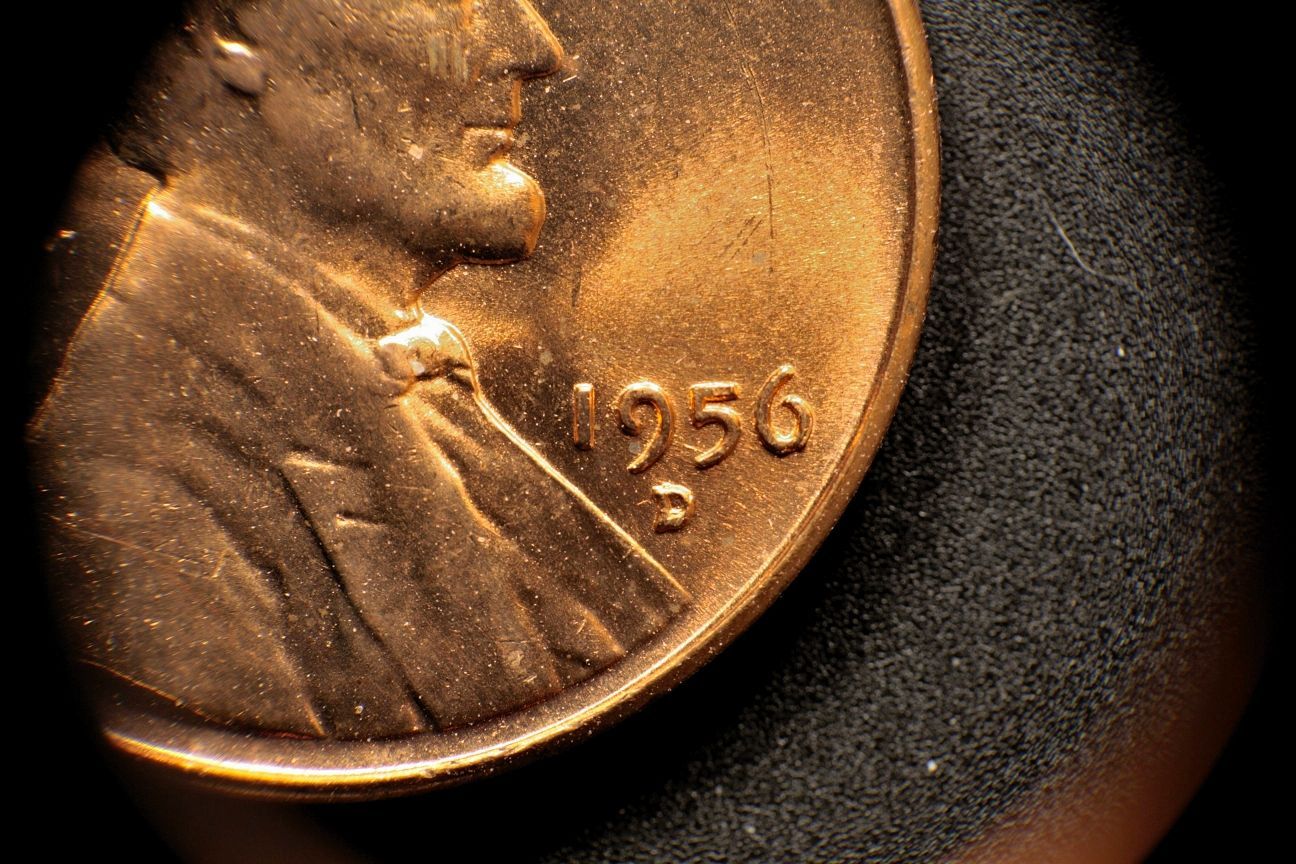
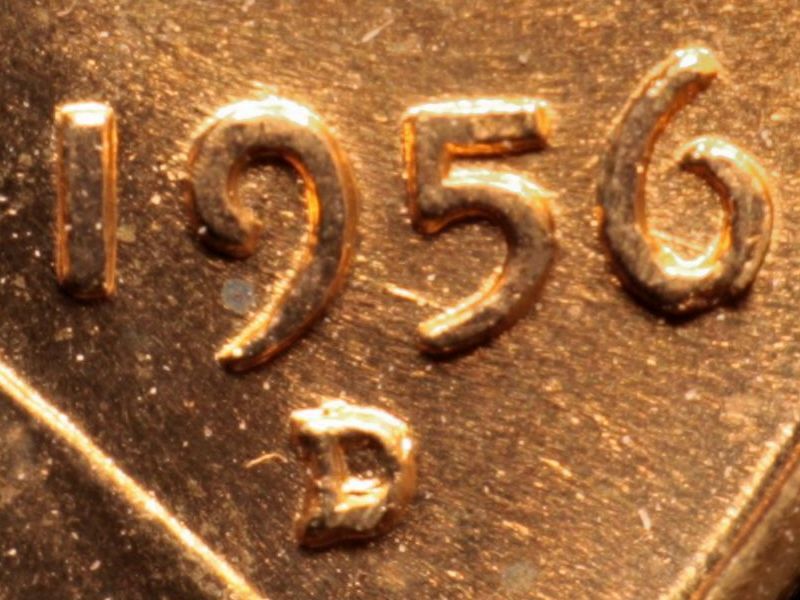 ZEISS 3/6/9X AT 3X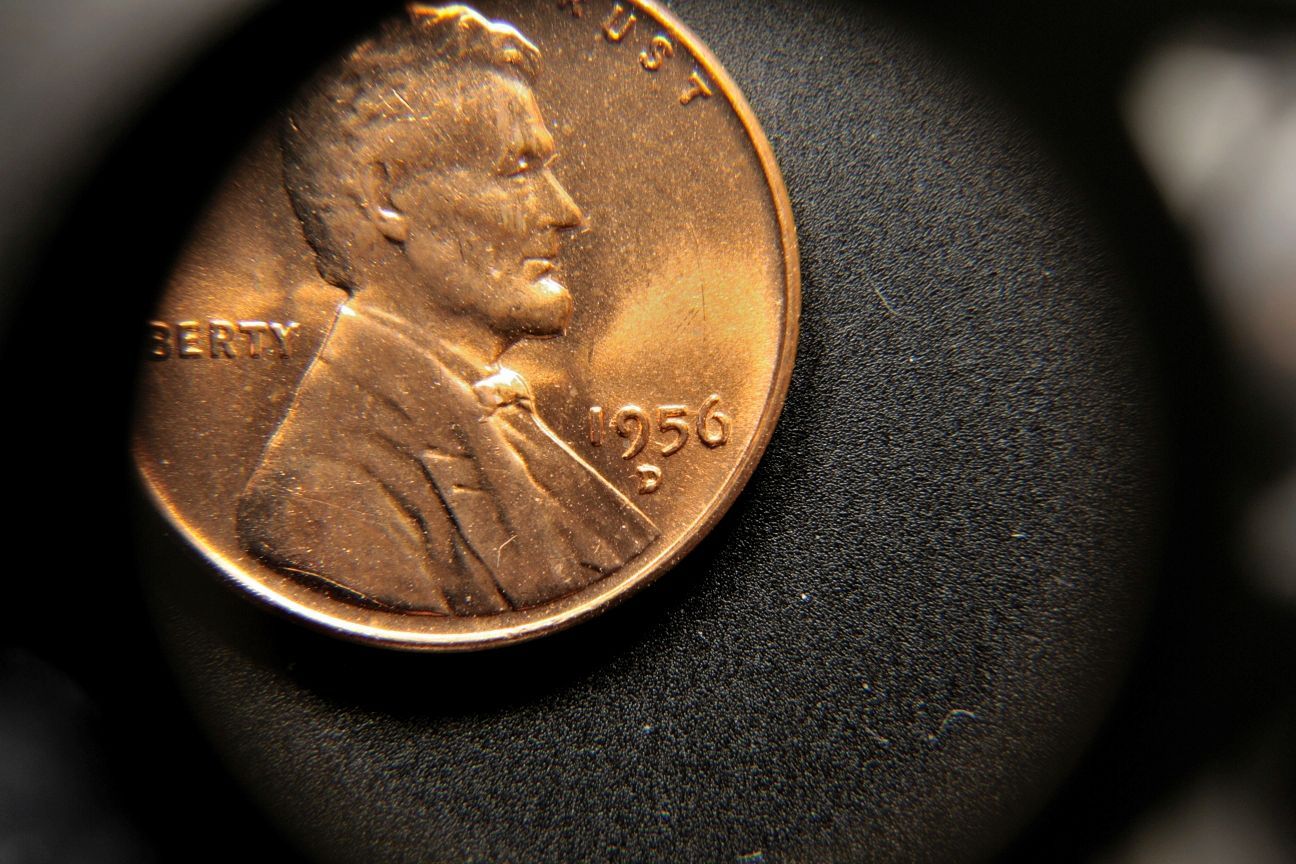
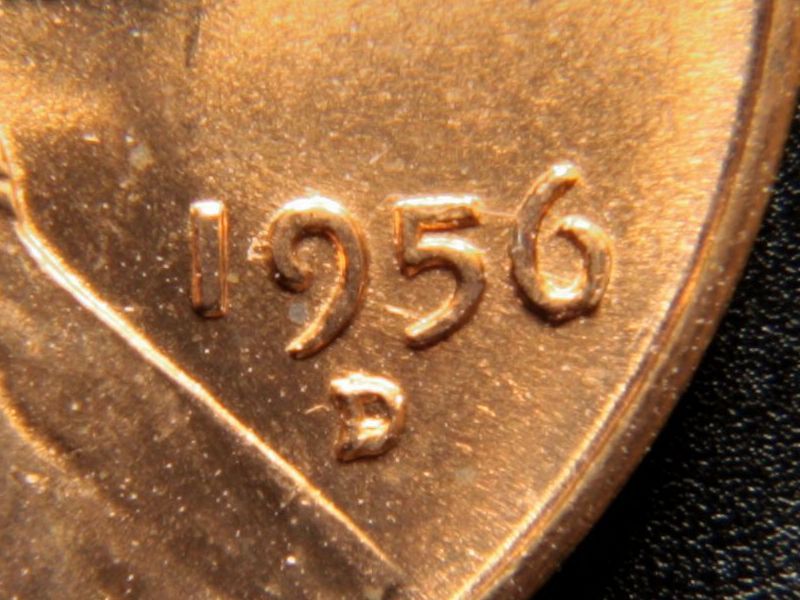 ZEISS 3/6/9X AT 6X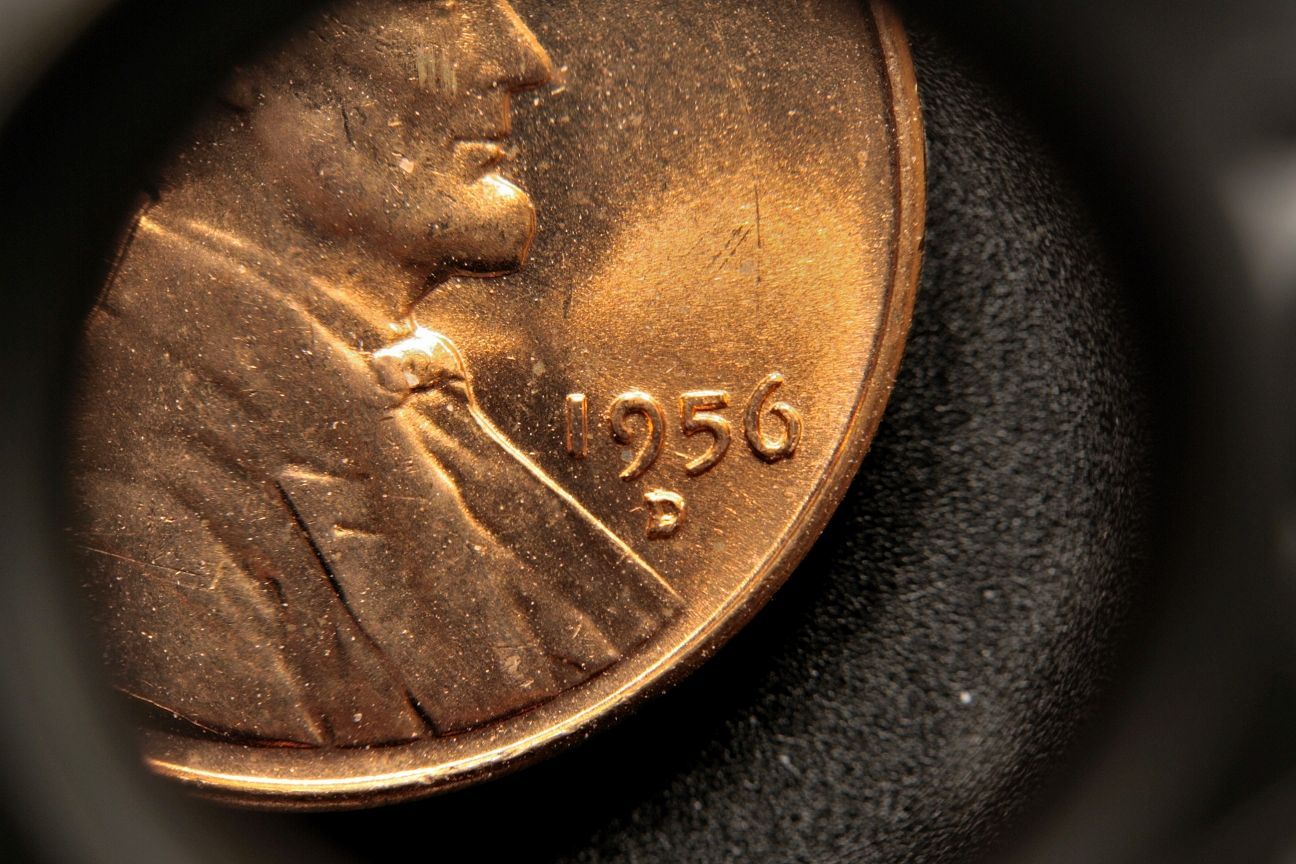
 ZEISS 3/6/9X AT 9X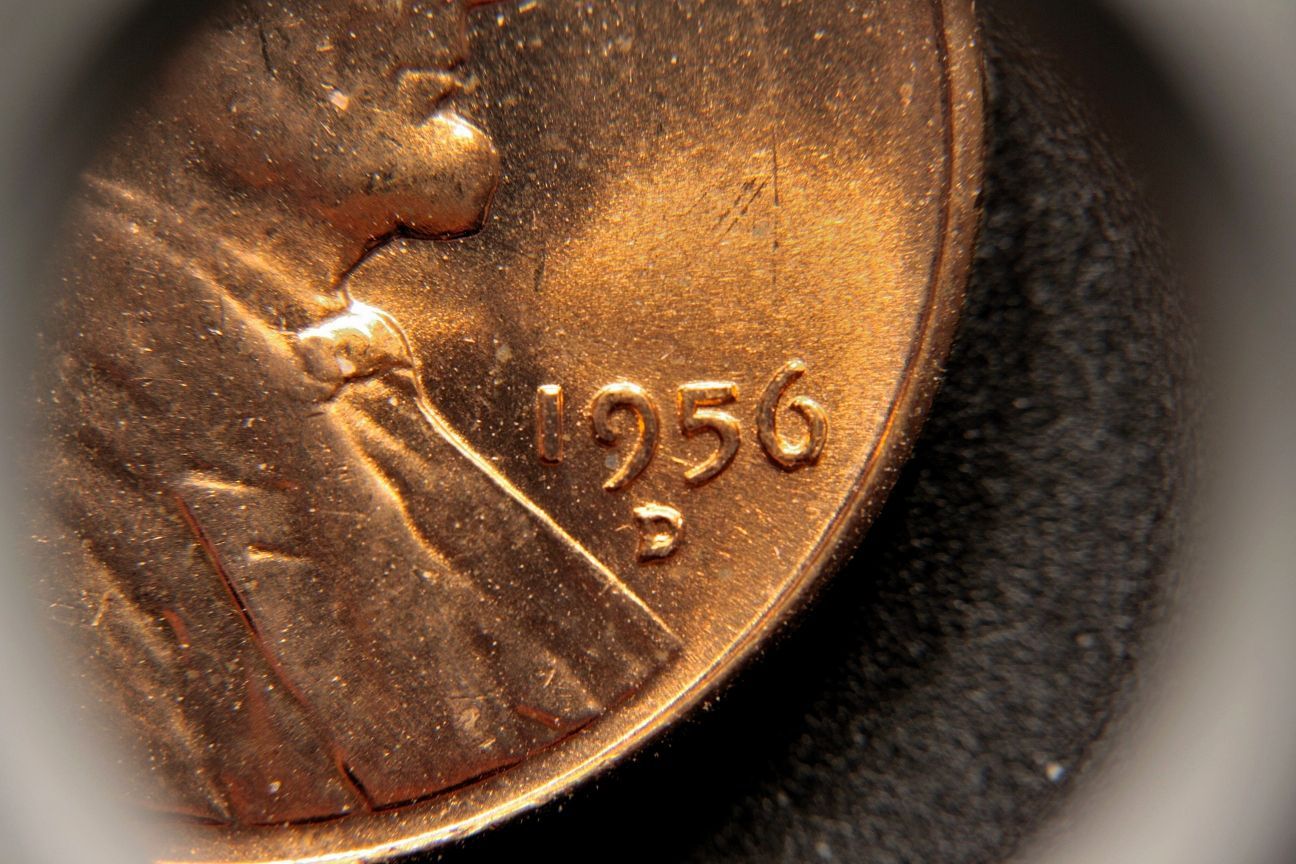
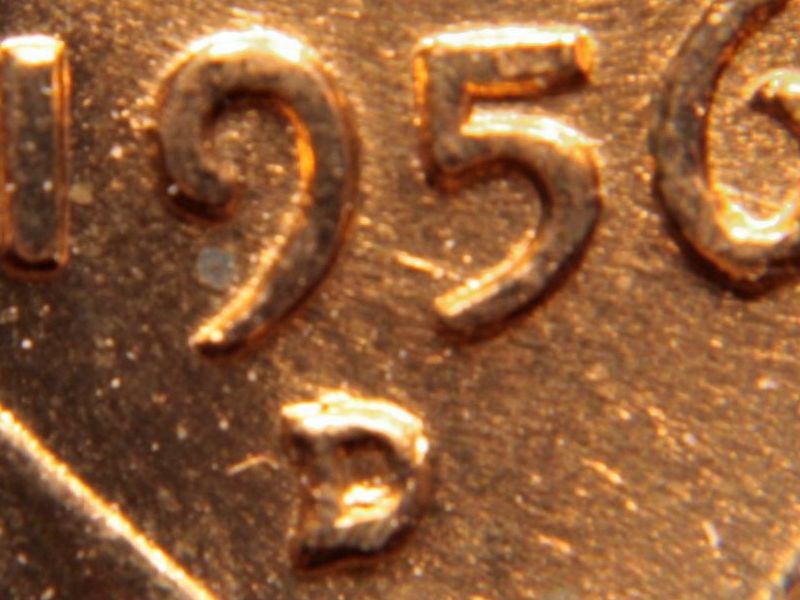 NIKON 75mm f/4 EL-Nikkor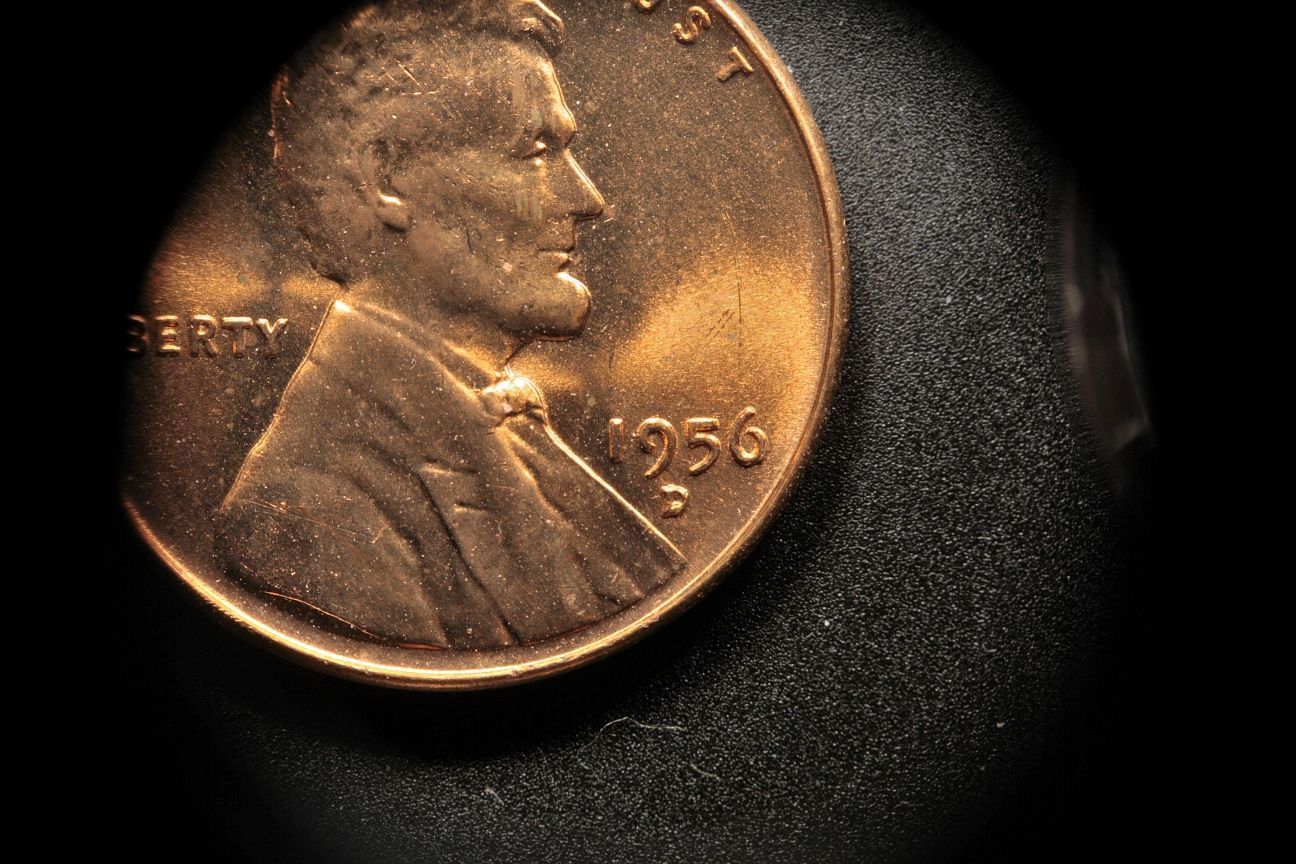
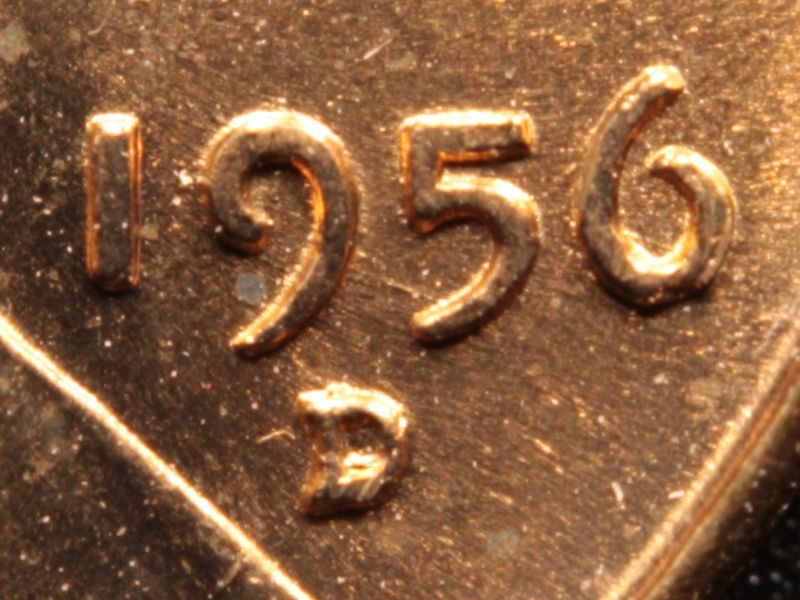
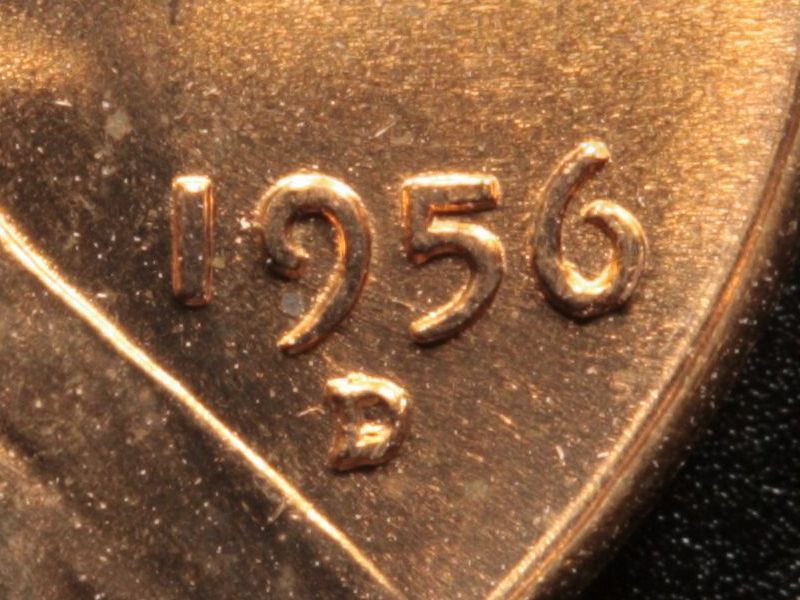 NIKON 50mm f/4 EL-Nikkor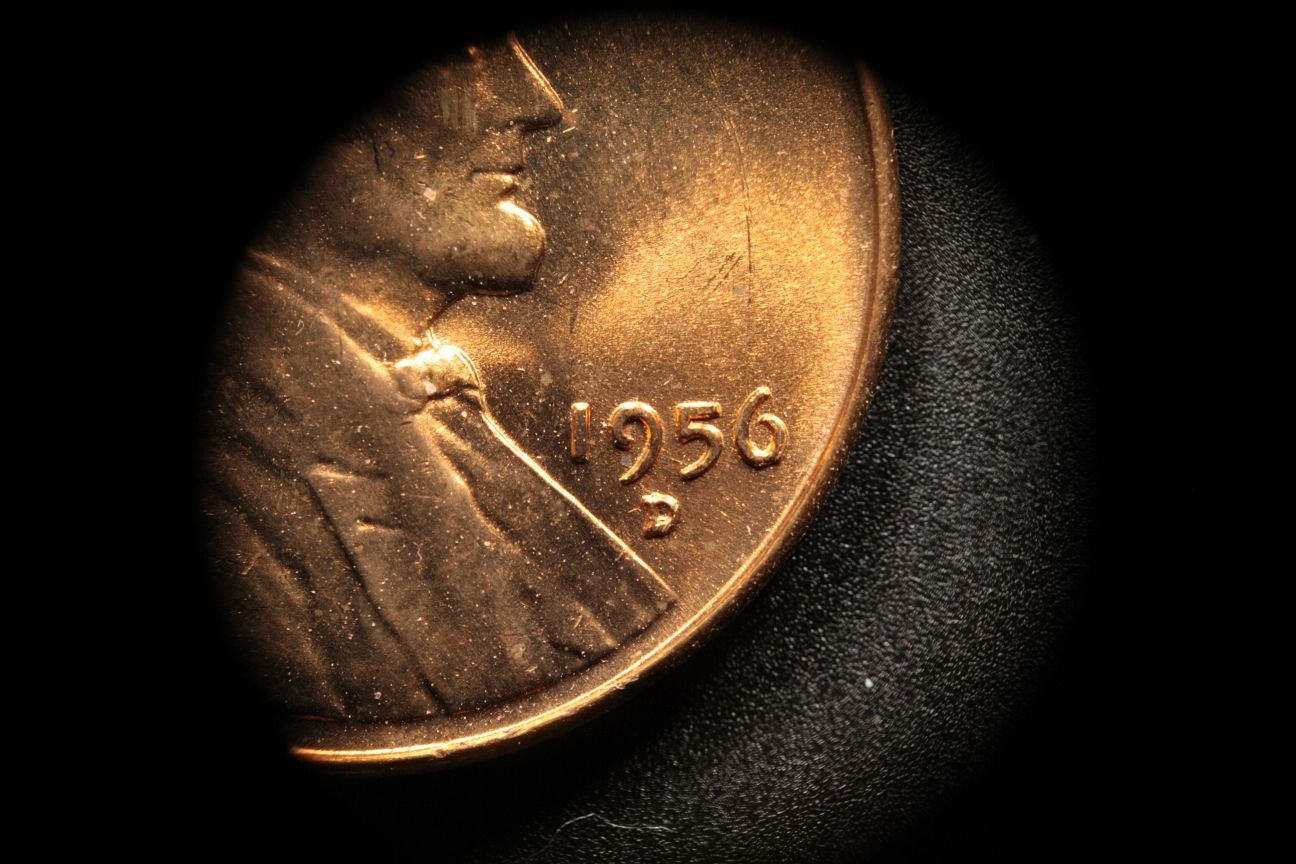
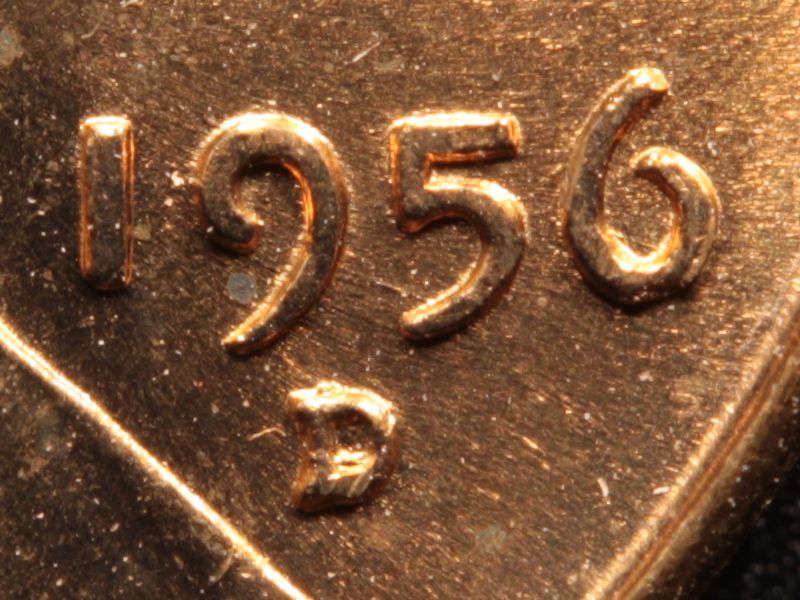
 NIKON 50mmmm f/2.8 EL-Nikkor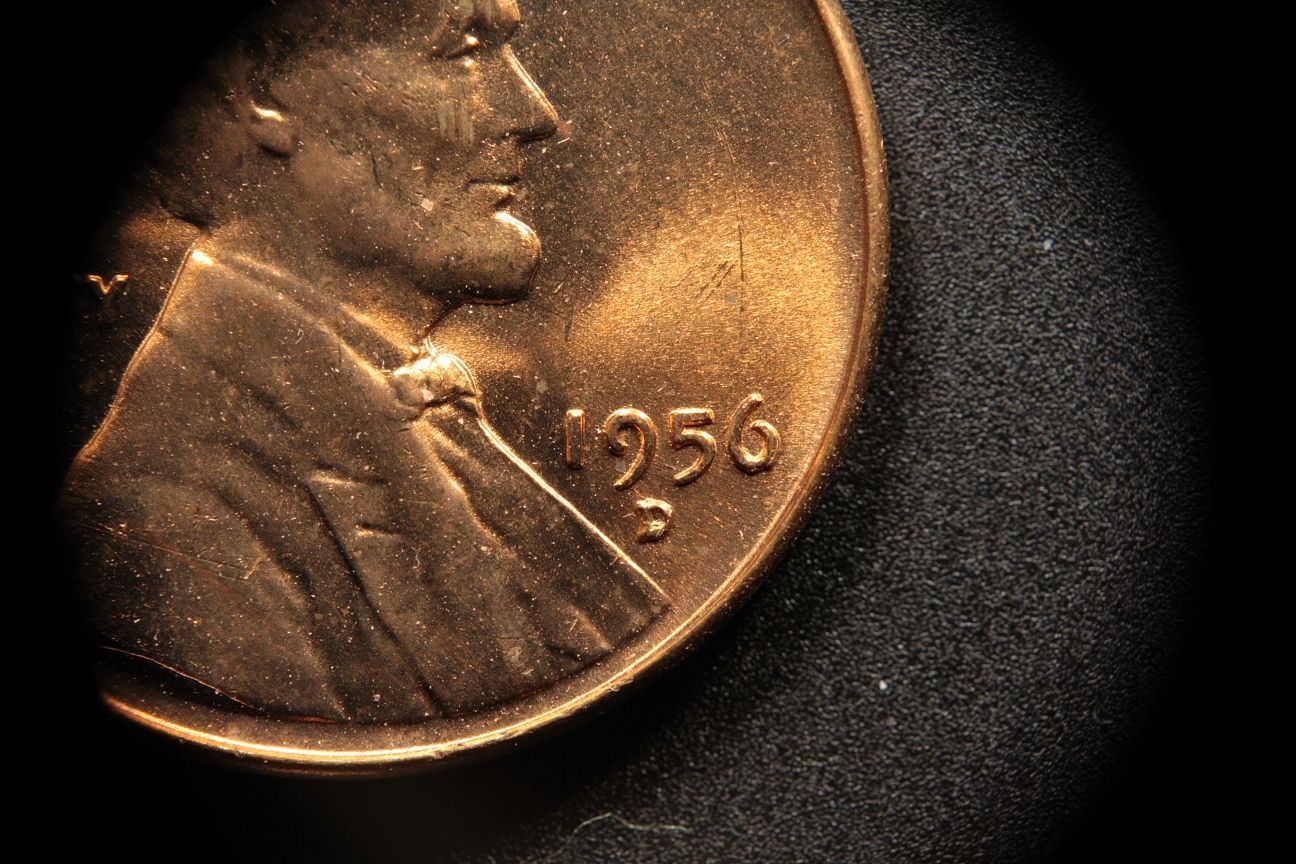
 COMMENTARY
The images show that the simpler lenses are not as well-corrected as the more complex ones, with less sharp centers as well as less flatness across the field.
The Eschenbach 5X is a singlet lens, and it shows the weakest performance in this group.
The Lomo is a symmetrical doublet, with better correction and flatter performance to the edge.
The Zeiss is two singlets, though it is marketed as an achromat, so likely has more than one lens cemented together to form each singlet. It is a bit less sharp at the center than the Lomo, but is fairly flat to the edge. It is the best performer in the standard loupe category.
The Nikon 75mm f/4 is a 4-element Anastigmat/Anachromat, and is well-corrected for both color and field flatness. This shows up as both good sharpness in the center and edge.
The Nikon 50mm f/4 is another 4-element design, and is similar to the 75mm in sharpness. It has a smaller field of view but is still usable as a 6x loupe.
The Nikon 50mm f/2.8 is a 6-element, highly-corrected Anastigmat/Anachromat. It is the clear winner in this shootout for both center and edge sharpness.
While I did not attempt to photograph the effect of slightly tilting these lenses, you can probably imagine that if the edges of the field are starting to get blurry, any amount of tilt will result in more blurriness and distortion. This is the true test of field flatness and coverage. The enlarging lenses were designed for a wide field on both film and print planes, so can tolerate a lot of tilt before showing any unsharpness or distortion. None of the purpose-made loupes tested here can tolerate any tilt and must be held straight-on to the coin to achieve good sharpness.








 Posted 04/03/2014 2:33 pm


