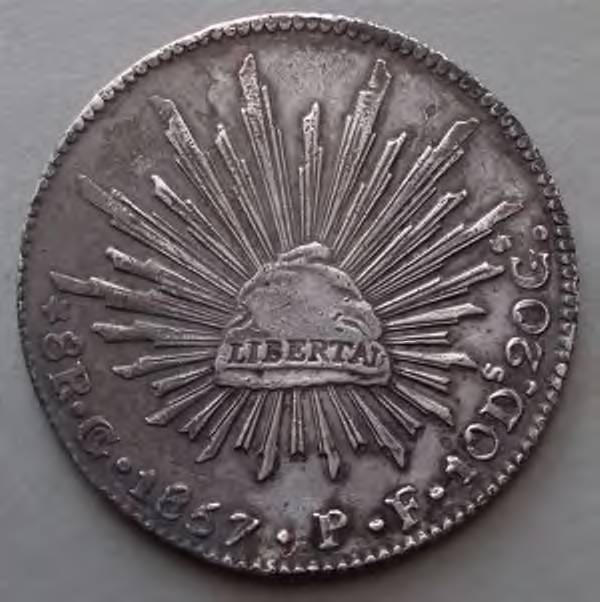
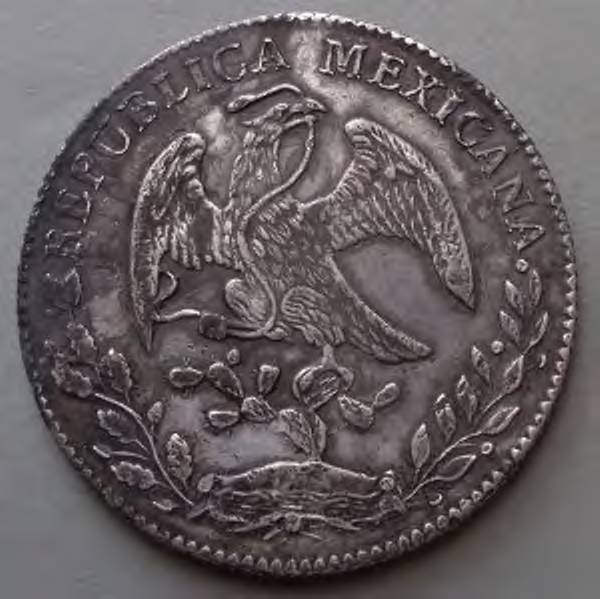
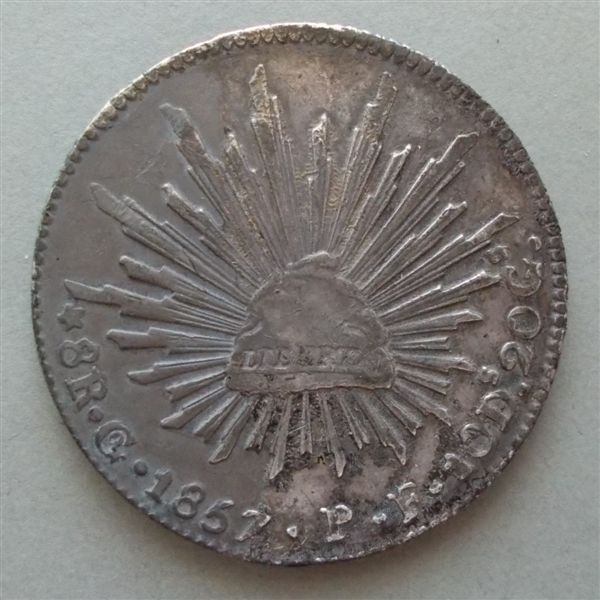
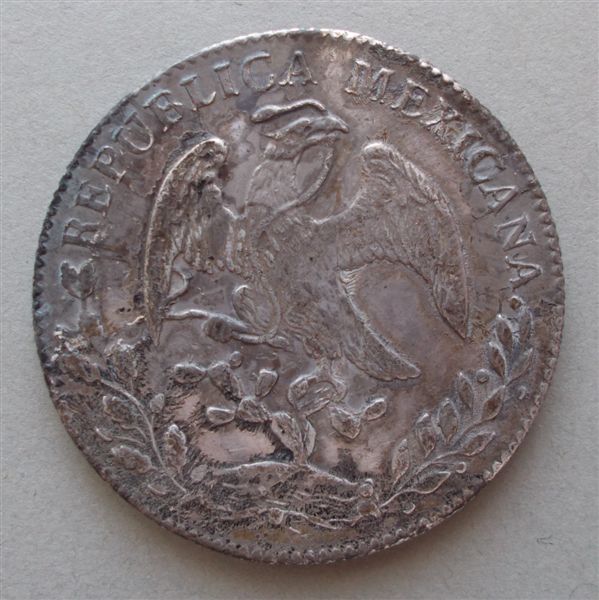
I never did get around to trying xylene. I did try methyl ethyl ketone (when I was a much younger man, I worked in a materials r&d lab, so I had some experience with mek as a resin solvent) but it proved as ineffective as acetone had. What did work the best was a gelatinous varnish remover that's a witch's brew of acetone, toluene, methanol, and methylene chloride. The remaining burnt residue still didn't slough off of its own accord, but merely softened and lost adhesion, with recesses particularly having to be gently worked with nothing harder than a fingernail or wooden toothpick. I think this is about as far as I can or care to take this process (I've removed the tiny bit more of final remaining crud since this latest photo was taken). I could dip it, but that'd probably be the step too far. So what do you think? I won't apologize for giving it a whirl, as it's neither uncirculated to begin with nor a rarity - but is the coin "conserved" to any real degree (it didn't turn out pretty by any means) or a waste of time and effort (toss it back into the "melt" pile)? Not that I'm contemplating submitting it for certification, but couldn't it now grade at least VF, maybe even as high as XF (although it has some dings, actual wear is minimal), albeit with a "details" annotation?
Colligo ergo sum
Edited by Lucky Cuss
06/04/2014 7:21 pm









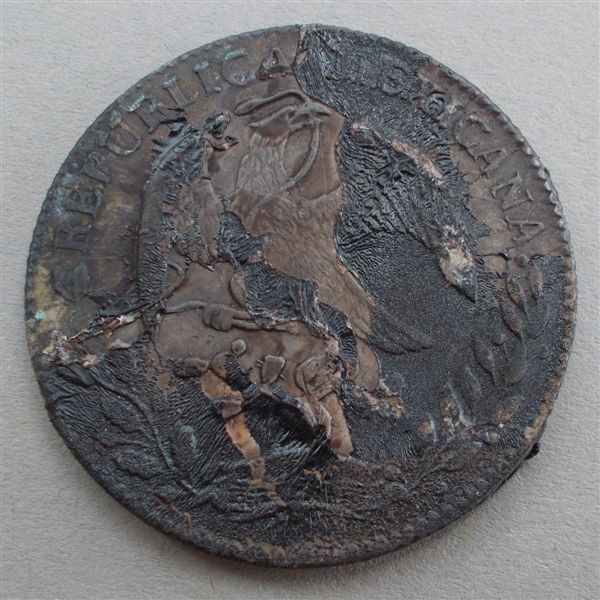
 I'm thinking of trying xylene next.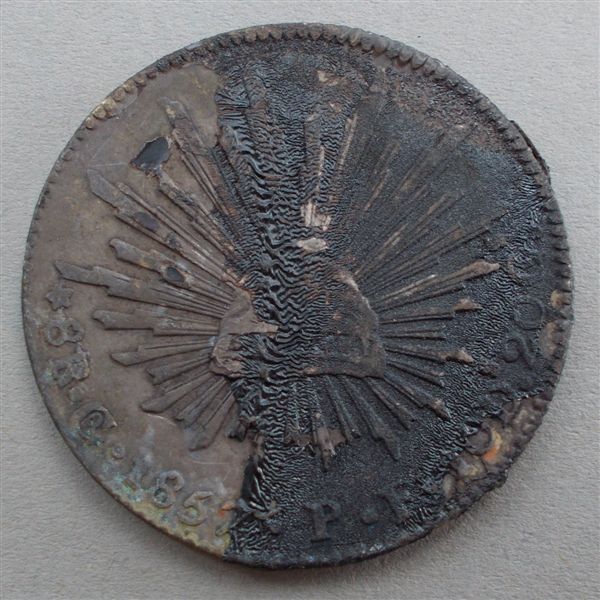


 Posted 05/27/2014 3:34 pm


