| Author |
 Replies: 12 / Views: 2,325 Replies: 12 / Views: 2,325 |
|
|
Pillar of the Community
Korea, Republic Of
1881 Posts |
This piece appeared on a Korean forum, and there's a huge debate going on about the authenticity of this coin. What do CCF ancients collectors think about the authenticity of this piece? The guy who posted it was filing its edges to make it fit in a jewelry mount, and he is seeing copper inside but from the outside it looks like silver. I am suspecting a cast copy plated with silver. 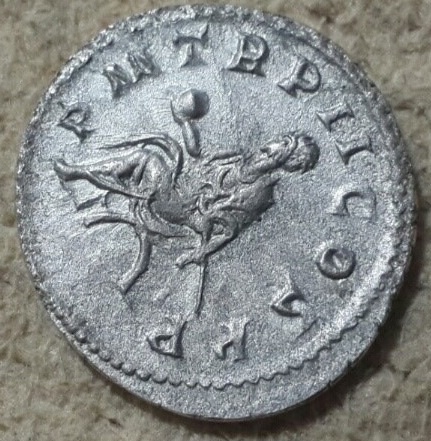 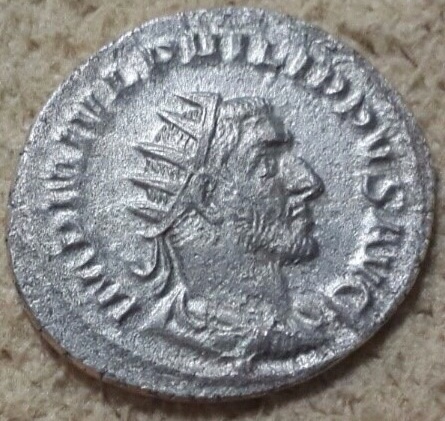 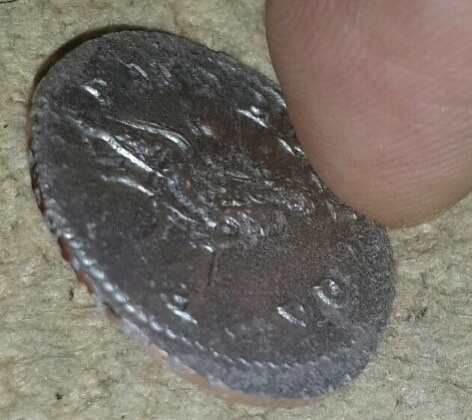 EDIT: New pics. 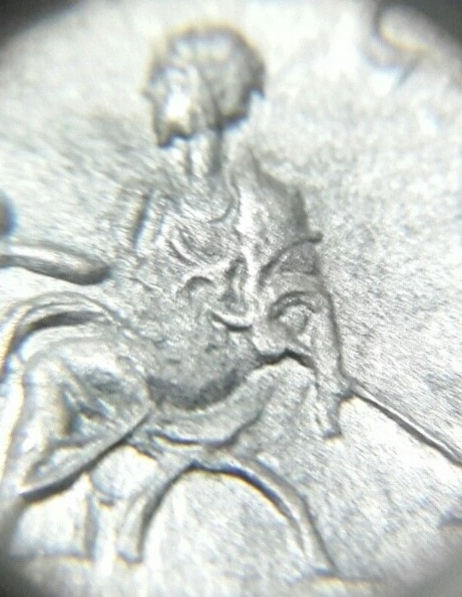 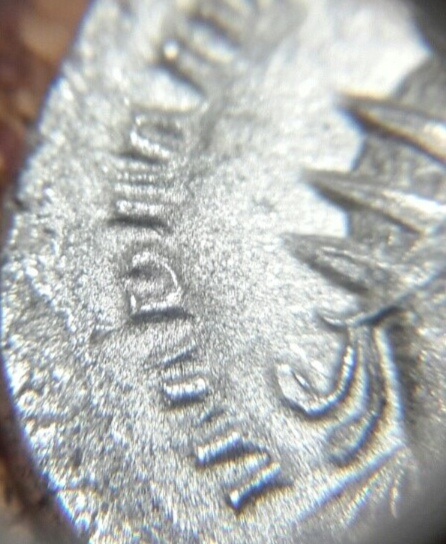 Edited by Matteproof
07/10/2014 08:59 am
|
|
|
|
Pillar of the Community
United States
3499 Posts |
Firstly copper does not cast well. Although bronze will.
The coin appears to have been 'struck' but the surfaces show signs of some corrosion. The period in question did see a rapid decline in silver content of this coin type (antoninianus) but the making of "fouree" silver coins at this time I am ignorant. A fouree is a bronze coin with a silver covering.
The minor pitting that is visible should have penetrated any thin silver wash or plating done at the time of manufacture. But seeing how the silver melt value would not exceed a few dollars why would someone make such a quality fake and use bronze ?
The coin looks fairly good ...... But the silver plating is puzzling.
|
|
Pillar of the Community
 Korea, Republic Of
1881 Posts |
I think fouree is possible, yes the silver content dropped in the period of this coin's manufacture and I could see how people tried to save silver by making fourees.
|
|
Bedrock of the Community
Australia
21794 Posts |
I say  I like to examine ALL ancient coins in hand before deciding to buy, unless the seller has an established and unquestioned reputation. Nevertheless, the reasons to support this view are four: 1. The fields on both sides have the texture of a cast coin 2. I cannot see all of the edge of this piece, but of what I can see at the bottom of the picture that does show the edge suggests that the casting sprue has been removed, and the surface of the edge is smooth, unlike the rest of the coin, and is at right angles to the fields . 3. The flan split at 270 degrees in the picture of the obverse is very shallow, unlike that of a genuine split found in a struck antoninianus of this period. The casting metal has not been able to reproduce the split. 4. The lettering is not as sharply defined as it should be, and there is no evidence of flare (metal flow lines in this case), on the outside edges and corners of the lettering. This coin provides good justification as to why a good reference collection af fake ancient coins should be maintained. The collector is thus able to educate himself in learning how to identify fake coins. |
|
Pillar of the Community
United Kingdom
4208 Posts |
The face is a little odd on the reverse, but I dont owna ny high quality examples of this.
What I will say is that in areas ravaged by horn silver, the silver quality is much lower -ive had it even go as far as just being plain Bronze. A tactic it is thought they used in ancient times was 'pickling' - the copper was leached from the surface to make a coin appear to have a higher silver content. That could leave pitting (though the tactic could be done today, of course).
The uneven surface of the coin is a good sign for authenticity. If its a fake, its an incredibly good one.
|
|
Moderator
 United States
23731 Posts |
This is supposed to be a silvered antonininius of Philip I, I believe the coin is genuine but has been re silvered at a later date to attempt to bring in more money when selling it.
|
|
Pillar of the Community
United States
3499 Posts |
I also lean toward a genuine with a modern plating to make it look nice and shiny. I see no evidence of it being cast. Casting a thin disk is very difficult without leaving a large sprue where the silver enters. Of course now that the edges have been filed ...... well even if genuine no collector would pay very much for it.
One reason I once made uniface silver castings was so I could sprue them straight off the backside leaving the edges intact and secondly so I would not need to DAMAGE a nice coin !
The plating may not even be silver ! It has an odd lead like look ..... zinc perhaps ?
|
|
Valued Member
United States
121 Posts |
I think that it is a lead fake.
|
|
Pillar of the Community
United States
513 Posts |
Echizento, I don't believe Philip I made silvered antonininii. I could be wrong but I'm pretty sure that all of his were silver (or at least the debased silver they were using at that point.)
The texture of the coin would scare me off from buying personally, but a weight could prove definitively that it is fake.
|
|
Pillar of the Community
United States
5014 Posts |
I'm not sure, but I know I wouldn't buy it. rough surfaces, weird looking edge (totally flat in one spot...strange color).
|
|
Moderator
United States
23731 Posts |
They weren't 100% silver but debased. I probably used the term silvered wrongly in the sense they weren't just silver covered. I tend to do that when they are debased silver.
|
|
Pillar of the Community
United States
513 Posts |
Oh, yeah, they were heavily debased, about 30% silver according to wikipedia.
|
|
Valued Member
Jordan
137 Posts |
This piece silver and Beilun Come blender with bronze
|
| |
Replies: 12 / Views: 2,325 |
|




 Posted 07/10/2014 09:23 am





