How to search for double dies with no photo reference.When it comes to nickels, dimes and quarter there seams to be a lot less love when it comes to photo reference.
I am a visual person and I learn best from photos to me a picture is really worth thousand words.
This task seamed like a imposable task for me at first.
This walk through is based on the
CONECA Doubled Die Numbering System.
If you are already familiar with this then this post might not help you at all.
The
CONECA doubled die numbering system is made up of
five separate sets consisting of both
numbers and letters which at first glance look like a bunch of nonsense.
For Example we are going to look for a
1990-S DDO-001 Jefferson Nickel 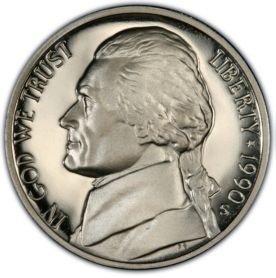
So say you want now go out and try find one of these varieties.
So to state the obvious with the 1990-S DDO-001 you know that it is a
1990 Jefferson Nickel with a
S mint mark which means its from the San Fransisco Mint.
Now What?All the rest of the information you need is in the
designation, description and
markers.
We start with the
designation which for this coin is
Designation: PR-1-O-V-CW from K-3So lets break this down into five easy sections.
Each of the 5 sections tell you important information about the coin.Part 1The first part which tell you the
level of die involvement which
type of die and
how often it was used.
[PR]-1-O-V-CW from K-3
the PR stands for Proof (PR) so you can rule out all circulation or business strikes.
the first could have any of the following.
Series Doubling (SD) - indicates that the same doubling occurs on more than 1 year on a given denomination.
Master Die Doubling (MD) - indicates that several working dies of a given year and denomination exhibit the same doubling. In the past, this has crossed mint lines to affect coins from all mints.
Working Hub Doubling (WH) - indicates that several dies of a given year and denomination exhibit the same doubling. In the past, this may or may not have crossed mint lines. Master die bears the mintmark, it is restricted to that mint.
Proof (PR) - indicates that the doubled die is on a proof coin rather than a circulation or business strike.
Ok so know we know it must be a
proof 1990-S this is more important on some of years where the proof did not have the s mint mark or if also had a business strike.
PR-1-O-V-CW from K-3
the next section
Part 2PR-[1]-O-V-CW from K-3
Is the Die number or listing number. The die number starts at 1 and increments by 1 for each new listing of a date and mint-mark for a given denomination. The die number for a master die or a series listing is the same for each mint and year involved.
So it has a 1
So its a 1990-s Jefferson nickel Proof Die 1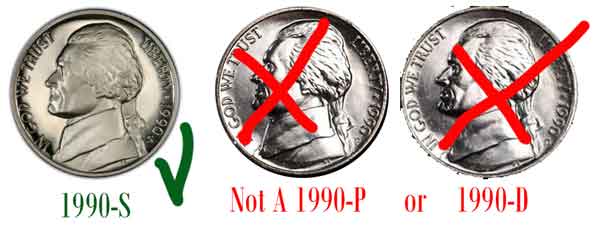 Part 3
Now on with the third section which is just where the doubling is located is it the front or back of a coin or obverse or reverse.
PR-1-[O]-V-CW from K-3
This one has a O so it is the front or Obverse
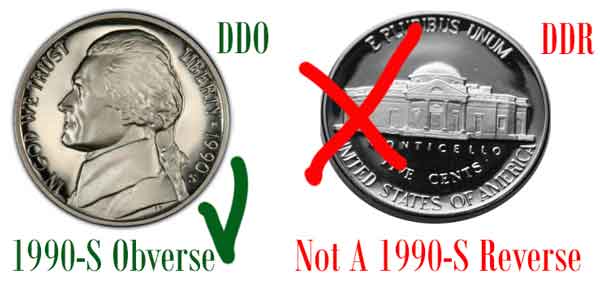
Obverse or Reverse (O, R).
So we now know it is
1990-s Jefferson nickel Proof Die 1 with doubling on the ObversePart 4PR-1-O-

-CW from K-3
On to the fourth section which has
roman numeralsThese represent the
class of doubling in Roman Numerals. Hybrid classes are indicated with a +.
It is very important to learn the different classes of doubling as there appearance varies and could look completed different from what you might think.
See
Coop's videos on these to get better visual example the difference of each of these.
https://goccf.com/t/183955Class I - Rotated Hub Doubling.
Class II - Distorted Hub Doubling.
Class III - Design Hub Doubling.
Class IV - Offset Hub Doubling.
Class V - Pivoted Hub Doubling.
Class VI - Distended Hub Doubling.
Class VII - Modified Hub Doubling.
Class VIII - Tilted Hub Doubling.
so know we know its
PR-1-O-
-CW from K-3
1990-s Jefferson nickel Proof Die 1 with Class V Pivoted Hub Doubling on the ObversePart 5Now onto the fifth and final section of the designation.
PR-1-O-V-[CW from K-3]
This section where appropriate is the
direction of the doubling and the
number of hubbings, if more than two.
and could be any of the following
C - toward the center
CCW - counter-clockwise
CW - clockwise
E - toward the edge
K - clock position for the pivot point
(3) - tripled die
(4) - quadrupled die
(M) - Multiple hubbed die
So to recap
1990-s Jefferson nickel Proof Die 1 with Class V Pivoted Hub Doubling on the Obverse clockwise at the 3 o'clock position for the pivot point .So now we have a basic idea of what we are looking for now onto the description.
Description which reads:
Medium spread on
IN GOD WE TRUST and
designer's initials.
this will help you separate the this
DDO form others if the doubling is found on different devices
so we are looking for a
1990-s Jefferson nickel Proof Die 1 with Class V Pivoted Hub Doubling on the Obverse at the 3 o'clock position for the pivot point. With Medium spread on IN GOD WE TRUST and designer's initials.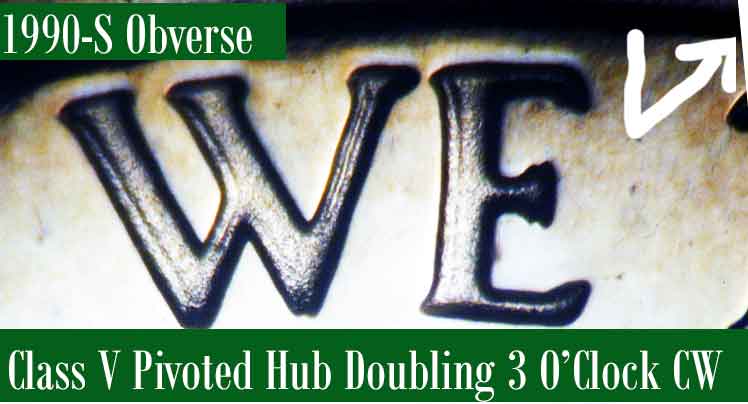
now on to the markers can help or assist being able to confirm it.
This coin does have any useful markers other then die state.
Markers:Stage A:Obverse and Reverse are EDS
Stage B:MDS (unconfirmed)
Stage C:LDS (unconfirmed)
this tell us that the know example tend to be in the EDS or early die state.
Die states can range from Early Die State (EDS), Mid Die State (MDS), Late Die State (LDS), Very Late Die State (VLDS) and even Terminal Die State (TDS)
I think you got a picture in you head of what this coin looks like.
So now lets see what does this coin looks like by going to a excellent example hidden amongst ken potters site.
http://koinpro.tripod.com/Articles/...ofDDO001.htmIf want to read info you can get it here directly from the link below.
http://www.varietyvista.com/Doubled...20System.htm 






 Thanks, Doug.

 Posted 08/18/2014 1:52 pm





