| Author |
 Replies: 7 / Views: 2,007 Replies: 7 / Views: 2,007 |
|
|
Valued Member
Belgium
54 Posts |
Got this coin today. I think it could be a variety since the lions head (mouth) looks like it has been double struck. However, the rest of the coin is just fine. I compared it to some other strikes of that year but could not find the same abnormality. The monogram on the obverse side of the coin also seems a little bit odd. As if the coin was overstruck (below the crown). 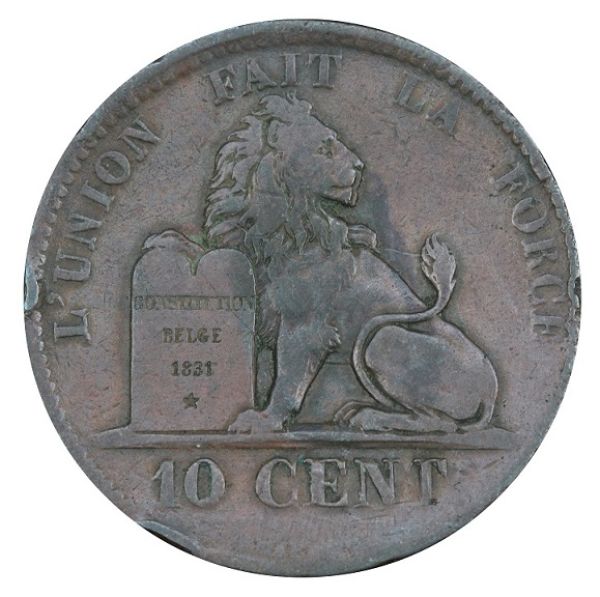 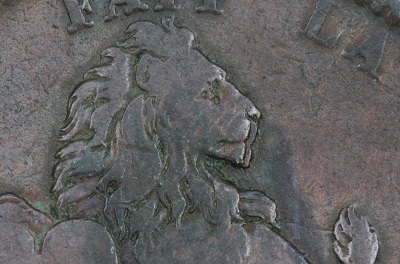 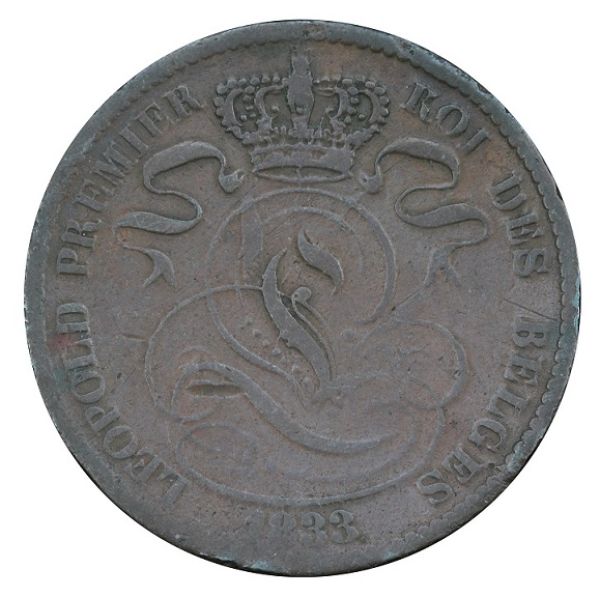 Edited by jagoedo
08/23/2014 05:33 am
|
|
|
|
Pillar of the Community
United States
3552 Posts |
Hello, This coin appears to have Machine Doubling on the lion's face and not a DDO. The other side appears to possibly have some die clashing coming from the area of the legs of the lion on the other side. I am unsure, though, how a European numismatist would value these types of anomalies. The link below is a great source for identifying foreign(non-US) coins and their corresponding 'reported' varieties: http://www.ngccoin.com/price-guide/...9-duid-71434fyi, mdpmedia |
|
Valued Member
 Belgium
54 Posts |
Thank you. Shouldn't Machine Doubling also be seen on other parts of the lions face (as for example the nose which is right above it)? Could this this be an error in the die? I know that not all varieties recognised by the Belgian numismatic community are listed on the NGC site. I am just curious on what happened here. Edited by jagoedo
08/23/2014 05:33 am
|
|
Pillar of the Community
United States
1674 Posts |
The coins of 1833 are notorious for being struck on other coins rather than blanks. This appears to be the case here, but since it's the standard for these coins it would not really add any value.
|
|
Valued Member
Belgium
54 Posts |
Are you sure it was also done for the 10 centimes? I know that they used Dutch coins for the 2 and 1 centimes. I have some of these.
|
|
Valued Member
Belgium
83 Posts |
@jagoedo: you are completely correct! Only the Dutch 1 cent (used to create the Belgian 2 centimes) and the Dutch 1/2 cent (used to create the Belgian 1 centime) have been used to create new Belgian coins. They are encountered often with traces of the original Dutch mints.
The 5 and 10 centimes were made with new blanks.
As a Belgian and a Belgian coin collector I have to disappoint you saying that this will bring a premium, since no real interest is found in doubling in the Belgian market (what is surely different on USA coins in USA market). HOwever, it makes an interesting piece for discussion!
According to me, there is another possibility: behind the monogram of Leopold 1, it looks like there are traces of the lion, especially just below the crown. What could have happened: A 10 centimes (piece 1) was struck, but stuck to the die of the monogram. A new blank was introduced (piece 2) and the lion was struck. Due to the presence of piece 1, an imprint of the lion was made on piece 2. Piece 1 left the machine, no new blank was introduced and the dies closed again. Due to small variations, you can see this as a doubling on the lion side of the coin and you can as well see the imprint behind the monogram of the lion.
|
|
Valued Member
Belgium
54 Posts |
Thank you for the possible explanation.
I didn't buy the coin for the premium but rather for the oddity on the lions head.
I inspected the coin but didn't see any marks which would be left by an incuse strike on the obverse side of the coin which I would expect if the coin was struck by another coin which was not removed. I have some examples of 2 centimes which had that problem and it's pretty clear on those.
|
|
Valued Member
Belgium
54 Posts |
After taking a good look at it again, you guys were right! The obverse is an incuse strike.
|
| |
Replies: 7 / Views: 2,007 |
|









 Posted 08/23/2014 05:01 am


