| Author |
 Replies: 11 / Views: 6,165 Replies: 11 / Views: 6,165 |
|
|
Pillar of the Community
United States
5155 Posts |
Lying on the trade and pilgrimage route between India and China, the Kingdom of Funan in 5th and 6th century was a power and well respected empire in southeast Asia. They practiced Hinduism and later Buddhism. Coinage in the region seems to have originated in the States of Pyu in Burma covered in another thread I posted. Coinage of the Rising Sun type is thought to have originated in the late 4th century in Northern Burma and they style was traded and eventually standardized in southeast Asia. These are thought to be inspired by contemporary Gupta Empire gold coinage. 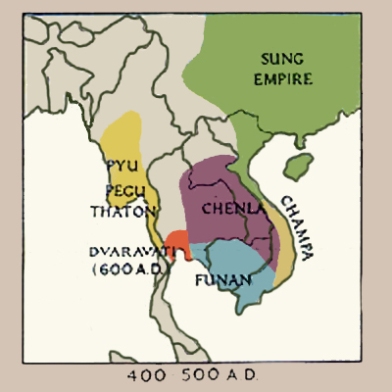 Hoard evidence suggests an origin in Pyu but the coins have a scattered distribution through out the region. No rising sun coins have ever been recovered in or neat the capitol of Pyu. Three types are found in pockets through out Cambodia and vietnam largely concentrated in Thailand. 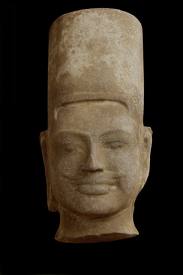 In the seventh and eighth centuries AD the Kingdom of Funan was integrated in Chenla to the North and invaded by Indonesian kingdoms that wished for a foothold on the Asian mainland. The Kingdom eventually fractured in small weak city states and eventually became a vassal of the King of Java. After laying in ruins neglected for centuries the vast treasures of the region were ransacked and looted are now dispersed throughout the world. Ooops.  Thailand,Cambodia and South Vietnam Kingdom of Funan AR Full Unit (s.400-550) 30mm x 9.37 grams Obverse: Sun rising over the ocean. Dots inserted into rays, all inside concentric line and dot boarders. Reverse: Srivasta Temple left field Swaztika; right field Stylized Drum or royal throne. 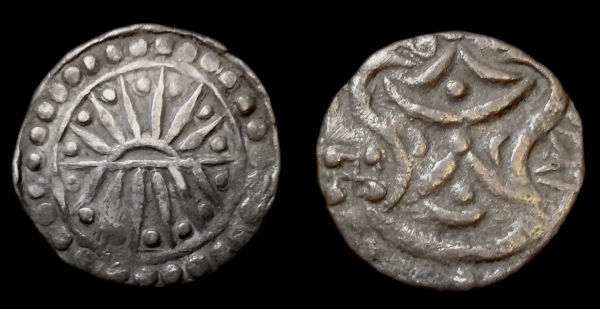 Edited by Ancientnoob
09/25/2014 10:13 pm
|
|
|
|
Moderator
 United States
23731 Posts |
Wow another interesting and obscure coin. You sparked my interest to start to learn about these kingdoms. Very nice coin.
|
|
Pillar of the Community
 United States
5155 Posts |
Thanks Ron. Mission Accomplished.
|
|
Pillar of the Community
United States
4778 Posts |
Another interesting "Anoob coin"!
|
|
Pillar of the Community
United States
2480 Posts |
Very cool!
I should get one so I can title my post the same: ThisIsFun(an) :D
Edited by ThisIsFun
09/26/2014 06:17 am
|
|
Pillar of the Community
United States
4778 Posts |
"THIS... IS... FUNAN!" [kicks some poor soul down a giant hole]  |
|
Pillar of the Community
United States
5155 Posts |
Hey TIF you cought on to the title.
VK- Thats pretty fun(an). Ee.
|
|
Pillar of the Community
Russian Federation
5186 Posts |
That must've been one of the easternmost Indian-style coinage types...
...Now that I think of it, this might not be Indian either. IIRC, coins were invented independently around the same time in Greece/Lydia, India, and China; these are clearly not of Chinese origin, and early Indian coins are the punchmarked ones, which this clearly isn't either... so does that mean this is somehow descended from the *Greek coinage (via Indo-Greek presumably)? If so, that would be pretty cool, given the location!
|
|
Pillar of the Community
United States
5155 Posts |
Jan1May,
That is a great observation. These coins are thought to have began sometime in the 300's AD in Burma. Burma was originally inhabited by the Pyu, whom are thought to have derived their coinage from Indian influence. Yes it was the Greeks who brought the technology of striking roundish coins to India. Whats interesting is that these coins exist as a blend of Buddhism and Hinduism. Imagine what a large coin like this could have bought you in Europe in AD 500.
VK care to make comment on European buying power in AD 500?
|
|
Pillar of the Community
United States
4778 Posts |
Anoob... not sure of all the exact details, but I do know that if you wanted to purchase things efficiently during that time, you would need gold coins or at least siliquae, because the tiny bronze nummi were near worthless at the time. Something like a loaf of bread you would need a bagful of the tiny things. And the fact that they got lost easily didn't help. These were reasons why Anastasius implemented his coinage reform that (re)introduced the follis, worth 40 of the old (but still struck and utilized) nummi. A couple of interesting comments I found on Doug Smith's page on late Roman buying power: Quote:
By 320 AD a loaf of bread might sell for two silvered nummi like this one of Crispus. This sample is midway in size and purchasing power for this denomination issued first by Diocletian as a large silvered coin and ending in the Byzantine period as a tiny scrap of copper. Prices followed a similar path with a modius of wheat worth 2 nummi in 305 selling for 40 nummi in 327 AD. Quote:
The gold solidus was not fixed in value in terns of the copper coins. By the time of this solidus of Theodosius the value could be as much as 7,200 nummi and could buy 30-40 modii of wheat. The daily wage for a cavalryman was then 180 nummi so a solidus represented the pay for a month and a half. My tremissis alone only had a third of the buying power of a solidus but I'm sure it was still valued: .jpg) Going by the fact that 1 solidus was worth as much as 7200 nummi, a tremissis would have been worth 2400 nummi, or 60 Byzantine folles. Edited by VisigothKing
09/29/2014 6:09 pm
|
|
Bedrock of the Community
Australia
21792 Posts |
A most interesting thread.
I am a generalist of World coinage from ancient times, not a specialist in any part of numismatics.
I need to dig in much deeper into this area of numismatics, and this thread along with similar ones here in the CCF, are a good education for me.
|
|
Pillar of the Community
United States
5155 Posts |
You should also consider the early struck coinage of Java, Bali and the eastern Archipelago. I found it very difficult to cover all the basis. I opted for the 8th century silver Massa from the Empire of Sailendra.
|
| |
Replies: 11 / Views: 6,165 |
|






 Posted 09/25/2014 10:34 pm





