| Author |
 Replies: 21 / Views: 6,809 Replies: 21 / Views: 6,809 |
|
Pillar of the Community
3772 Posts |
There I saw in another topic the comment: Quote:
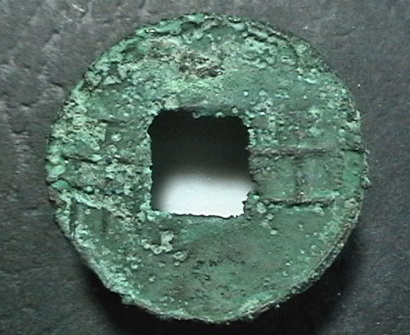
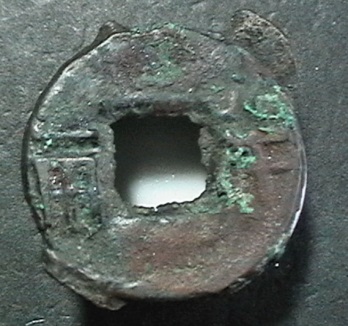
Jeeze like the real ancient world we are seeing overwhelming Roman domination. So seems one needs to do something against the Roman/Byzantine domination here  Not going to start with the larger items like 'knife' money but stick first to the small stuff. --------------------------------------------- The following two 'coins' were produced in the Principality of Ch'u from circa the 8th to the 3rd century BC: 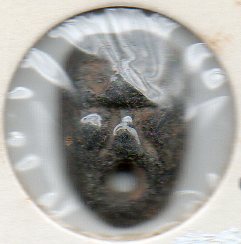 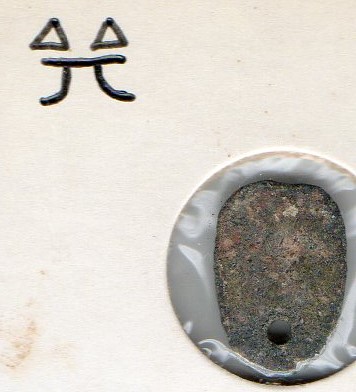 "Chin" aka 'Ghost Face' - Schjoeth#A15 / Mitchiner#5375+ 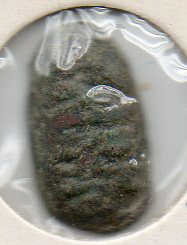 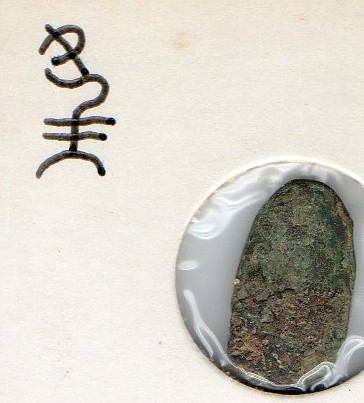 "Lo-i-chu" aka 'Ant Nose" - Schjoeth#A14 / Mitchiner#5377 |
|
|
|
Pillar of the Community
 3772 Posts |
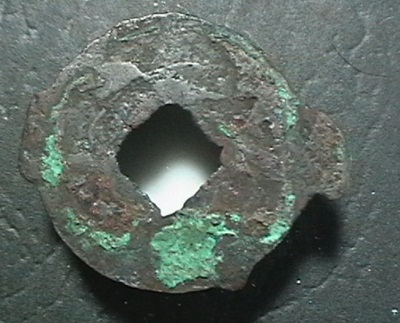
Here one of the earliest round coins with a square hole which was the format of Chinese coinage for a long time: 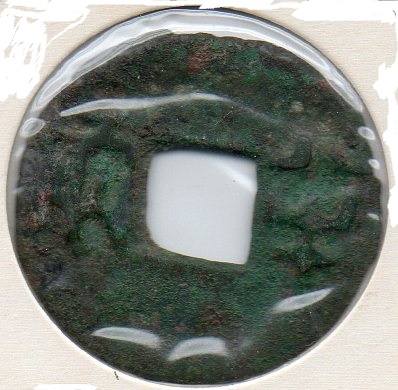 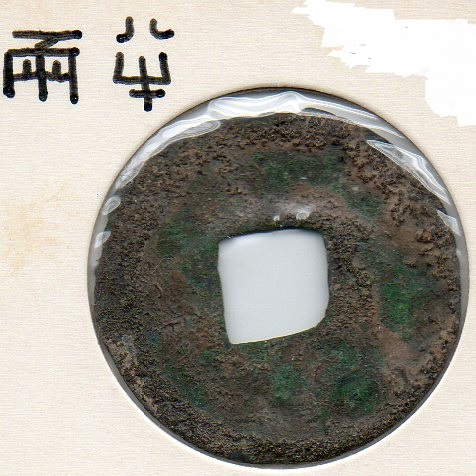 Pan Liang (of 8 Chu weight) from the period of Empress Kao (187 BC - 180 BC) Schjoeth#5402+ / Mitchiner#88+ The weight of the Pan Liang dropped in subsequent decades, in the end down to 3 Chu - that's what you call inflation. |
|
Pillar of the Community
3772 Posts |
Emperor Wang Mang who ruled from AD7 to AD23 (and had his own dynasty) experimented with different coin designs (no need to show the reverses, they are all plain and the coins are quite clear): 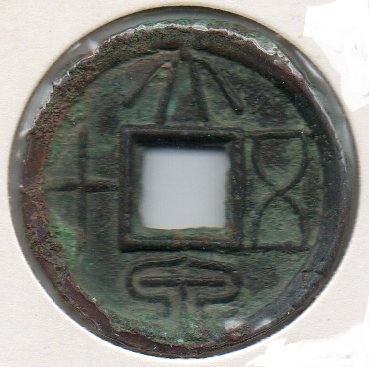 "Ta Chg'uan Wu Shih" aka 'Great coin value 50' - Schjoeth#120 / Mitchiners#5445+ 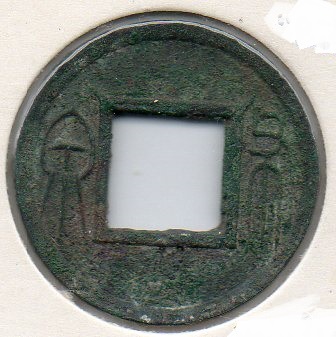 "Pu Chu'an" (minted after AD14 for a short while) - Schjoeth#176 / Mitchiner#5454+ 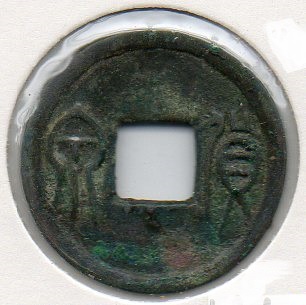 "Huo Ch'uan" (minted from AD14 to AD40) - Schjoeth#163 / Mitchiner#5456 |
|
Pillar of the Community
3772 Posts |
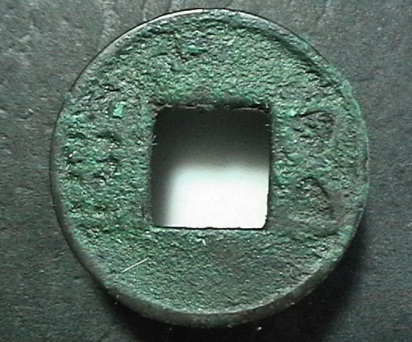
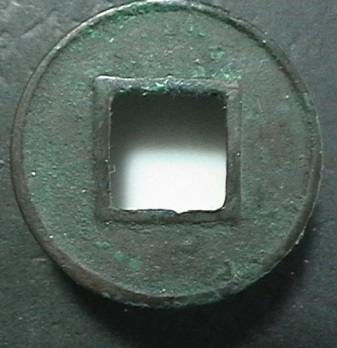
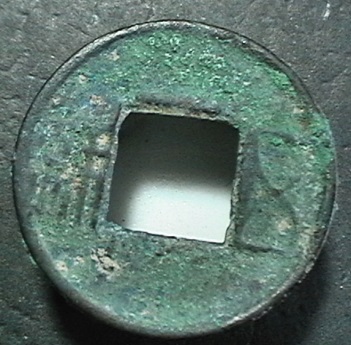
For many centuries after, various types of "Wu Chu" were minted, distinguished by minor marks like a dot or stroke under the hole, so here only one: 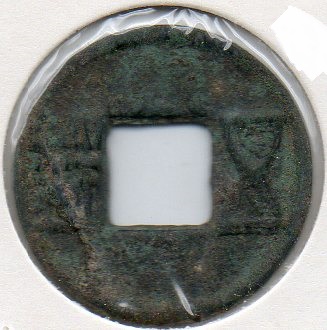 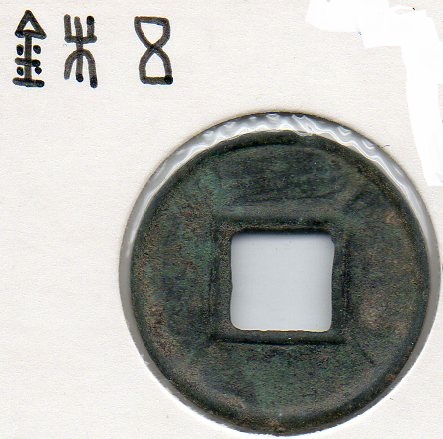 Wu Chu from Emperor Ling (168-190) of the (Eastern) Han Dynasty Schjoeth#179 / Mitchiner#5460var The distinguishing feature of this specific issue is the lack of a rim around the obverse hole and the four strokes radiating from the hole on the reverse. Note: Maybe someone who knows more about Chinese coinage can correct some potentially evolved attribution changes and also post a few, Edited by Medieval
10/07/2014 9:47 pm
|
|
Pillar of the Community
1121 Posts |
And here is a (pointed) knife (coin) from around the 5th Century B.C. 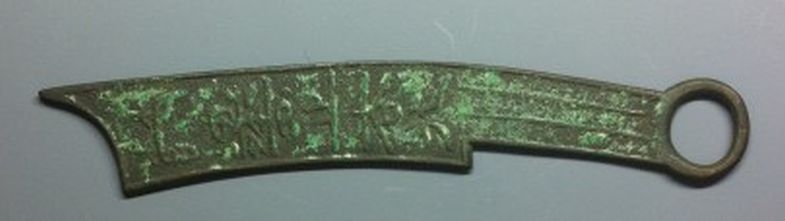 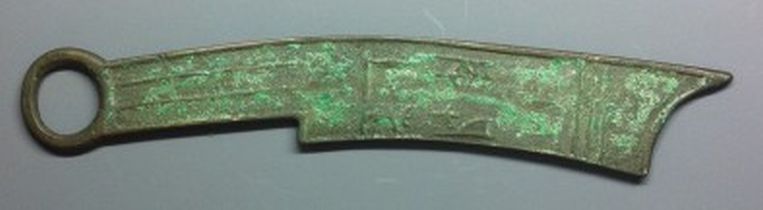 |
|
Moderator
 United States
23731 Posts |
Nice coins. There are a few of us here that have decent collections of Ancient Chinese coinage. Usually not very popular because the style hadn't changed in 2,000 years. What folks fail to realize is that China has a 5,000 year history and what they have contributed to art, science, medicine, etc is nothing less than amazing.
|
|
Pillar of the Community
United States
5003 Posts |
|
|
Pillar of the Community
1121 Posts |
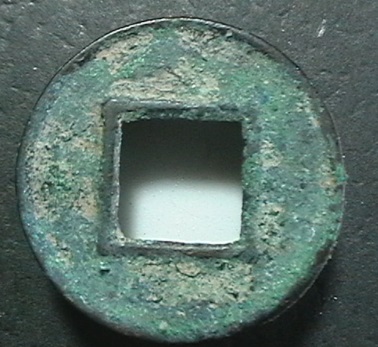
C.M. Coincidence or what? The same coin arrived as a free gift (with another purchase) in today's mail. Sui Dynasty - Emperor Wen (General Yang Jian) minted 581 - 604 A.D.AE23, Wt 2.35 gm. Ref Schjoth-253 Obverse: Chinese Legend Wu Shu Reverse: None 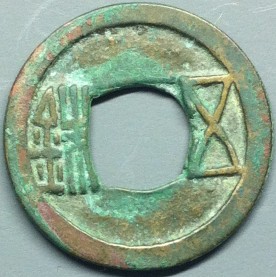 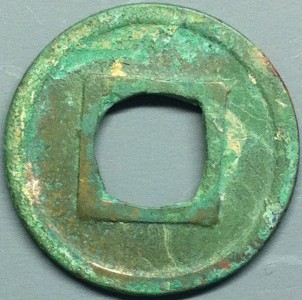 Edited by Topcat7
10/08/2014 02:18 am
|
|
Moderator
United States
23731 Posts |
|
|
Pillar of the Community
Netherlands
1204 Posts |
That are ancient coins I dont have yet, but very I do like them!
|
|
Pillar of the Community
3772 Posts |
Plenty of nice coins, but just a note to Quote:
Sui Dynasty - Emperor Wen (General Yang Jian) minted 581 - 604 A.D.AE23, Wt 2.35 gm. Ref Schjoth-253 Whoever attributed that as Schjoeth#253 made a mistake, but no need to complain about a free coin - it is certainly an old Wu Chu. The distinctive mark on Schjoeth#253 is that on the obverse there is only a rim on the right side, yours has also a rim above the hole (have a Schjoeth#253 on hand with the specifics written on it) - my copy of Schjoeth is still hidden in an unpacked box, else I would give you the right number. |
|
Pillar of the Community
United States
5155 Posts |
In an age of credit and debit its always important to have a little cash on hand. 11 mm x 0.61 grams Han China 2nd cent BC to 1st cent AD Wu Zhu Chicken Eye 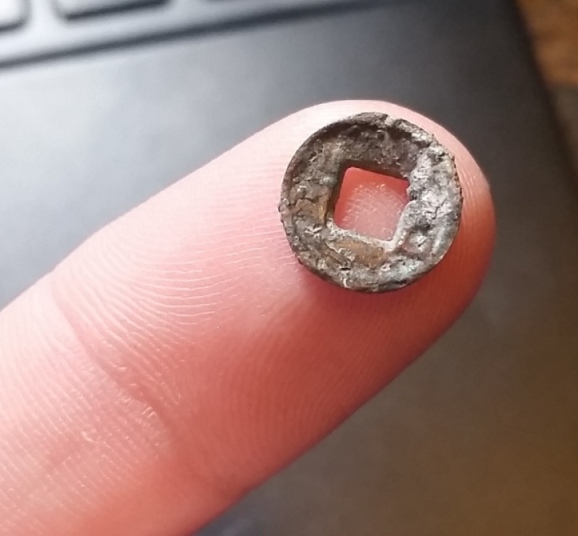 |
|
Pillar of the Community
1121 Posts |
chrsmat71 What can you tell me about the first coin that you are showing on this post, please?
|
|
Pillar of the Community
3772 Posts |
Quote:
In an age of credit and debit its always important to have a little cash on hand The interesting thing about Chinese coinage/currency is that even your tiny coin was still currency early in the 20th century. While it probably wouldn't have been accepted as a single coin (or part of a small handful of coins), it might very well have been part of a string of cash. Those strings were used for slightly bigger purchases and can/could contain any of the (one) cash coins. While the coinage labeled Wu Chu (or 5 Chu - even when the weight was lower than 5 Chu) continued for centuries, eventually came coins up which remind us closely of the so common coins from the Ch'ing Dynasty which started in 1644 and is therefor outside the scope of this forum. The first of those eventuated in the T'ang Dynasty with: 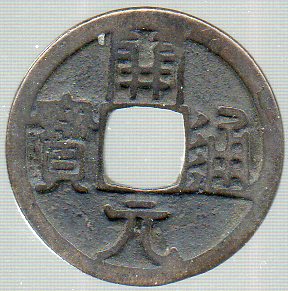 The coin reads (top, bottom, right, left) "Kai Yuan Tung Pao" - Schjoeth#312+ / Mitchiner#3395 (I will be using the old-style naming, if you prefer you can call it 'dong bao') This was a general issue from 621 to 907 and was not specific to one emperor. Those coin with various marks as well, similar to those on the Wu Chus. Later emperors put there name on the coins, actually various names: they choose a reign title and some emperors changed this reign title from time to time. Here the oldest one I have: 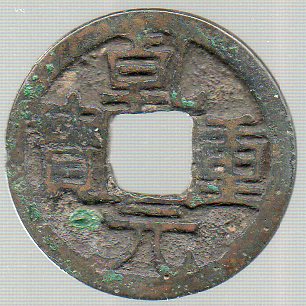 "Ch'ien Yuan" (title 758-759) "Ch'ung Pao" - Schjoeth#353 / Mitchiner#3400+ of emperor Su Tsung (756-761) |
|
Pillar of the Community
3772 Posts |
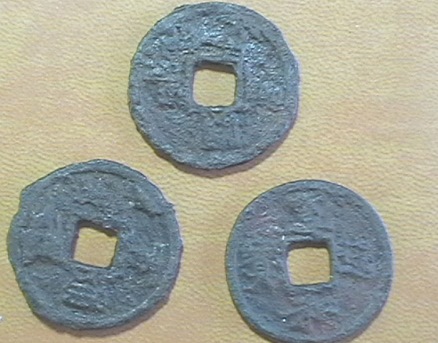
While I don't have any coins from the Five Dynasty period (907-960), I have several dozen from the next one. But I will be restricting myself to only a few coins to show a few points. The Pei Sung (or northern Sung) Dynasty lasted from 960 to 1127. On top of the standard cash, the introduced 2 and 10 cash coins. First 4 coins with different script style (all 2 Cash because of the clearer inscriptions): 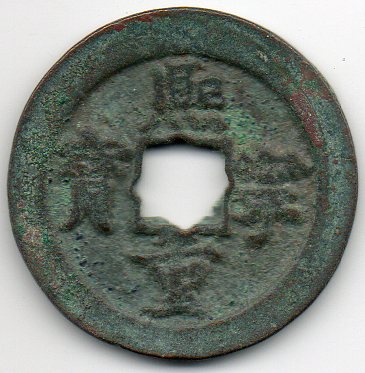 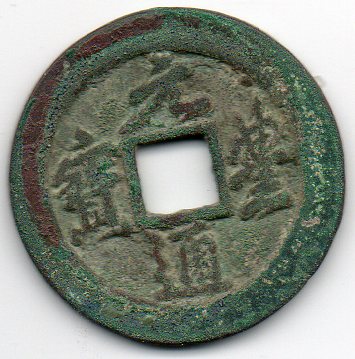 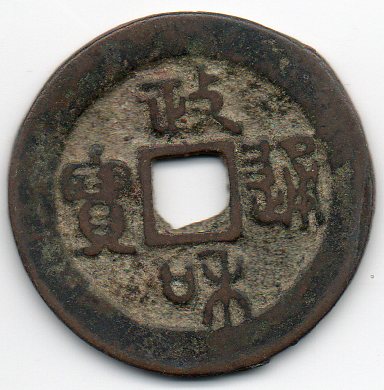 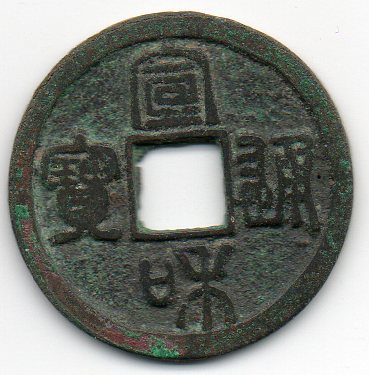 Top left is written in so-called "orthodox script", top right in "Grass Script", bottom left in "Seal Script" and bottom right us "Clerkly" script. The top two coins are from Emperor Shen Tsung (1068-1085): "Hsi Ning Chung Pao" (1068-1077) - Schjoeth#542 / cf.Mitchiner#3472 "Yuan Feng T'ung Pao" (1078-1085) - Schjoeth#556 / Mitchiner#3491 And the bottom two are from Emperor Hui Tsung (1101-1125): "Cheng Ho T'ung Pao" (1111-1117) - Schjoeth#638 / Mitchiner#3540 "Hsuan Ho T'ung Pao" (1119-1125) - Schjoeth#659 / Mitchiner#3550 Finally a 10 Cash with an earlier reign title of Hui Tsung: 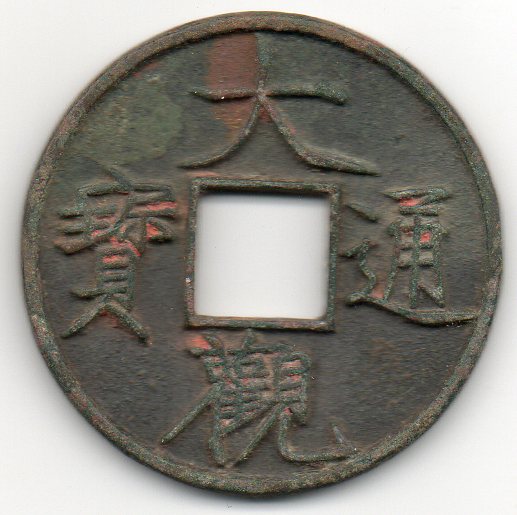 "Ta Kuan T'ung Pao" (1107-1110) - Schjoeth#530 / Mitchiner#3531+ Note: The one cash coins have roughly 25mm diameter, the 2 cash more than 30mm and the 10 cash 40mm. Edited by Medieval
10/09/2014 08:01 am
|
|
Pillar of the Community
3772 Posts |
One of the competing dynasties were Hsia (1083-1222), here one coin from them: 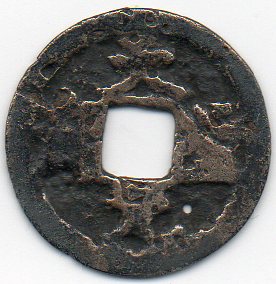 This one is from Emperor Jen Tsung (1140-1193) "T'ien Sheng Yuan Pao" (1149-1168) - Schjoeth#1078 / Mitchiner#3606a |
| |
Replies: 21 / Views: 6,809 |










 Posted 10/07/2014 9:36 pm