| Author |
 Replies: 23 / Views: 5,688 Replies: 23 / Views: 5,688 |
|
Pillar of the Community
United States
1192 Posts |
So my friend brought me two halves of Wheat cent folders that his mother collected in the 1950's as a girl. She had kept them in her garage since that time in a non climate controlled and moist environment. Needless to say they are mostly ruined and covered with green gunk. He knows they aren't worth much but would like to conserve or clean them so that they could still serve some sentimental value in new folders. The vertis is so thick I can't make out any features of a lot of the coins. He doesn't care if the patina is stripped but he rather have them as clear as possible unless it has eaten away the face of the coin. Though he will still keep them as a reminder of his mom even if they are rubbed to blank copper circles. What would you guys suggest I try? I was thinking of a sticking them in a potato to try it out and see how the starch reacts overnight. I hate cleaning coins but the collectors value of the cents is destroyed at this point anyways on the ones affected. Atleast it's a good lesson of what happens when you keep coins in bad conditions for him. He's hoping to find the other halves of the folders soon. He, hopes that it's in better condition but it's pretty dubious. 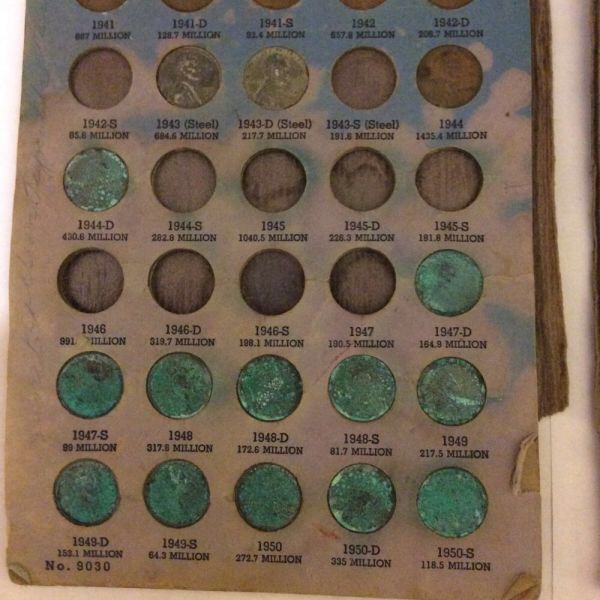 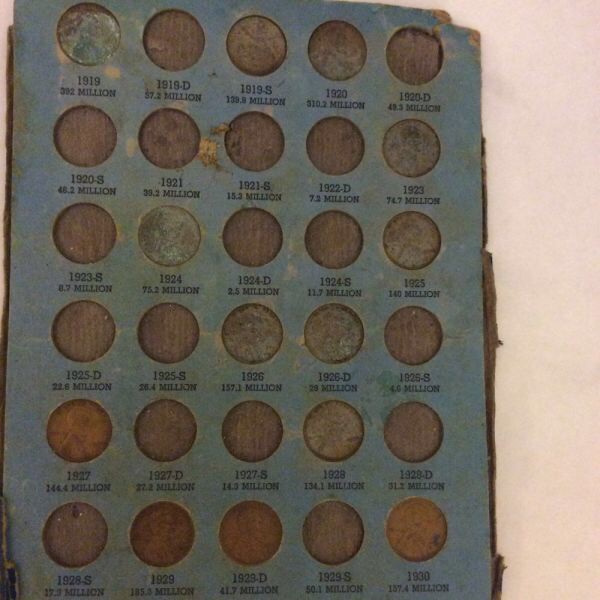 |
|
|
|
Pillar of the Community
Canada
2527 Posts |
If the green is verdigris it I doubt the coin would be worth anything anymore since there's so much on it. I think you'll just be wasting a good potato by using your method. I don't know how to get rid of that much verdi so I can't help you much here.
|
|
Pillar of the Community
 United States
1192 Posts |
I agree that the value is shot, just salvaging sentimental value for his mom. She was going to throw them away while crying. He knows I collect and metal detect so he brought them to me.
I'm trying a potato on one. I have a few sprouting :). I've seen potatoes work to varying degrees. If that doesn't work I'm trying to soak it in hot perioxide. It's a interesting science experiment atleast. Atleast I'm not using my own coins hehe. Maybe try a few in taco sauce and olive oil. If that fails, I'm tumbling the suckers, into blanks if I have to.
|
|
Pillar of the Community
3772 Posts |
One method which works if the verdigris is not too thick is to use toothpaste and brush them with a soft/medium toothbrush. Another method is to use vinegar, just put the worst ones into some vinegar for a few minutes, this will resolve (some of) the verdigris and you can brush it away afterwards.
Just ensure that you always dry the coins afterwards properly, else the verdigris will grow again (and more).
|
|
Pillar of the Community
United States
4703 Posts |
NO NO NO, do not brush them with a toothbrush. These are not 2000 year old coins. Do NOT put them in vinegar either.
Don't mess with them!
|
|
Pillar of the Community
United States
1192 Posts |
Haha, I was pretty sure this topic will stir people up a bit haha. I hate cleaning coins too but I so hated to see them thrown away because of the verdigris. It's so thick that you can't even tell that they were once cents at all. Atleast the ones with bad verdigris are super common 1950's. I would be heart broken if it was a actual 1909 s vdb :/ Though that page is MIA until he looks tomorrow.
|
|
Pillar of the Community
3772 Posts |
Quote:
Don't mess with them! Seems 'Bertensgrad' does want to mess with them so that he can see what they really are. What would be your method to remove verdigris if it really had to be that is? Let me guess: you would remove the rest of the coin together with the verdigris into a rubbish bin or to metal recycling.  |
|
Pillar of the Community
United States
1192 Posts |
Yeah his mom was so upset about them being caked green. Atleast I know what they are because the holes. The potatoe is actually starting to take the caked verdigris off. After only a few hours I can already read the date. There is no rubbing involved so I think the most it will do is strip the patina. My sister is a chemist and suggested the potatos starches to break it up. I guess I will see in the morning.
|
|
Pillar of the Community
United States
836 Posts |
I would love to see pictures of what the coin looks like after the potato. I don't like cleaning, but there is a fine line between cleaning and conserving. As long as harsh methods aren't used I consider it conserving especially if it is this far gone. Now for the people that dip silver because they don't like the toning or do other crazy things is a different story.
|
|
Pillar of the Community
United States
4809 Posts |
My focus would be on any of the coins that are lower mintage, semi-key, key, etc. Do the experiment on a common date coin. Maybe different approaches for coins in different states of corrosion. Once you have a coin to a respectable state, use Verdi-care or the like to slow the regrowth of Verdi/corrosion. Good luck.
|
|
Pillar of the Community
United States
4703 Posts |
Hmmm, never heard of a potato being used for this purpose. Perhaps the starch in it. I wonder if you boiled the potatoes and used the leftover water which will be full of starch it that would have the same effect -- same goes for starch from pasta. So if it is the starch, then the leftover water would probably accelerate the effect -- then you could also just spray household starch on them and see what happens. Of course I could be completely wrong and there is something else in the potato that seems to work.
In any event good luck.
|
|
Bedrock of the Community
United States
17884 Posts |
With the verdigris/corrosion being that heavy the surfaces of the coin will show the result of the corrosion/pitting after they are cleaned. There aren't any better dates in the group posted so it really doen't matter what he does to them. As they are they are worth at most about one cent if you could spend them and find someone willing to take them. After cleaning and removing the corrosion they might be worth Two Cents each. He has nothing to lose. He could use a wire brush on them and not hurt them. |
|
Pillar of the Community
United States
1192 Posts |
Yeah the potato got a lot off but not all it. I can see the date and the mint marks now. They are pitted slightly but you can tell she collected them in a almost uncirculated state from the wear on the cheeks and wheat. I have a feeling I will just end up using a brass brush on them and giving them back to her son. I will post pics of different methods.
I tried the 1950 s first since we both had uncirculated examples of it in our albums already.
Edited by Bertensgrad
10/13/2014 11:16 pm
|
|
Bedrock of the Community
United States
20027 Posts |
I agree with Conder, based on the heavy verdigris, these coins are goners. Also, the coins shown in the pictures are all common date. Personally, I'd dump them back into circulation and buy replacements. Regardless of any "sentimental" value, it's not worth the effort of cleaning. The verdigris is so heavy that details will be removed if harshly cleaned. Buy a new folder, put replacements in and give it back....they will NEVER know the difference.
|
|
Pillar of the Community
United States
1247 Posts |
you didn't hear this from me..... but, if you just want to salvage them to clean the junk off, dip in coin cleaner... it will ruin any value, not that there is any value, but it should clean them off.
|
|
Pillar of the Community
United States
8533 Posts |
I'm with BadThad, buy a new folder and put circulated coins in it. She'll think your the best coin conserver ever lol.
Oregon coin geek.....*** GO BEAVS ! ! ! ***
|
| |
Replies: 23 / Views: 5,688 |










 Posted 10/13/2014 01:07 am


