| Author |
 Replies: 19 / Views: 23,269 Replies: 19 / Views: 23,269 |
|
Valued Member
Australia
55 Posts |
Guys, I came across this and wondered if anyone can tell me what may have happened to make this coin like this? Is this what is termed an off-centre strike? The reverse is fascinating - it's as if the metal on the reverse near the edge has smeared too thin (wide rim) & over the grooves on the edges & left holes you can see through looking at the coin square-on. Andy. 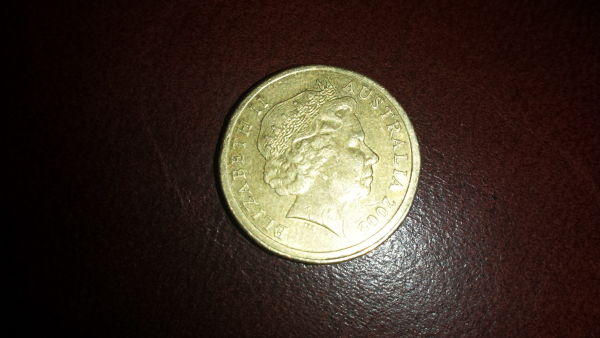 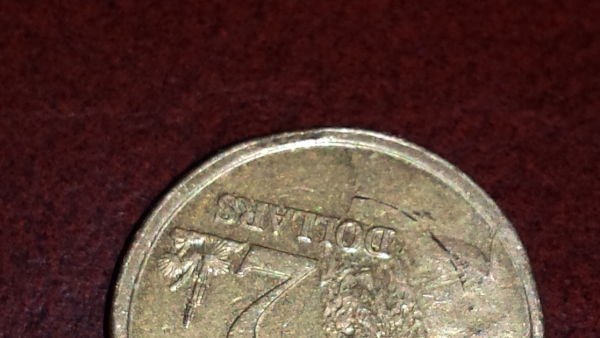  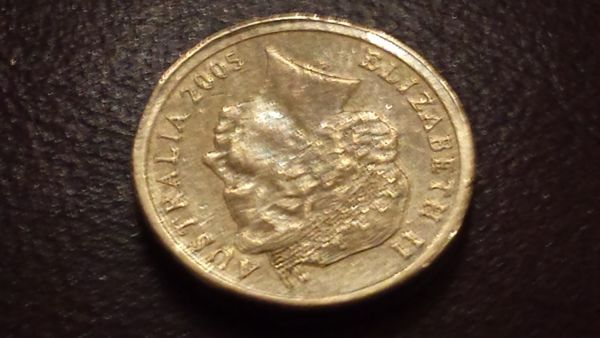 Edited by andycoinster
10/17/2014 06:25 am
|
|
|
|
Valued Member
 Australia
55 Posts |
Well the help is deafening... guess when you know everything it's nice to sit back with a smug feeling of self-satisfaction :)
Edited by andycoinster
10/17/2014 07:16 am
|
|
Pillar of the Community
United States
2563 Posts |
Please do not speak like this, as this is a family forum. Our experts are more than likely at work at this hour, so you will have to wait until this evening. But as for your coin, it has a slight MAD, which is not worth any premium because it does not omit part of the design.
|
|
Valued Member
Australia
55 Posts |
Hi coin collector. Thanks very much. I know it's a great friendly (& family) forum - I was  Now I shall go & see what a slight MAD is. Edited by andycoinster
10/17/2014 6:22 pm
|
|
Formerly nancyc
Australia
5385 Posts |
Pretty common with $2 Aussie coins. I have quite a lot like that, 1999 is another year that produced many of these.
life is a mystery to be lived not a problem to be solved
|
|
Valued Member
Australia
301 Posts |
MAD = Misaligned Die I believe.
|
|
Valued Member
Australia
55 Posts |
Ahh, thanks very much, the old misaligned die trick. Wonder why more common on the $2 - outsourced to China, India?
Nancy, when you say you have quite a lot of these, this includes with the holes through them?
|
|
Pillar of the Community
Australia
560 Posts |
No $2 have been produced outside Australia. But a common mint error.
|
|
Pillar of the Community
Australia
852 Posts |
Lots of $2 have been produced outside Australia. From the same sorts of "mints" that make 1930 pennies.
|
|
Formerly nancyc
Australia
5385 Posts |
Quote:
Nancy, when you say you have quite a lot of these, this includes with the holes through them?  Is this a real question, or are you just  life is a mystery to be lived not a problem to be solved
|
|
Pillar of the Community
Australia
2830 Posts |
quote 1: "Wonder why more common on the $2 - outsourced to China, India?"
quote 2: "No $2 have been produced outside Australia."
quote 3: "Lots of $2 have been produced outside Australia."
I may have to stand corrected on this.
For some years now, all Australian coins are minted on planchets that sourced from outside RAM.
As I understand it, a South Korean company has had the contract for all denominations for the last few years.
But, as I understand it, Australian coins have not been minted outside Australia for many years (1983 ?).
I invite informed comments ...
|
|
Valued Member
Australia
301 Posts |
Hope this helps. The coin has only been struck at the Royal Australian Mint in Canberra, the nation's capital. The only year that had no production was 1991, due to the large amount issued for its introduction in 1988. In accordance with all other Australian coins, the obverse features the portrait of the reigning monarch, who during the lifetime of the coin has only been Queen Elizabeth II. From 1988 to 1998 the portrait of her was by ( Raphael Maklouf ) before being replaced in the following year by one sculpted by Ian Rank-Broadley.[2] Designed by Horst Hahne, the reverse depicts an Aboriginal Elder, inspired by an Ainslie Roberts drawing of Gwoya Jungarai, known as One Pound Jimmy.  [4] However, the design is not intended to depict any person in particular.[5] The design also incorporates the Southern Cross and native grasstrees. The initials of its designer, Horst Hahne, were removed from the design from 1990 onwards.[1] All two-dollar coins have been struck at the Royal Australian Mint in Canberra. 160.9 million coins were minted in the first year of issue.[4] It has been issued in all years since except 1991,[4] with an average mintage of 22 million coins per annum from 1989 to 2008. The 2012 Remembrance reverse $2 coin. In 2012, the Australian mint released the first ever different designed 2 dollar coin. It features a poppy flower, with the words LEST WE FORGET and REMEMBRANCE DAY in the background of the coin. There had been no commemorative designs for this issue, until the 2012 Remembrance coin was minted. On 21 June 2013, a second commemorative 2 dollar coin was launched by the Royal Australian Mint. This coin, commemorating the 60th anniversary of the coronation of Queen Elizabeth II, featured a purple circle bordering St Edward's Crown. It was therefore the first coloured circulating coin to be released in Australia.[6] When the coin was introduced there were complaints that the coin was too small for its value and was easily lost, or counterfeited by placing two 5 cent pieces together and colouring them gold.[citation needed] However, with an uninterrupted milling on the 5 cent and the 2 dollars having 5 grooves in 4 lots separated by 7mm length of the side, identification is easy. It has the same size and milling as the 10 Swedish kronor. Its smaller size in comparison to the $1 coin can lead to confusion for visitors from outside Australia.[citation needed] Minting figures[edit] The coin has only been struck at the Royal Australian Mint in Canberra, the nation's capital. The only year that had no production was 1991, due to the large amount issued for its introduction in 1988.[1] 1988: 160,900,000 1989: 31,600,000 1990: 10,300,000 1991: 0 1992: 15,500,000 1993: 4,900,000 1994: 22,100,000 1995: 15,500,000 1996: 13,900,000 1997: 19,000,000 1998: 8,700,000 1999: 27,300,000 2000: 5,700,000 2001: 35,600,000 2002: 29,700,000 2003: 13,700,000 2004: 20,000,000 2005: 45,500,000 2006: 40,500,000 2007: 26,000,000 2008: 47,000,000 2009: 74,500,000 2010: 19,800,000 As for where the planchets came from,-- I have no idea where they have been sourced from if at all. Also remember there are many uncirculated $2 coins produced for collectors only etc not circulation so maybe they have been produced out side Australia but the circulated $2 is only ever been minted in Canberra. Edited by sweetap
10/20/2014 10:59 pm
|
|
Pillar of the Community
Australia
852 Posts |
When I said lots were produced outside Australia I thought the reference to the 1930 penny made things clear. Lots of fake (counterfeit) $2 coins are produced outside Australia. Not as common as say the fake English 2 pound coin (supposed to be about 1 in 40 of the 2 pound coins so about 10 million fakes). Still not that hard to find a fake $2 coin (both local and Chinese fakes) if you noodle for them.
Sterling and Currency (Andrew Crellins website) even mentions seeing bags of fake $2 coins for sale at shows in HK and Singapore.
|
|
Valued Member
Australia
301 Posts |
Makes sence Neal, Yes I'm aware there are fake $2 coins I can not tell the difference but I know there out there LOL.
I was just making it clear on the LEGAL side of things LOL after all you shouldn't count a fake as anything other than what it is NOTHING at all but a lump of?.
|
|
Valued Member
Australia
55 Posts |
Hi to Nancy - no it was a very genuine qn. My $2 coin has holes through it around the rim - is this really common is my qn? I take it that MAD/ non-central strikes are a fairly common error on the $2 - but are they common to the extent you get holes through the rim over the reeds? Sorry if it seems a silly qn - remember I'm new :)
Edited by andycoinster
10/21/2014 12:13 am
|
|
Formerly nancyc
Australia
5385 Posts |
Quote:
left holes you can see through looking at the coin square-on. Mine have the little pits, but not holes that you can see through. $2 1998 c2 Rev Rim Dots, the 5 green bars indicate the Reeding positions.  life is a mystery to be lived not a problem to be solved
|
| |
Replies: 19 / Views: 23,269 |










 Posted 10/17/2014 1:26 pm


