| Author |
 Replies: 16 / Views: 4,638 Replies: 16 / Views: 4,638 |
|
Pillar of the Community
United States
5362 Posts |
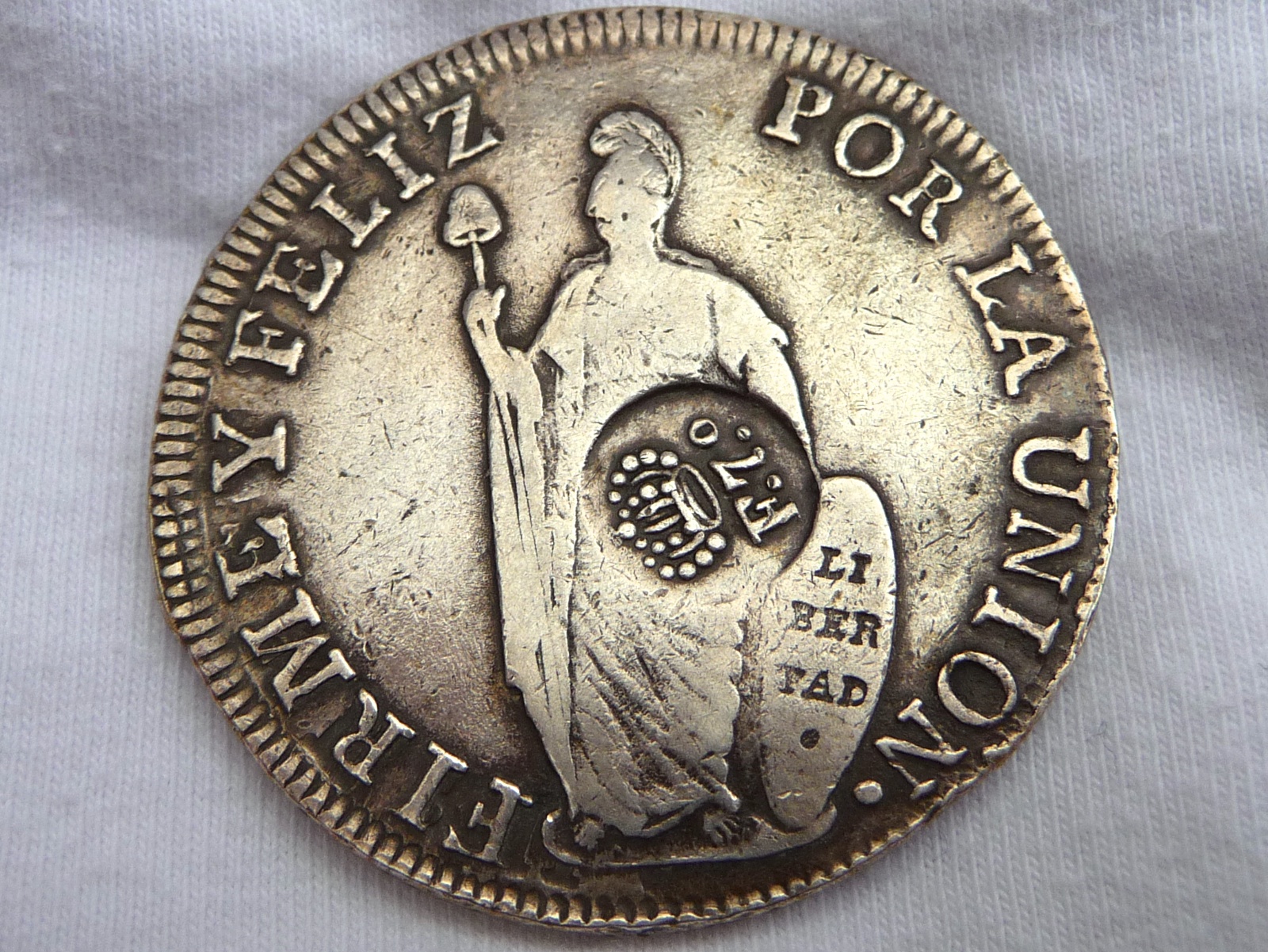
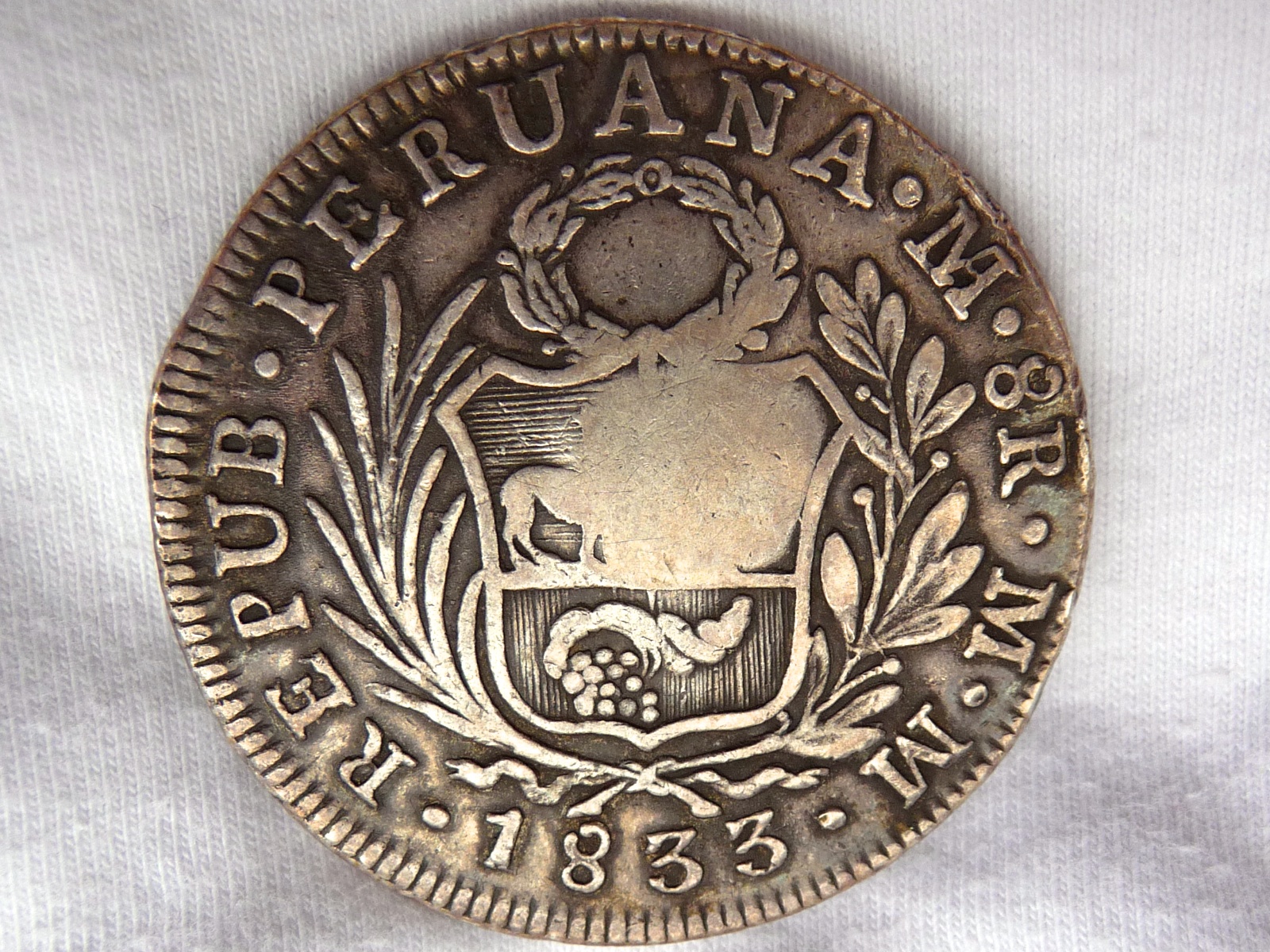
After hearing from two individuals that they missed my quizzes on Counterfeit coins. I thought it might be fun to do a few again. Possibly with a bit of a twist. So I decided to look at auctions ending in the next few hours and I located a group of coins that "I like". I will ask specific questions in some cases. Not all will be counterfeit. The first auction will likely end before I even finish this post. http://www.ebay.com/itm/390976368548 The coin is referred to as: Quote:
1804 TH (MEXICO) 8 REALES (SILVER) COLONIES w/DOUBLE COUNTERMARKS (Y-II) MANILA
Comments with reasons please. |
|
|
|
Pillar of the Community
United States
1215 Posts |
Hey! People were looking for you!
|
|
Pillar of the Community
3772 Posts |
My 3 cents to it:
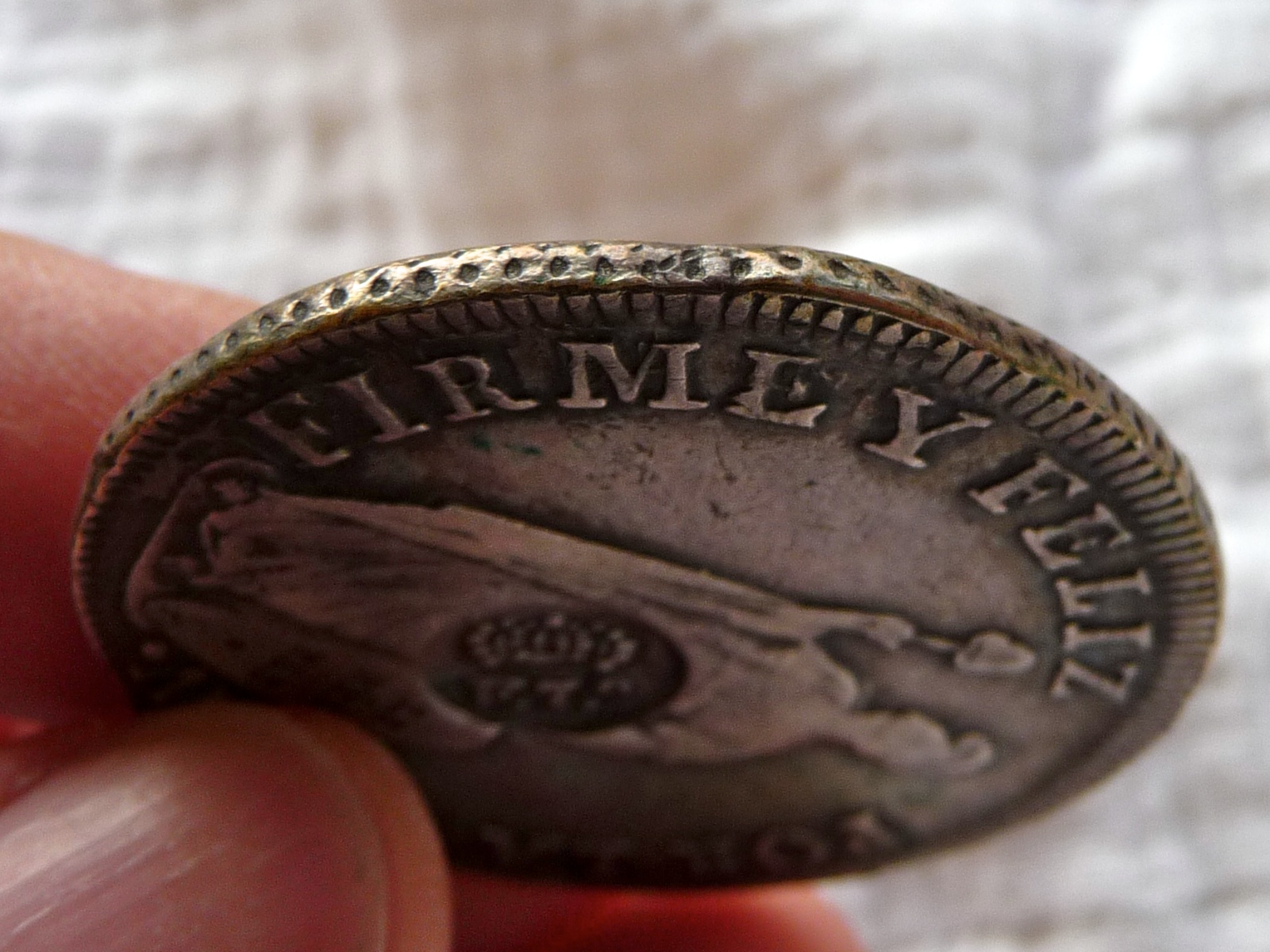
1. Odd how well the countermarks are aligned
2. With the overall wear and the amount of chopmarks I would expect some wear on the countermarks
3. Why does the metal protrude outwards on both sides of the hole
|
|
Pillar of the Community
 United States
5362 Posts |
The coin sold for $ 252 - unfortunate.
Any other comments?
|
|
Pillar of the Community
France
1591 Posts |
The YII don't have the proper design.
Moreover, it was sometime applied OVER a hole, here it seems it's the opposite (the hole was made after - as it was said above the metal protrudes)
I think holes were covered by the stamp for validation, on both sides (so that seems OK)
The blow seems a bit hard for the type though - it's pretty deep.
The chinese marks look legit, wear is consistant for them - but the way the YII stamp looks would mean the coin would not have circulated after it (while having traveled back and forth between china and the new world before)
Coin has been harshly cleaned ...
The host is pretty worn-out, so I'm unsure ... but the smile don't look like the proper one. Could it be a class II ?
|
|
New Member
24 Posts |
@MathieuMa
what is "class ll" meaning please ?
|
|
Pillar of the Community
United States
1761 Posts |
Moroccan Friend got to Amazon Books U.K. and type in the words Eight Reale. Look inside the new Gurney Book on Counterfeit 8 Reales. JPL |
|
Pillar of the Community
United States
5362 Posts |
To all those who replied - Thank you.
The selected coin is a great example of how a coin forgery can be exposed by the way in which it was made.
The host coin is likely a genuine worn 8R. There is of course always a possibility that it is a Class 2 coin (Circulating Silver Counterfeit made for trade with China - see my book "Counterfeit Portrait Eight-Reales"). More likely the host was selected because it was very cheap.
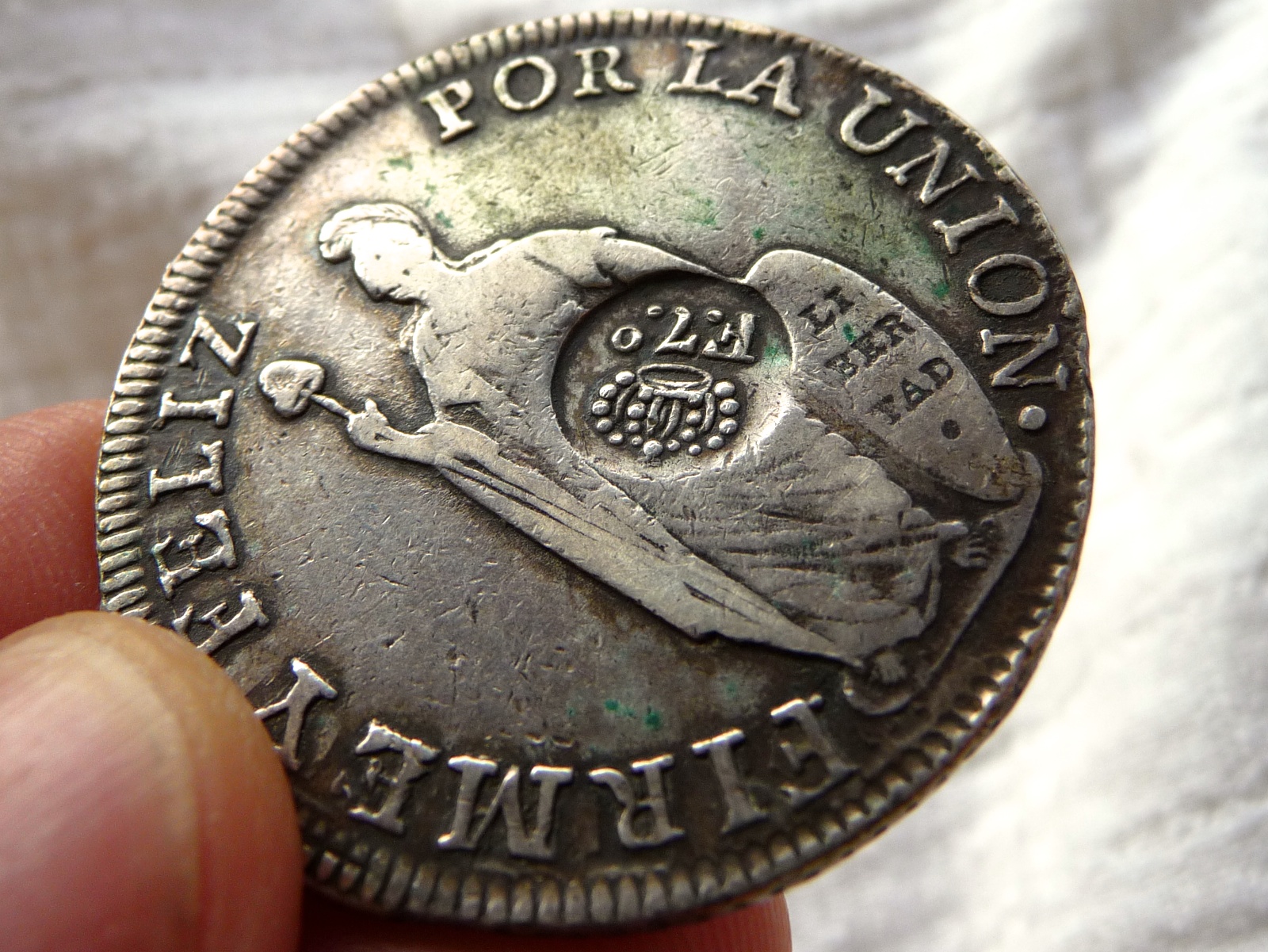
The double counterstamps were applied to coins in the Philippines that had holes drilled in them. The stamp was pressed into both sides (NOT AT ONE TIME) to validate the coin for circulation. Genuine coins never seem to have aligned stamps and the same stamp appears on both sides.
Here the coin shown shows incorrect priorities - the hole was drilled AFTER the stamp was applied as was correctly pointed out by Medieval. That is adequate to prove a forgery even if the designs of the stamps were correct.
MathieuMa seems to have gotten most of the main points. The designs on the stamps are incorrect. They are poorly engraved and the designs are not symmetric. There are TWO stamps being employed which implies a single very hard strike with two die punches. That was NEVER done by the authorities in the Philippines. These two stamps are terribly crude and are unbelievable. The stamps are also deeply impressed - too deeply when compared with genuine coins. The stamps show NO WEAR at all - so the coin did not circulate after 1837 - yet it was terribly low grade - that makes no sense at all. This coin would never have been set aside as a collectable in 1838.
The small chop marks were on the coin and well worn-in before it got to the Philippines. ODD. At all times before 1839 China did not use Carolus dollars as payment for overseas debt. The Carolus dollars were traded in China at a premium and no where else in the world did this premium apply in trade. This particular coin making a journey from China to the Philippines simply makes no sense at the time it would have had to travel before 1838. Remember that the YII counterstamp was used after December 1834 and before March 1837.
The point I am trying to make clear is that a coin to be genuine must make sense - all of the forensic data that the coin brings to the table must make sense when taken together and the creation of the coin has to follow a logical progression. This is where the dates given in the reference books like Krause start to become meaningful.
|
|
Pillar of the Community
France
1591 Posts |
Cool - glad to see I had a good teacher ;)
Actually, regarding the double stamp, I didn't took time to check more ... I knew the holes could be stamped, but I was unsure wether it was double sided or not (in any case, it was one blow at a time). I've found some samples with two different stamps (FoVII and YII) - but not both.
Thanks - love that game :D
|
|
Valued Member
Germany
194 Posts |
Bob, you say: Quote:
At all times before 1839 China did not use Carolus dollars as payment for overseas debt. The Carolus dollars were traded in China at a premium and no where else in the world did this premium apply in trade. This particular coin making a journey from China to the Philippines simply makes no sense at the time it would have had to travel before 1838. Remember that the YII counterstamp was used after December 1834 and before March 1837. Do I get your argument right that it is unlikely for chopped bust dollars having arrived in Manila prior to the mid-1830s because it made no sense for them to leave China, where they traded at a premium? The Spanish Philippine decrees for the application of the counterstamps explicitly dealt with chopped dollars. The regulation stated that unchopped dollars were accepted, heavily chopped coins were to be melted. Lightly chopped coins could be countermarked as a means for revalidation. So chopped dollars did get to Manila, in amounts that called for such a decree being issued! |
|
Pillar of the Community
France
1591 Posts |
dosmundos : very interesting, I was wondering what those resellos were for !
Some are easy (like during the WOI to validate some crude cast coins), some have an easy historical origin (obliterate royalist legend for example) ... but I never checked for those :)
I was just aware of the "hole" issue - which could be re-validated by being struck by that mark.
What I don't get though is that the only F7o resello in my possession has no single choppmark.
I suppose it was a bit more than "just" for choppmarks ?
(it's a peru republic 8 reales - which means ... not a royalist coin ... which should be a simple explanation)
|
|
Pillar of the Community
United States
5362 Posts |
There are of course exceptions to every rule but as I understand the Philippines law the stamps were applied to worn and pierced coins to allow them to circulate as legal tender. I was not specifically aware that chopped coins were mentioned. That said I do not have access to my books they are all packed so I am working from memory. I am not really aware of a great number of 8Rs with legitimate chop marks that have been countermarked with the F 7 or YII punches. I would estimate there are over 10 to 1 in favor of clean hosts. I have of course seen chops placed on top of the cmks and as Frank Gilboy noted some of the Birmingham forgeries were made complete with fake chops so that those alos enter into the mix of the types circulating in the Philippines. Gilboy was of the opinion that some counterfeits were actually marked for circulation. That I have only seen in very few cases - mostly Cap and Ray varieties that were well made counterfeits. I have not seen a Portrait counterfeit with a real Philippines cs.
There was no economic reason for the Carolus dollar to be shipped to the Philippines at anytime before the end of the first Opium War. This does not preclude people using a chopped dollar in trade but they would lose 16% of the value in the period of 1838. So this is a violation of Gresham's Law. (People use the least valuable coin for payment when there are two options of differing value).
Did it happen - perhaps. Did it happen in great numbers - I really doubt it.
I would look very closely at any coin presented which has the Philippines cs OVER a chop. I would bet the majority are fakes.
|
|
Pillar of the Community
France
1591 Posts |
|
|
Valued Member
Germany
194 Posts |
Don't get me wrong: The main reason for the F7 and YII countermarks was the arrival of coins from the countries that had declared independence from Spain. The majority of the stamps are on these coins. The original intention of the stamps was to legitimize the non-Colonial issues for use in the Philippines (after the first try to completely overstrike them with the "MANILA / 1828 (to 1830)" counterstamp failed)
But the decrees also provided for the "revalidation" of holed and chopped Colonial coins. Colonial coins with chops traded at a discount in the Philippines, and the counterstamping was a way to remedy this. Which is why you can find the counterstamp on earlier Colonial coins. However, there was a fee involved in the counterstamping, so if you see the countermark on an unchopped Colonial coin, there is very good reason to be cautious!
|
|
Pillar of the Community
United States
5362 Posts |
dosmundos You say:
However, there was a fee involved in the counterstamping, so if you see the countermark on an unchopped Colonial coin, there is very good reason to be cautious!
Do you have a copy of the text of the law - I know it is contained in at least two reference books in my collection but they are still packed.
I know for a certainty that pierced or damaged (cut) coins were allowed to be stamped - but can not recall chops being included as an impediment to actual circulation.
Holed coins and cut coins did not circulate - the stamp remedied that. So the expense (fee) was justified. Republican coins DID not circulate and the stamp remedied that as well.
The "discount" which applied to chopped coins simply reduced them to face or bullion value by eliminating the Chinese premium which was paid for unchopped Portrait Mexico City coins of the two Kings named Charles.
I know I have seen quite a few stamped Carlous and Ferdinand dollars which have no chops which I considered to be genuine. (I do not own one however.) I have also seen numerous coins with small chops that I also consider genuine. I would say I have never seen a coin that had large chop applied BEFORE it was stamped. (Of course priority can only be ascertained when the two stamps overlap).
If the law restricted or prevented chopped Colonial Spanish coins from circulating then I see your point and all clean coins would need to be re-examined very closely.
It is a very good point that I have missed to this point which could be a very critical tool for authentication.
|
|
Valued Member
Germany
194 Posts |
It's all in the Oropilla book on Philippine counterstamped coins which I am sure you have, let me go and look for it...
|
| |
Replies: 16 / Views: 4,638 |








 Posted 11/23/2014 12:01 am