| Author |
 Replies: 9 / Views: 2,481 Replies: 9 / Views: 2,481 |
|
|
Pillar of the Community
Hong Kong
1270 Posts |
|
|
|
|
Pillar of the Community
United States
1760 Posts |
You do come up with some challenging specimens from time to time <VVBG>. Pewter is tin based and can't be at this weight level. Can't be salt water corrosion - at this weight? Colonial edging looks high in some spots - not uniform around? Not GNL listed - just checked. See here: https://goccf.com/t/153459Could be looking to deep here but it could be regal and then some form of silver corrosion induced embrittlement. This can cause cracking as seen in this link and severe surface porosity where it looks cast in certain areas. Just a thought. This embrittlement I have seen can take the coin ring away from a coin giving it a thud like shorten sound you mention ... IMO. Another good lab specimen to view/analyze IMO. Google Wanhill and silver embrittlement to go deeper than this simple post. JPL Edited by colonialjohn
11/26/2014 5:08 pm
|
|
Pillar of the Community
 Hong Kong
1270 Posts |
Thank you your comments, John. I would expect more challenge after reading Bob and your's book. I have ordered on by still not come.
Yes, the word brittleness is just right to describe the sound come out from hitting the coin. I will do a S.G. within a few days to confirm the silver content of this coin.
BTW, would you tell the meaning of abbreviation <WBG>?
|
|
Pillar of the Community
United States
1760 Posts |
http://www.forumancientcoins.com/mo...l_coins.htmlTo me its some form of silver embrittlement with that v.high weight. See the link. Same type of surface features IMO. It's a form of surface corrosion. Read some of Wanhill's paper's ... <VVBG> = very,very big grin = a big smile = totally appreciating someone's merchandise and/or thoughts ... I know this silver embrittlement causes those surface cracks we normally see on regals ... no harm/no problem. Its a phenomenon we should all review IMO ... In the link ... click the coins for a large view and compare. Just a guess without coin in hand ... JPL
Edited by colonialjohn
11/27/2014 12:17 pm
|
|
Pillar of the Community
United States
5362 Posts |
Things are not adding up here.
The diameter seems wide compared to the smaller dentils that actually show. This means the face diameter of the die is larger than standard. A quick look at the edge makes me think it may be too thick because of the way there is extra space past the circle and rectangle design. Lima and Potosi use larger edge segments than Mexico City which often shows space on one or both sides of the edge segments.
If the coin is increased in diameter and has been thickened a bad alloy could be the cause of the poor ring.
The coin is heavy therefore the idea of the ring being effected by porosity due to corrosive emersion makes no sense. Corrosion causes a loss of weight. Corrosion to the extent that the ring is totally wrong would mean a loss of significant weight.
The coin faces look cast to me - the date is ragged along the edges as are some of the letters and of course the concentration of pores at the high points of the portrait are all suspicious. The intersection between the face and the edge appears to show a possible seam along the reverse - this could be an optical illusion but it is worth a close look.
The edge is very poorly executed and irregular. Even though Lima is notorious for rather poor edges, I would still look for opposing laps of equal length to eliminate a post cast edge application.
|
|
Pillar of the Community
Hong Kong
1270 Posts |
After throughout investigation on the whole coin by my lens, I tend to agree this coin is not real. The coin is not likely be corroded but the outer layer of Ag has been peeled off and leaving numerous dark spots.The coin is more likely to be struck but plated with silver afterwards.
Nickel also has the property of diamagnetism. Would the coin be nickel inside and plated with a layer of silver outside?
If it is really what I guess, is the coin a contemporary counterfeit or it is a modern forgery. Shall you answer my question, swamperbob?
P.S. I will do my S.G. test on Sunday and tell you the silver content of the coin.
|
|
Pillar of the Community
United States
5362 Posts |
If the coin is plated after it was struck and the plating is a thin film type (electro-plate) - not thick or paint like (silver amalgam gilding) - then it was made sometime after 1840. That is a simple fact that is not possible to change. How long after 1840 it was made is not possible to determine either so the range of possibility is 1840 to 2014.
Nickel will at times corrode producing a very dark gray to black color - so if the underlying metal is "black-ish" in tone it may be nickel corrosion. Nickel is also a metal that responds magnetically like iron. However, when alloyed with copper that magnetic property is not seen.
So yes, the facts would fit the observations here. The coin could be a silver electro-plate over copper.
The question of classification involves some "educated guesses" or reasonable but not absolutely certain conclusions about what the data says.
The Portrait 8 reales of Charles IV was still a circulating coin as late as 1885 based on comments in Spanish literature of that date (see my book). So I conclude that for at least 45 years after electroplate technology existed that this coin was still in circulation. When it left circulation is unknown but certainly it was no longer circulating in 1935. That leaves 50 years of uncertainty.
Next I look at when thin film electroplates were popular for forgery. This is a statistic based on my personal experience over the past 50 years. The VAST majority of these counterfeits were made in the 1870s-1890s and the target was circulating silver coins. The base metal tends to be copper or brass by a wide margin. The same method was used by numismatic forgers until the 1960s in large numbers as well but the core metal tends to be cheaper white metals. These are NOT exclusive. Both types do exist over the interval but there is a tendency for earlier electro-plates to have cores of copper while later forgeries tend to have white metal cores.
If the core is nickel you need to consider that higher pressures were needed for coining. This means higher power mechanical equipment. That is likely the reason why the switch over took place.
So my conclusion, based on the known facts, is that the coin is slightly more likely to be a Class 3 numismatic forgery made before 1970. It may be a LATE Class 1 coin made to circulate as bullion in the latter part of the 1890s also.
|
|
Pillar of the Community
Hong Kong
1270 Posts |
First, I would like to thank John's information about the brittleness of a coin and tell the meaning of an abbreviation that I don't know. Second, Bob's reply to the post is encouraging and makes me more about the underlying manipulations of a contemporary counterfeit. I do the S.G. test on this coin today and it finds to be 9.978, that is equvalent to 70.1% Ag if it really has a AG-Cu core (but I don't believe so). Anyway, this means the coin is NOT an ORIGINAL for sure. I still want to discuss more about this coin. 1)The coin is non-magnetic but has some diamagnetic characteristic to Neodymium. S.G. of the coin is 9.978 which is higher than the S.G. of pure Cu and Ni but lower than pure Pb. Cu and Ni will neutralize the magnetic property of a coin so may I suppose the coin will contain some lead that exhibit the diamagnetism as I put it on a neodymium slide. If my guess is true, the coin was struck to dupe the coin users rather than collectors. So, Bob's claim is supported. Quote:
It may be a LATE Class 1 coin made to circulate as bullion in the latter part of the 1890s also. 2)Bob, will you tell how to distinguish a coin which is casted or struck before the electro-plating process? I post more pictures for you to see if you agree with the coin is electro-plated with silver? Many areas on both faces of the coin show a sign of peeling off the tiny silver pieces. This is not from erosion. 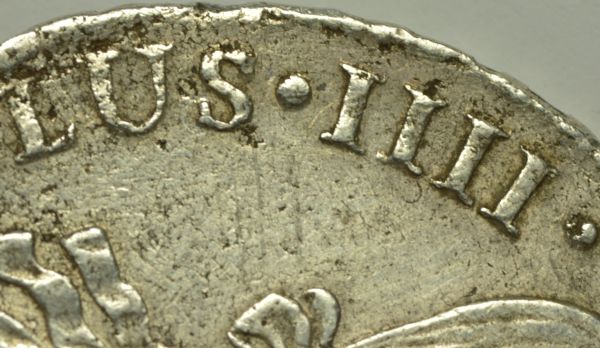 The letters look bold so I suppose the coin was struck rather than casted. Am I correct? A test cut is also seen here. 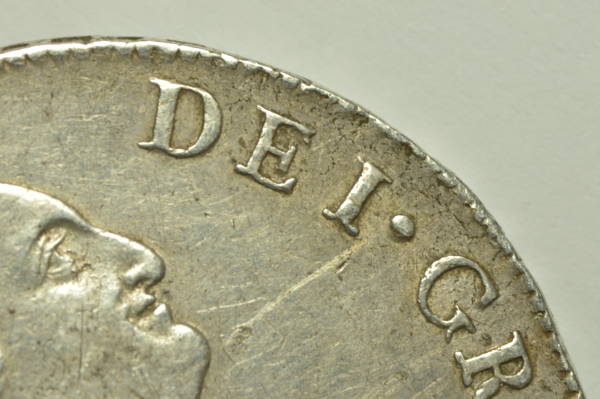 The under side of the lion has an insufficiency of electro-plating. The castle wall goes beyond its quadrant. 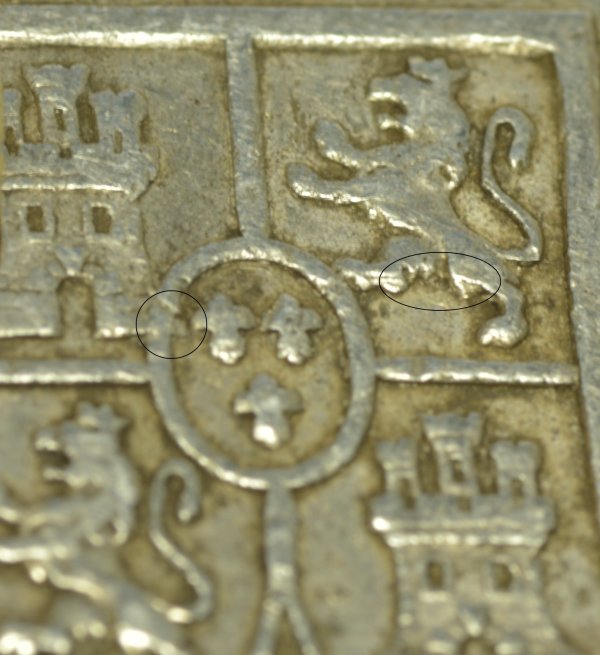 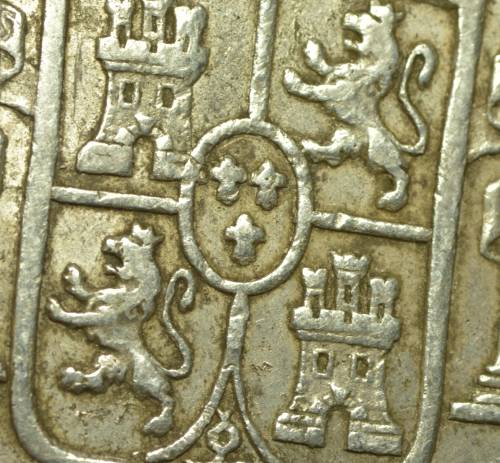 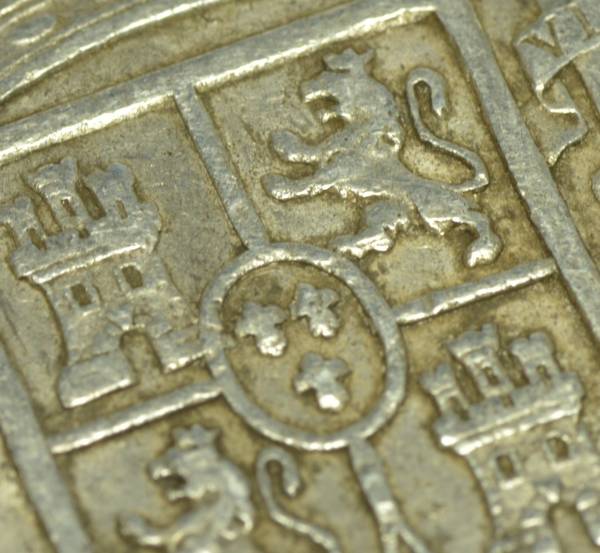 |
|
Pillar of the Community
United States
3229 Posts |
Interesting coin! Cool thread!  |
|
Pillar of the Community
Hong Kong
1270 Posts |
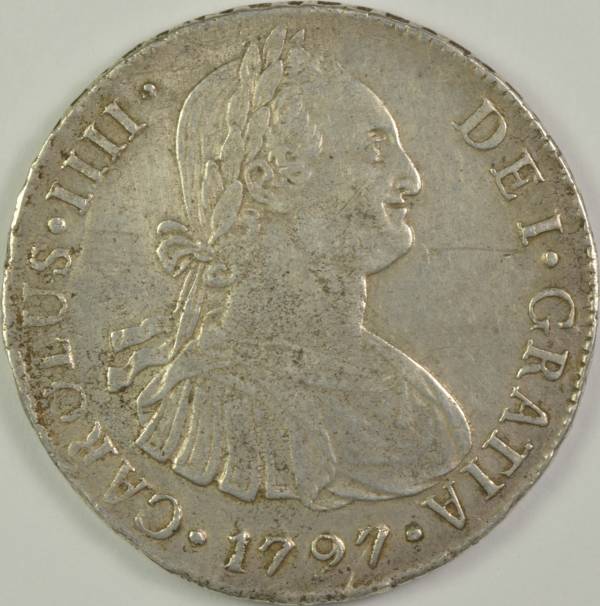
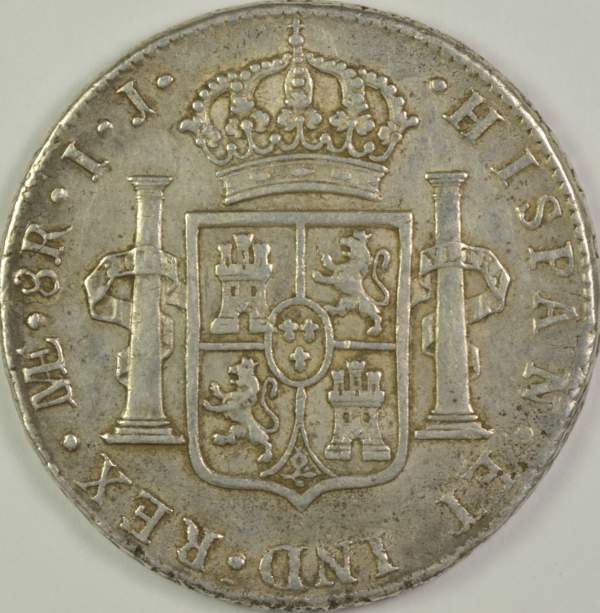
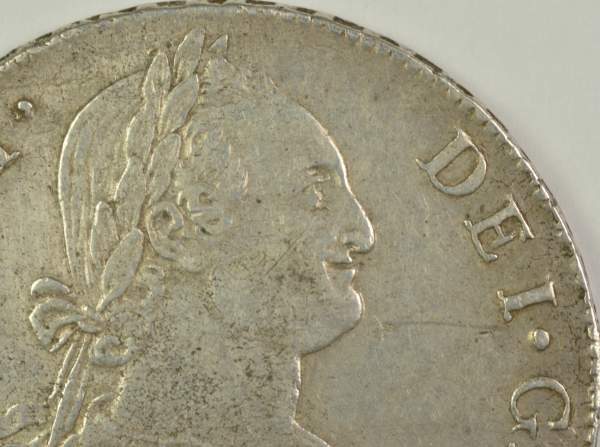
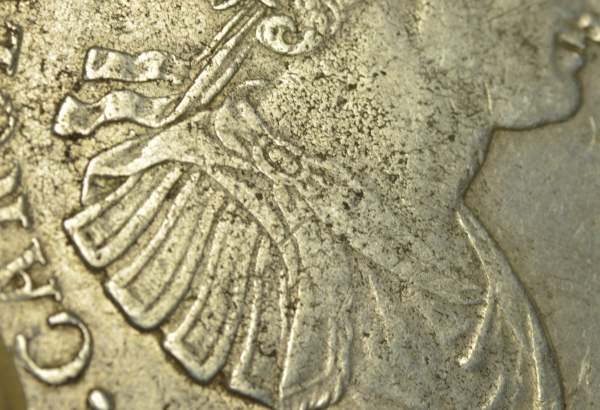
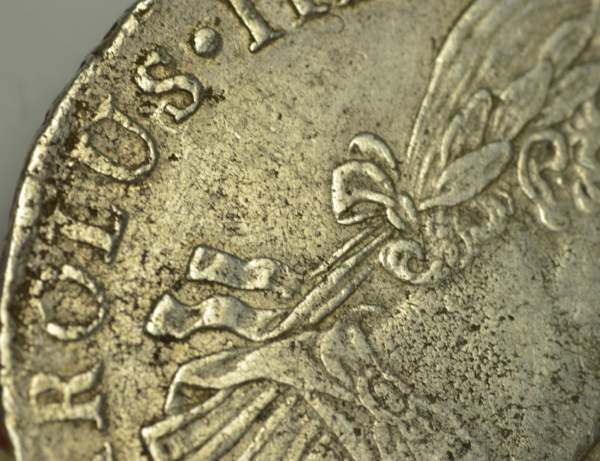
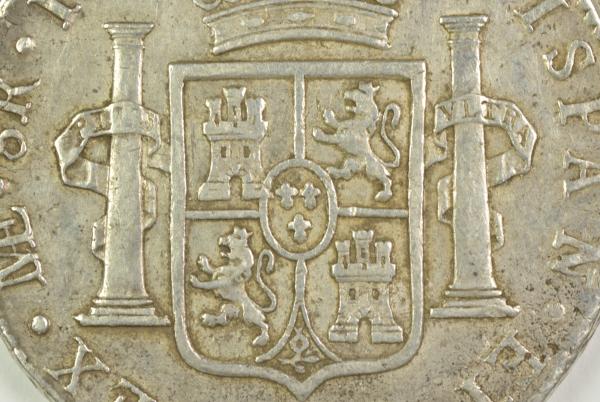
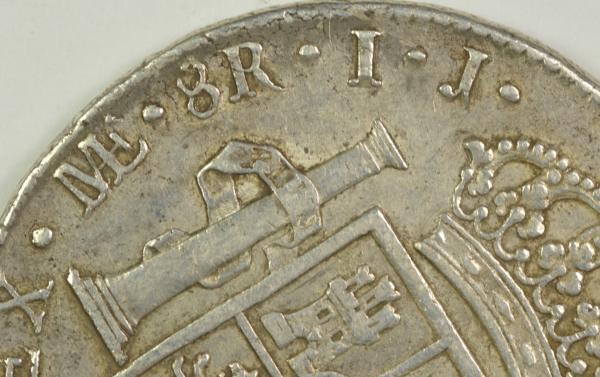
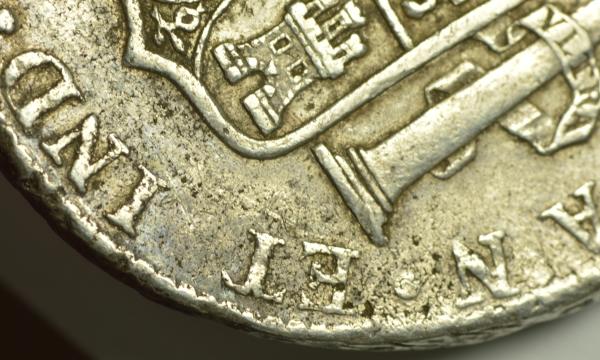
I buy this coin recently, it is a real one for me. The coin is 26.89 grams, 39.5-39.8 mm in diameter. The coin rings like a normal colonial 8R and has a good reaction to my neodymium magnet slide. The thickness (by eyes) of both coins is the same so the higher weight (27.12 grams) of the first coin comes from its increased size (40.0-40.3 mm). If I don't compare both coins, it is hard to say the previous one is fake by eyes. The luster of the second coin makes me feel comfortable for it is believed to be made of real silver. My query is: The year of Peru 1797 is not especially expensive so it should not be the target of numismatic forgery. I would deduce the counterfeit was made to dupe commercial activity. The counterfeit was made so good, I would also incline to believe it was made in late 19th Century as one of swamperbob's deductions. That is, it is a high grade counterfeit and is made by more advanced technology. Any further opinion is always welcome. See the pictures of this real one. 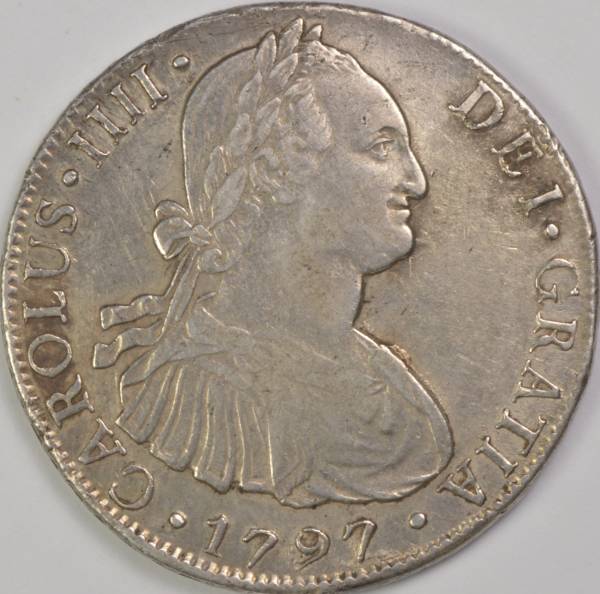 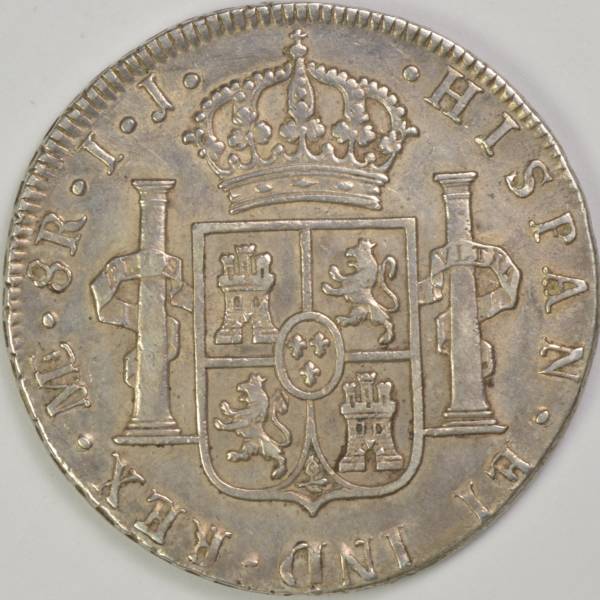 There is a minor eroded area in "D EI". 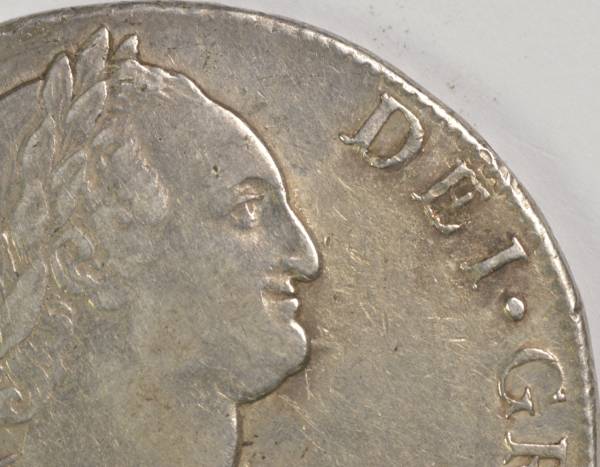 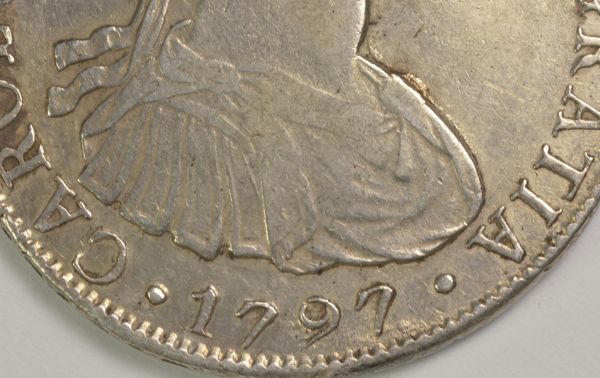 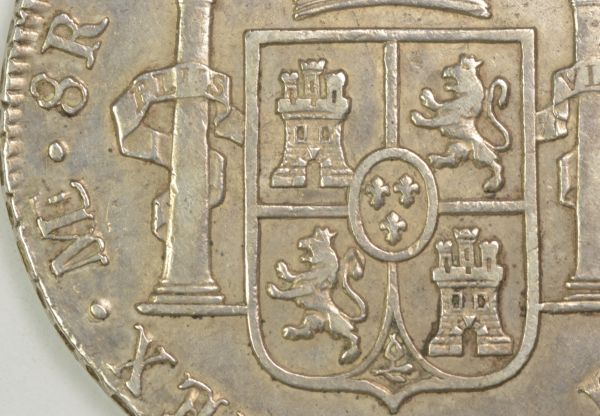      |
| |
Replies: 9 / Views: 2,481 |
|
















 Posted 11/27/2014 02:12 am


