Quote:
I'm thinking of Old Testament in particular, but of course New Testament would have a lot more identifiable ones anyway.
Most of the Bible was either written long before the invention of coinage, or describes events and times occurring long before the invention of coinage. I think the only actual "coin denomination" mentioned in the Old Testament is the
Persian gold daric, recorded in Ezra 2:69 and elsewhere in Ezra and Nehemiah (books written while the Jews were living under Persian rule). Other measurements of money in the Old Testament are references to weights, rather than actual coins.
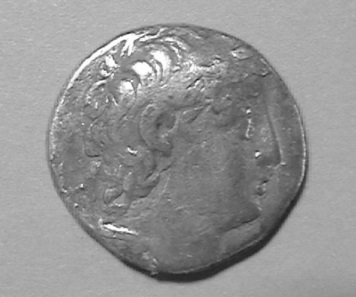
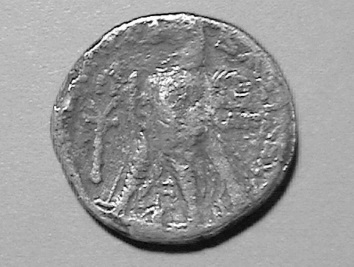
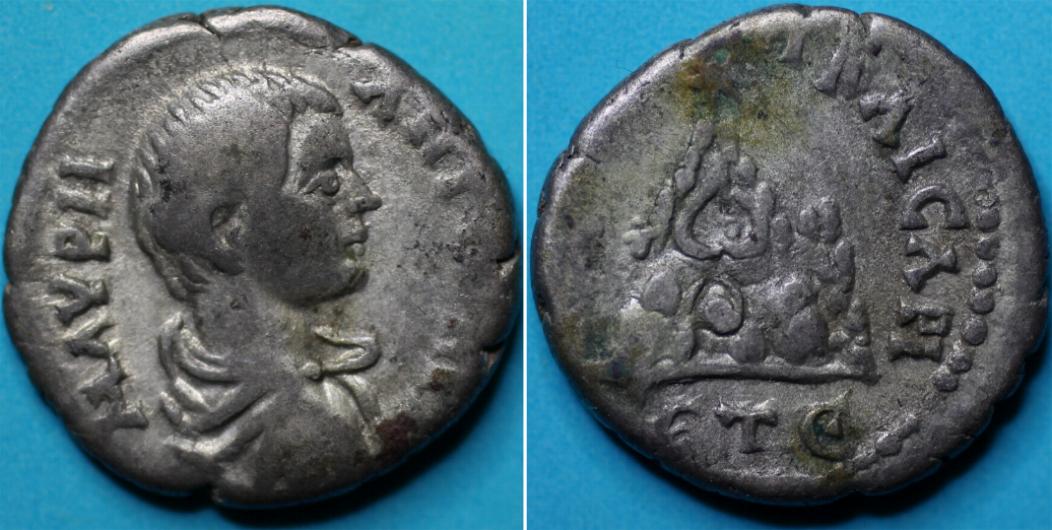
"Biblical coins" can mean more than just "coin types actually mentioned in the Bible", of course. Especially since the list of actual mentioned coin denominations is rather short: the Persian daric, Judaean lepton, Roman quadrans, Roman denarius, Greek drachm, Greek half-shekel/didrachm and Greek shekel/tetradrachm. We don't even know for sure which specific types within those denominations might actually have been the coins in question, though of course there are the traditional definitions. The definition of "biblical coins" is therefore often extended to include any and all "Jewish coins" from the Maccabean, Roman, First Revolt and Second Revolt periods, as well as coins issued by people and cities that were mentioned in the Bible. Or even any coin dating from around 1 to 100 AD, from anywhere.
If you want specific Scriptural references:
Persian daric: Ezra 2:69 etc, as discussed above.
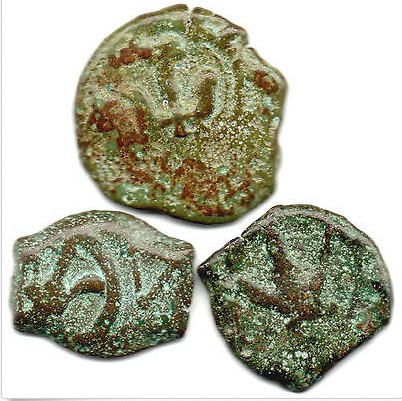
Judaean lepton: Mark 12:42 and parallel passage in Luke 21:2. The "Widow's Mite".
Roman quadrans: also Mark 12:42 - the original Greek text here reads "two lepta, worth a quadrans".
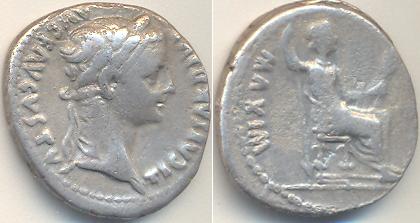
Roman denarius: Matthew 22:19, parallel passages in Mark 12:15 and Luke 20:24; several times in a parable in Matthew 20:1-16. The "Tribute penny".
Greek drachm: Luke 15:8-9, the woman with "10 silver coins", the Greek word for the coin is actually "drachma", the only time this specific word appears in Scripture.
Greek half-shekel/didrachm: In Matthew 17:24, the Jewish Temple tax-collectors are called "those who collect the didrachma". The Temple Tax was half-a-shekel, rated the equivalent of the Greek didrachm.
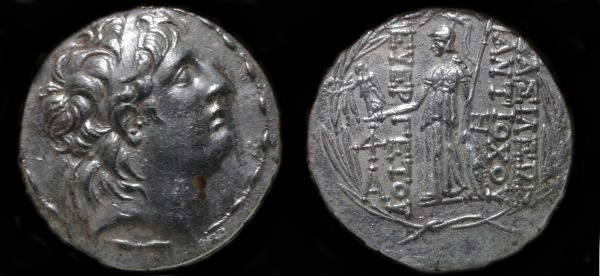
Greek shekel/tetradrachm: In Matthew 17:27, the coin pulled from the fish is a tetradrachm (Greek "statera"), worth two half-shekels (and therefore worth the Temple Tax payment for two people).
It is debated whether the "pieces of silver" paid to Judas in Matthew 26:15 and nearby and parallel passages refers to the tetradrachm, drachm, shekel, or some other money of account. The Greek word is simply "argyria" (silvers). Given the Temple context, the shekel (tetradrachm) seems logical, and the tetradrachm is the much more commonly encountered coin. We know the Jewish authorities preferred Tyrian tetradrachms to other silver coins, because they were higher-purity silver. Matthew 26:15 specifically says the chief priests "weighed" the money out to him, rather than "counted", meaning it may have actually been a mixture of denominations adding up to thirty argyria, rather than thirty coins. The same unit of money, with similar ambiguity of meaning, is found in Acts 19:19.
The standard reference work for "biblical coins" is
David Hendin's book. I've been meaning to get myself a copy of it; thanks for the reminder.
Don't say "infinitely" when you mean "very"; otherwise, you'll have no word left when you want to talk about something really infinite. - C. S. Lewis









 Posted 12/02/2014 08:02 am