| Author |
 Replies: 10 / Views: 2,814 Replies: 10 / Views: 2,814 |
|
|
Pillar of the Community
Hong Kong
1270 Posts |
|
|
|
|
Pillar of the Community
3772 Posts |
|
|
Pillar of the Community
 Hong Kong
1270 Posts |
Oh so fast to receive your reply, Medieval. Thank you and Merry Christmas. This is austrokiwi's paper, also thank you very much. Henry
|
|
Pillar of the Community
2087 Posts |
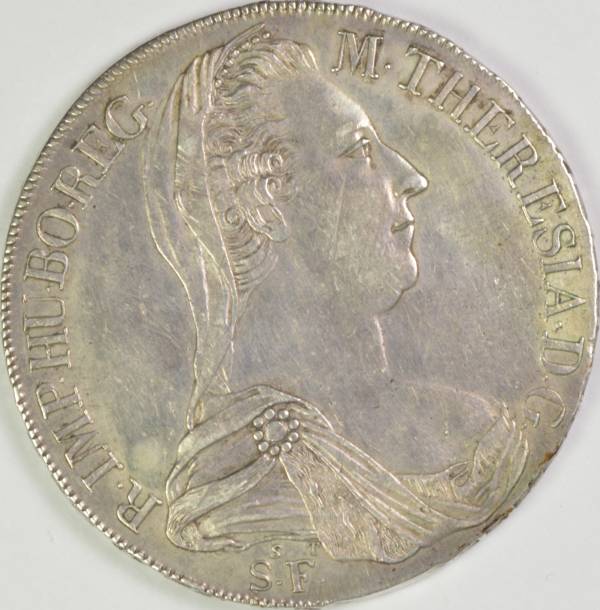
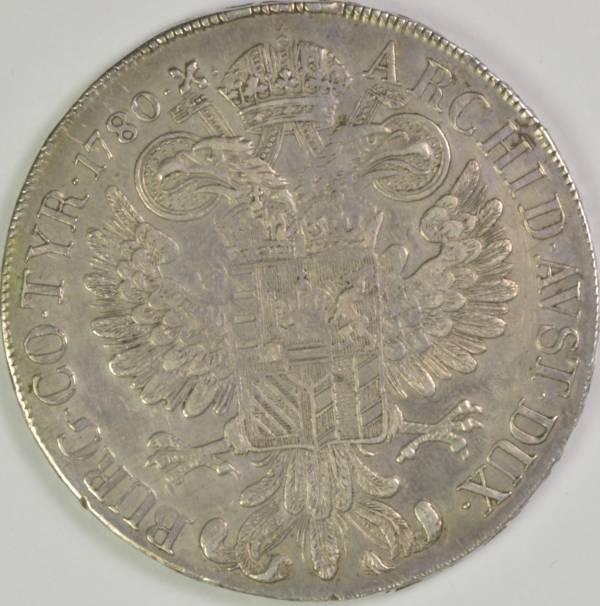
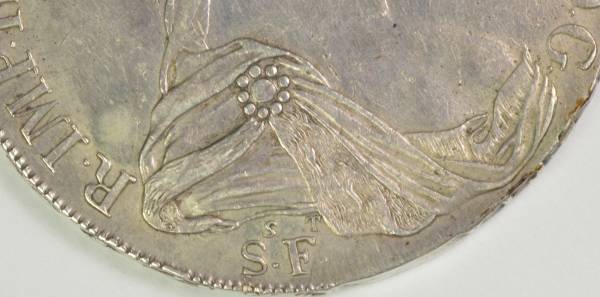
JUst for every one else's benefit: Hafner says the coin is MIlan based on the 1976 work of Dr Franz Leypold. Hafner published in 1984. In 1986/7 (I am going from memory) Dr Leypold published an article updating his research. In that update he acknowledges the work of MR Broome and accepts that H35 is from Florence. If we were to be strict we wouldn't describe H35 as a restrike but instead describe it as a counterfeit. Florence is the most likely mint, as such the coin would have been struck without Austrian Habsburg approval. It is therefore a Napoleonic state counterfeit( of correct weight and silver content) As for the "ST". NO one knows what it stands for. I have to get to Florence to check but in other literature quoting the Florentine mint records there is an interesting fragment Which says the Coin has the initials "S.F." standing for Series Fecit. ( translates as Series made this coin/engraving). Series is the probable engraver. I am pretty sure the authors citing that fragment weren't familiar with the MTT. MY speculation is they confused the ST with the proper Mint Signature SF and read an "F" in the records where they should had read "T" ( its an easy mistake with old hand written documents). So my speculation is the engraver to ensure the Austrian habsburgs wouldn't have a legal standing added ST ( for Series Fecit) to clearly identify the coin from Austrian made examples. He would have used the last letter of Fecit to ensure it wasn't SF/SF which would have been confusing. I repeat this is pure speculation but it is the only possibility that fits the currently known facts. This variety was first struck in 1814 and its very existence challenges Hafners date attribution of the other so called Italian mint MTT). The coin was produced before Venice and Milan started production of the type. The current Numismatist has an article outlining the other evidence that Hafners attributions are incorrect.
Henry its a very nice example I have 11 or so and only two are close to the condition of yours. Hafner talks about only two varieties . MY 11 examples show there are probably five varieties made from 3 die sets.
Edited by austrokiwi
12/20/2014 02:35 am
|
|
Pillar of the Community
Hong Kong
1270 Posts |
Thank you so much about the story behind this coin, though you said it's your speculation. I am very satisfied to have this important MTT collection, no matter it is a "counterfeit" or not.  It is great to hear that this is a Napoleon-related example. The coin bears an additional bonus to me as I love to collect coins at this era. Henry |
|
Pillar of the Community
United States
5362 Posts |
Nice coin Henry - great that it is a counterfeit.
|
|
Pillar of the Community
Hong Kong
1270 Posts |
 Thanks! |
|
Pillar of the Community
3772 Posts |
Wouldn't really call it a counterfeit but rather imitation coinage (the ST letters make it different from the original if not sanctioned).
|
|
Pillar of the Community
United States
5362 Posts |
An unauthorized coin made in a location other than a mint legally authorized to do so is by definition a counterfeit. Adding two letters will identify it to those who know what the letters mean, but since the fact was so well hidden that the meaning was only recently discovered proves it certainly was not common knowledge. If you classify these as genuine varieties because they contain the correct amount of silver then the 1896 micro-O Morgan dollar needs to be restored to its former VAM status. It was made as a circulating counterfeit when the coin contained only 35-50 cents worth of silver metal. There are other silver and gold counterfeits as well. In my book, I was faced with the same problem of what to call a class of full weight silver imitation 8 reales that was made for trade purposes. They were made with no authority to do so in the UK, US and other countries decades after the originals ceased to be made. I introduced a brand new classification for such coins. I called them Class 2 Contemporary Circulating Silver Counterfeits. |
|
Pillar of the Community
2087 Posts |
Its not a good idea to get tied up in knots over the term counterfeit. My comment came from considerable research and a need to accurately understand the different varieties.
I think class 2 counterfeit is the best way to describe it. Don't worry about the word counterfeit to many people think counterfeit= worthless. class 2 counterfeit dutch lion thalers produced in Italian mints are phenomenally rare and fetch prices in the range of US$1000 - US$20,000.
I do have to admit with the MTT it is very confusing. I regard the coin posted in this thread as a counterfeit because the florence mint had no legal standing to produce the coin( under contemporary international law. But the MTT produced by London, Paris, Belgium, Calcutta and bombay I would regard as genuine. the reason being is due to a legal mistake by the Austrians. After the 1st world war the austrians forgot to include the MTT in their monetary legislation. They then handed the minting rights over to the italians effectively, under international legal principles(no applicable international law at that time) surrendering the right to the MTT. There was a Private Swiss striking in 1937 but I would regard that as a class II counterfeit because it was deemed illegal ( which it was) and the Swiss government seized the dies( they hadn't authorised it). From a collecting point of view this seems complicated and confusing...but in understanding the story of the MTT such definitions enhance the coins' story. The ST/SF variant is rare ( R5 on the 1-7 scale) and understanding that it was made without Austrian Habsburg authority just makes the coin more desirable. The coin Henry posted has a value in the range US$500 -US$1000.
Edited by austrokiwi
12/21/2014 01:44 am
|
|
Pillar of the Community
United States
5362 Posts |
I agree that it is best to not get hung up over technicalities. The concept must remain clear to be of value. Class 2 is absolutely not always a condemnation as worthless by any means. Until actual rarity is determined by testing of large numbers of coins the value of Class 2 coins of any type is uncertain. As you indicate many types of clearly Class 2 coins are as rare as many of the Class 1 debased counterfeits. Rarity does not change because of a technical legal status. I agree you are technically correct when you say: Quote:
But the MTT produced by London, Paris, Belgium, Calcutta and bombay I would regard as genuine. the reason being is due to a legal mistake by the Austrians. While technically correct this way of classifying some MTTs as "genuine" because of a mistake made by the Country that actually controlled the legitimacy of the coins - does not change the way the people authorizing the coins would have viewed it. England thought they had a legitimate right to coin counterfeit Spanish and Spanish-American 8 reales. The US altered existing laws to make it "legal" to coin Mexican 8 reales. Even though the Austrians ultimately lost in court on a legal technicality - the MTTs mentioned fall much better into Class 2 than they do as "genuine" with a qualifier. In China today - their laws allow for the legal production of replicas of the coins of all other countries. These do not become "genuine" by a manipulation of law. The examples you cite might always need a qualifier even under Class 2 but that is where I would place them for simplicity. |
| |
Replies: 10 / Views: 2,814 |
|











 Posted 12/20/2014 01:52 am





