| Author |
 Replies: 11 / Views: 2,637 Replies: 11 / Views: 2,637 |
|
|
Valued Member
United States
166 Posts |
I am new to coin photography, and just assembled the "under $400 setup" discussed in earlier forums. I have also started Mark Goodman's book; it is great reading. I am looking forward to working with this set-up once we get through the Holidays. I realize my question is probably an elementary one, but please bear with me as I am puzzled. My question is this: the two photos below are of the same coin (I didn't take them). I am wondering if the difference between them is spot lighting vs. axial lighting, or Photoshop editing? I am assuming the photo of the coin in the slab is more representative of the coin's actual appearance, but I am not sure about that either. I would be grateful for any comments that would help me understand what techniques I am viewing here. I hope to post some of my own shots when I get started with my new set-up. Thanks! 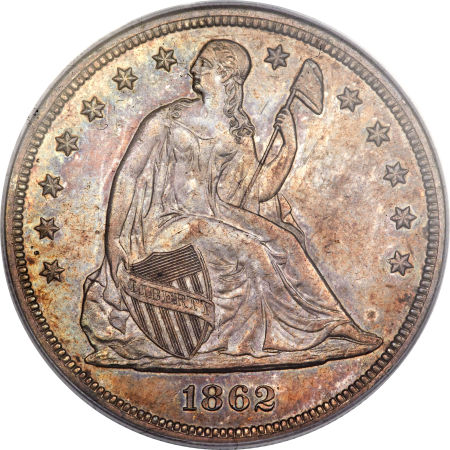 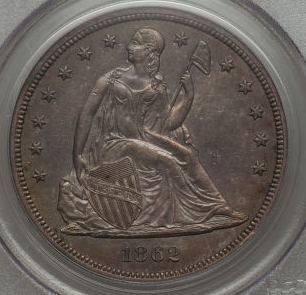 |
|
|
|
Pillar of the Community
2087 Posts |
The best position for lighting a coin is to prject the light from where the camera and lens sit. A compromise is a ring light but the light hitting the coin and then the sensor still doesn't do it. Axial lighting is the most common and cheapest way to get light to the coin as if it had been projected through the lens. There are systems that allow light to be projected through the lens (using a combination of beam splitters and polarisers they are expensive and usually used in optical labs).
Axial lighting when its done well provides a high contrast image with great detail but for proof coins and the like it "removes" the lustre. You get a great picture but not a true to life rendition. That first picture you posted looks like axial lighting.
|
|
Moderator
 United States
23522 Posts |
 He got it in one, Kristi-coin. Your results, however, are going to be superior to the slab shot, because you're going to be better at this than that image shows.  Seriously, though, you should have no trouble achieving the same level of contrast in a direct shot as an axial one; the difference being the direct light will show luster (if present) to an extent at the expense of clarity on all the fields. I don't see much evidence of the need to Photoshop either of those images, aside minor little sharpness tweaks or something. They look straight out of the camera. |
|
Valued Member
 United States
166 Posts |
Thanks for your comments and encouragement. I guess that I will be doing quite of experimenting while learning. I am hoping that one of the benefits of learning to photograph coins is to be able to interpret photos that others have taken. In the example that I posted, I don't believe that either photo represents the actual appearance of the coin in hand. As such, I must past on this coin, as I cannot personally view it before it is to be auctioned.
I will post some pictures once I get comfortable with my new set-up. The price estimates posted on here were right on target, and I was able to snag a Canon in mint condition, and also a El Nikkor 75 mm. enlarging lens. The only thing that broke the budget was that I insisted on getting a copy stand ($150 with 2 lamps).
Thanks again for your comments.
|
|
Moderator
United States
23522 Posts |
You're absolutely right that this will make you a better buyer for what you'll learn about imaging. In the case of the above coin, on a normal day it'll look like the bottom image.
But the point is, when you light the coin like the upper image, that's what it's going to look like to your eye. So that's what the coin "actually" looks like too.
|
|
Pillar of the Community
United States
4050 Posts |
Great to have another "under $400" system user! And the copy stand will likely be a good investment, so is worth being over budget for.
The lower photo you show is only using a single light, so with your two-light setup you should be able to do better. As AK points out, axial light does not present luster, but it does a great job of showing "deep" color of toned coins like the one you showed. The trick to show both color AND luster is to use two lights, and bring them up as high an angle as possible so that you're "nearly axial" so that deep colors are presented, but still have enough of a side-angle to show luster. It will take some practice and experimentation but you will get the hang of it. Post your shots as you take them and describe what you're doing, and folks here will give constructive criticism.
|
|
Valued Member
United States
166 Posts |
When I started out to put the set together, I assumed that obtaining the copy stand would be the easiest task, for some reason. While I found plenty of cameras and lenses to choose from, used copy stands were not to be found. I guess that if I was more patient, one would come up for sale. But I want to get started, so I threw in the towel and bought a new one. It was sold as "gently used", but was in fact new in the box. Anyway, it seems that used copy stands at a bargain price exist only in my imagination.
SD's point about a coin's appearance and the relationship to it's lighting is well taken. I have a bit of experimenting to do. I did some reading on the application of axial lighting, where the angle of the glass slightly deviates from 45 degrees to obtain differing results. A very interesting topic. Thanks for the responses, they are most appreciated. The opportunity and ability to post photos on here and discuss the attributes of the photos is immeasurably helpful!
|
|
Valued Member
Canada
478 Posts |
Quote:
It will take some practice and experimentation but you will get the hang of it. So true! Its not magic by any means. It took me awhile to get the hang of things. I got lucky and found a great stand for my set up...don't buy those el-cheapo's, make sure its a good solid stand. If your handy, you could always make one. Lighting is the trickiest obstacle but it will come...stick with it |
|
Moderator
United States
23522 Posts |
Don't forget, though, this is a skill and not a talent. It can be taught, and it can be learned. You can get there from here.
|
|
Valued Member
Canada
478 Posts |
|
|
Moderator
United States
23522 Posts |
I'm not sure about the price, and don't forget the $42 he's charging for shipping. I guess if a copystand is worth $150, a Bogen is that stand. The lights look excellent for coin imaging, and it's tall enough for a 100mm lens.
|
|
Valued Member
United States
166 Posts |
The copy stand that I purchased seems to be good quality. Photos TC! I have taken some shots with the standard 18-55mm lens in macro mode that came out pretty good for a first try. It took forever to get the lens extensions from China. I am now learning to use the enlarging lens with all manual settings.
Thanks again!
Edited by Krusti-Koin
12/30/2014 2:09 pm
|
| |
Replies: 11 / Views: 2,637 |
|










 Posted 12/27/2014 12:16 pm


