| Author |
 Replies: 19 / Views: 3,783 Replies: 19 / Views: 3,783 |
|
Pillar of the Community
1121 Posts |
I recently purchased this coin and it was sold as - Caracalla 198-217 AD, AE Provincial, Serdica mint, 14.4g, 29mm. Obverse: AVT K M AVP CEV ANTWNEINOC, laureate and cuirassed bust right. Reverse: OVLPIAC CEPDIKHC, serpent coiled upward, head right. ? Moushmov4860. My problem is that the bust is left, and the legends do not seem to match. I therefore think that this coin is 'mis-attributed', however, the only Caracalla I can find with a similar reverse and a bust left is Hadrianopolis, Moushmov 2629, but again, the legend appears to be wrong. Can anyone help me with this, please? 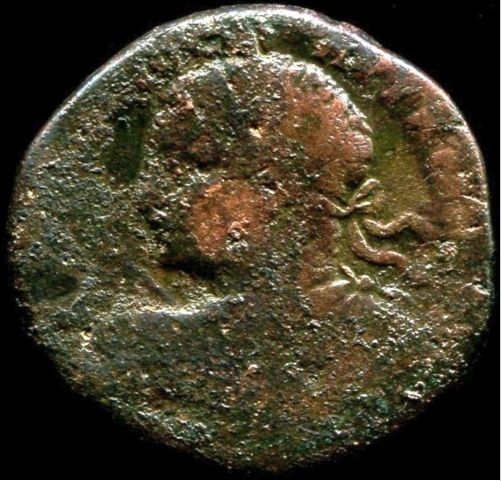 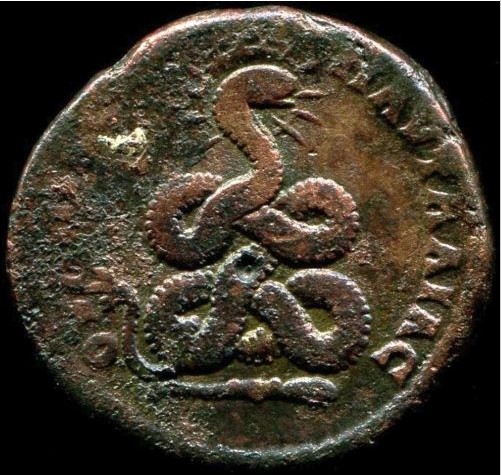
|
|
|
|
Pillar of the Community
3772 Posts |
From the reverse inscription the coin must be from Pautalia with the title "OYΛΠIAC ΠAYTAΛIAC".
|
|
Pillar of the Community
United States
3495 Posts |
Nice coin ! I believe I have a similar one around here ....... somewhere ! Back around AD 2000 ebay got flooded with these Balkan issues. I knew precious little about them but they were selling for around $5 apiece ! XF's could be had for $20-30 ! That was a huge fall from the prices of the early 90's when this coin would have fetched close to $100. I grabbed up quite a few and sold off most of them when things got tough around 5-6 years ago. Ah the good old days I believe the serpent is a symbol of the god Asclepius (god of medicine and healing). There was a major competition going on between him and the 'new' god who both claimed great healing powers. The ancients believed snakes to have the secret of eternal youth. Shedding old skin and becoming once again young. Edited by FVRIVS RVFVS
01/22/2015 06:16 am
|
|
Pillar of the Community
 1121 Posts |
Very interesting F.R.
Where do I go to find out more?
|
|
Moderator
 United States
23731 Posts |
Nice coin, I have a similar one mine is of Macrinus though.
|
|
Pillar of the Community
United States
5010 Posts |
on a quick search I didn't have any more luck than you did TC, I found righty obverses but not lefty. i found a seller who had attributed the revese type refered to as "the serpent of agathodaemon". i had no clue who that was... http://en.wikipedia.org/wiki/Agathodaemon |
|
Pillar of the Community
United States
3495 Posts |
|
|
Pillar of the Community
1121 Posts |
Ron, would you please post photos of your Macrinus? I would like to see where the similarities are and where they end.
(I.e. legend, size weight, images etc.)
|
|
Moderator
United States
23731 Posts |
Macrinus 217-218 AD Nicopolis as Istrum 4 Assaria 26.5 mm x 11.2 grams Moushmov 1253 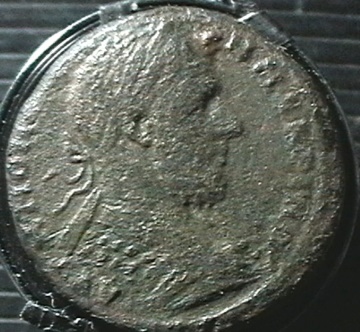 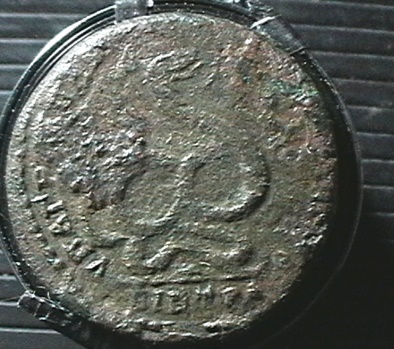 |
|
Pillar of the Community
1121 Posts |
Absolutely right, Med.
The inscription (in English) of OULPIA PAUTALIA (I hope I have that right) would indicate its origins there, but my (endless) searchings of that have failed to turn up any 'Coiled Serpent' Rev. with a bust left Obv. I have tried numerous databases, but I do not have access to Moushmov, Varbanov, or Mionnet.
Do you have any other clues, that might be useful for me, please?
|
|
Pillar of the Community
3772 Posts |
The pictures shown on the plates attached to the Wildwinds Pautalia page include several coiled serpents, but none matching yours. Perhaps Varbanov has it in his more extensive catalogue.
From the image on the obverse I am not sure that it is Caracalla though, might as well be Elagabalus - perhaps those better with portraits want to chip in. Whatever seems to be legible from the legend could just as well be from Elagabalus.
The vast majority of the coinage from that town (with 'ANT...' or similar) is from Caracalla though.
Note: The cognomen "Ulpia" was given to quite a few towns by the Romans, the Greek transliteration used the "OV" or "OY".
|
|
Pillar of the Community
1121 Posts |
Chris, F.R. - Thanks. All input is welcome.
Thanks for the photos, Ron. They did what I was looking for.
Med. That is a little bit 'above' my level as yet, (hopefully I will get there one day).
In the absence of someone showing that it is not Caracalla, for now I propose to mark the 2x2 with something like ,
Caracalla 198-217 AD, AE29 Provincial, Pautilia, Thrace. Obverse: laureate and cuirassed bust left. Reverse: OVLPIAC PAUTALIAC, nimbate serpent, head right. Unattributed.? (Agree?)
|
|
Pillar of the Community
3772 Posts |
Wait and see what those who know portraits better than me have to say.
While you might not have a reference number, the place of mint and the emperor are clear (assuming one can confirm either way). That means the coin is fully attributed with just a reference number missing. As stated in another thread, I have an Aquilia Severa from Aelia Capitolina where I could not find a reference for. (Plus a few more well identified non-Roman coins without a reference.) Once you know for sure where a coin is from and who minted it, it's attributed. Nice to have one or more references, but they can wait.
|
|
Pillar of the Community
1121 Posts |
I will wait until someone confirms Caracalla, Elagabalus or?
Someone who has better facial recognition abilities than me, although Varbanov 3618 is close.
|
|
Pillar of the Community
3772 Posts |
While it is more likely to be Caracalla based on the amount of coinage minted in Pautalia, in the end it might have to come down to finding an exact obverse/reverse match (Varbanov is probably the best hope). As per portraits, have a look at Edessa BMC#60 on the Wildwinds Elagabalus page.
|
|
Pillar of the Community
1121 Posts |
Ahhhhh! Yes! I can see your point.
The coiled serpent appeared on a number of rulers coins, Elagabalus, Caracalla, Macrinus, Commodus, Agrippa, Geta, to name but a few.
Who is willing to 'have a go' and say who this is?
|
| |
Replies: 19 / Views: 3,783 |










 Posted 01/22/2015 06:13 am


