| Author |
 Replies: 24 / Views: 6,980 Replies: 24 / Views: 6,980 |
|
|
|
Moderator
 United States
196100 Posts |
Quote:
Instead of purchasing STUFF to clean coins, why not use that money to just buy coins?  Best advice yet.  |
|
Pillar of the Community
 United States
1314 Posts |
Quote:
Instead of purchasing STUFF to clean coins, why not use that money to just buy coins? The answer is because I do not like dirty coins. I would have thought that the answer to that question was obvious, but as this world is big enough for different opinions, we can share them in this forum. I don't know if coins carry enough germs to warrant hygienic motives, but certainly economic and aesthetic factors come in to play. Any coin that retains crud has a greater opportunity to retain moisture and corrosive chemicals. Over time that can damage the coin and certainly it's value. Simply based on appearance, clean coins are more appealing and pleasant to look at. The market will support my assertions. If I really believed that there was a large body of collectors that prefer dirty coins, I would get together with BadThad and market a product called CoinCrud - a waxy substance filled with carbon, powdered quartz and dissolved acids. But I don't think that's what collectors really want. I remove the harmful junk from my car, kitchen utensils, target rifle and even my own body. And when done properly, I like the results. Your opinions may vary. |
|
Valued Member
United States
459 Posts |
Coin Care works great to take old label adhesive and such off slabs. I don't use it on coins as it leaves a 'protective coating' that I don't care for.
|
|
Valued Member
United States
127 Posts |
Don't wanna hijack this post but I feel like this is very relevant: i bought a roll of LWCs from an antique/coin shop over the weekend. It was labeled "different dates/mints" and was $5. I thought it was a bit overpriced but what I got was almost every pds of from the 40's to 50's with MANY in BU condition, pretty sweet. On closer inspection, I noticed a lot of the brown cents looked oily, although not unappealing. It made me think of this post, soI took some cents from another bulk bag I bought (they were actually awful, most had verdigris or were worn) and compared them side by side: 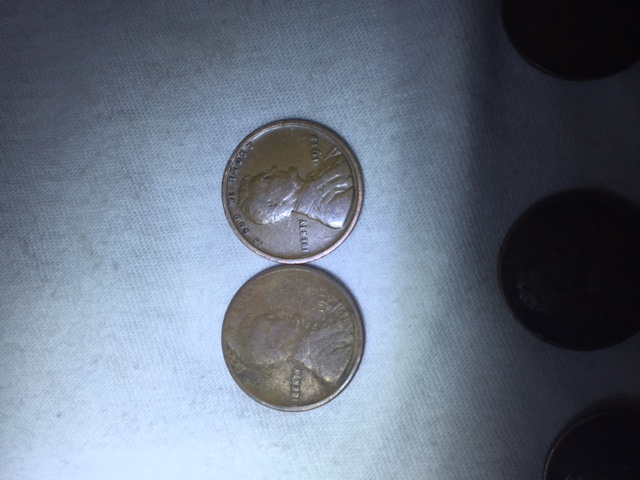 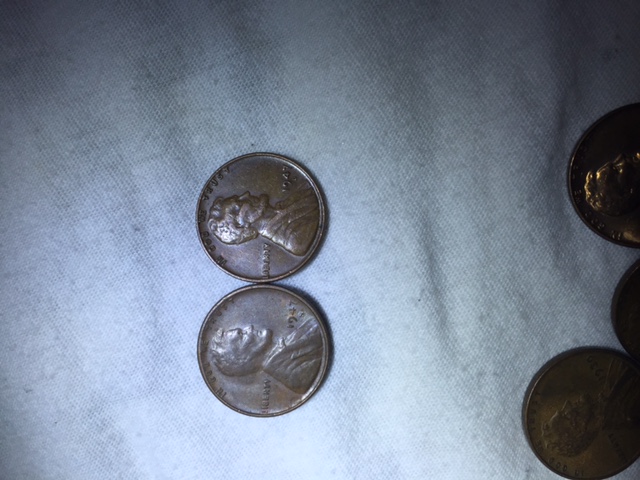 There are many coins in this roll that would be upgrades for my LWC album. I was just going to do my standard acetone soak, but now I'm thinking I may need to rinse them in xylene first? I don't own any xylene, i'd prefer to just acetone them and be done with it. Does the coin care stuff damage the coin, or just give it an oily look that people don't like? |
|
Valued Member
United States
127 Posts |
OK I've read a few archived posts, and posts on coin talk and I'm pretty sure these were "oiled" with something, and that I need to use some xylene. a couple questions though:
do I brush xylene or just dip it in a glass full of it? For how long? Do I need successive baths of it, or just a quick dip?
I've read BadThads order of solvents in a couple posts: 1. Water, 2. Acetone, 3. Xylene
If I use acetone by default for all my coins, wouldn't I want to use the acetone after using the xylene? Or no?
|
|
Bedrock of the Community
United States
20049 Posts |
Turbo - Just use xylene, there's no need to use water and acetone if you suspect there's oil on the surface. Just rinse with xylene, let dry a couple of minutes and you're done.
Lincoln Cent Lover!VERDI-CARE™ INVENTOR https://verdi.care/
|
|
Valued Member
United States
109 Posts |
Thread is a few days old, but didn't want to make a thread.
I've heard about mineral and olive oil on copper for a long time. Olive oil would be acidic, but aside from coating the coin, what would mineral oil do? Or, what is it supposed to do? Since they're trying to make a coin cleaning solution with it...
|
|
Bedrock of the Community
United States
20049 Posts |
Mineral oil will dissolve any non-polar, organic residue on the surface, e.g. any materials soluble in oil.
Personally, I hate coins that have oil on them. Oils are complex mixtures of various hydrocarbons and can only be removed with xylene and, in the process, may remove or disturb the patina. Also, the lighter components will evaporate over time leaving gaps in any oxidative protection. Additionally, oils typically contain trace dissolved elements such as sulfur, chlorine and phosphorus which are reactive to metals. DO NOT USE OILS ON COINS.
Lincoln Cent Lover!VERDI-CARE™ INVENTOR https://verdi.care/
Edited by BadThad
12/03/2015 11:37 am
|
|
Pillar of the Community
United States
1761 Posts |
I went through the last decade of coin cleaning topics - not all - and Thad I must compliment you on your background, knowledge of coin cleaning and your development of Verdi-Care. This current Coin Care is indeed an interesting mixture with d-limonene being the active cleaning agent. Actually I worked for the company that first introduced d-limonene into the industrial cleaning line ... introduced as a biodegradable cleaning agent with both hydrophilic/hydrophobic properties since it can be used for oil/water separation in solvent emulsion cleaning products in dip tanks.
As the Canadian said too bad on the removal of Freon TF from the original Coin Care (blue Ribbon - later?) we all loved ...
If someone could only bring that product back ... to be able to clean a Proof Copper coin with no side effects ... is it possible? Who has SUCH POWERS?
John Lorenzo
Numismatist
United States
Edited by colonialjohn
12/09/2015 3:16 pm
|
| |
Replies: 24 / Views: 6,980 |








 First Page


 Posted 10/29/2015 8:59 pm


