| Author |
 Replies: 13 / Views: 1,418 Replies: 13 / Views: 1,418 |
|
|
New Member
United States
15 Posts |
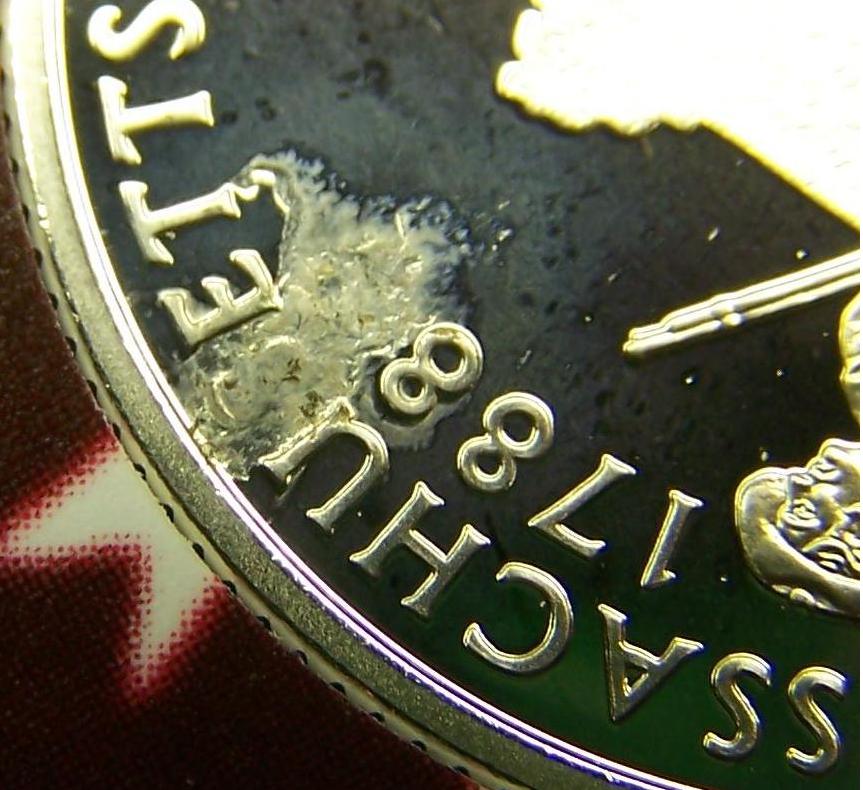
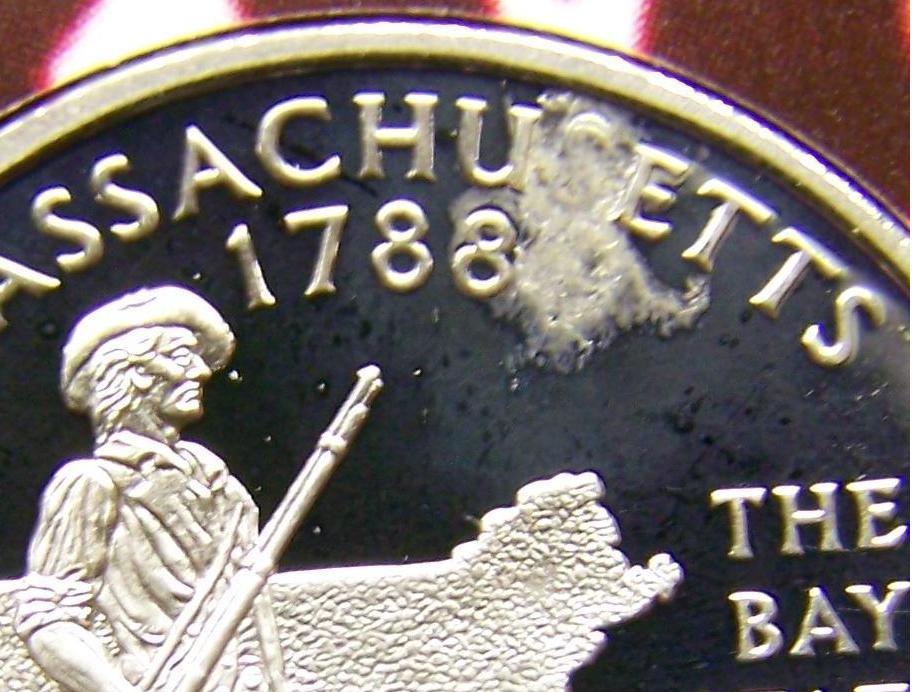
First of all thank you guys for your time. I received a unwrapped 2000 Proof set for my birthday in 2000. This set came from the U.S. Mint with an error on the reverse side on the Massachusetts State Quarter. The third "S" in Massachusetts and the surrounding lamination appears to be, for the lack of a better word, damaged. The rest of the coin is spotless. My questions are, what could cause such a error and is it worth to get certified by ANACS? Thanks Image:  quarter3.jpg quarter3.jpg98.27 KB Image: quarter4.jpg101.87 KB |
|
|
|
Bedrock of the Community
United States
14454 Posts |
its just a strike through, it looks like maybe it was Struck Through Grease or something like that to me. In my opinion it wouldn't be worth getting slabbed because its not all that uncommon but others may feel differently than I do on the slabbing game |
|
Pillar of the Community
United States
7629 Posts |
It's Struck Through Grease. My opinion, it detracts greatly from the value of the coin. Someone else may have a different opinion. |
|
Pillar of the Community
United States
3507 Posts |
I agree with coppercoins. It is a detracting spot on a proof coin likely caused by a strike through grease.
|
|
Bedrock of the Community
United States
62064 Posts |
They happen on all denominations. Just block the die from getting a full strike on area affected by the grease/debris. 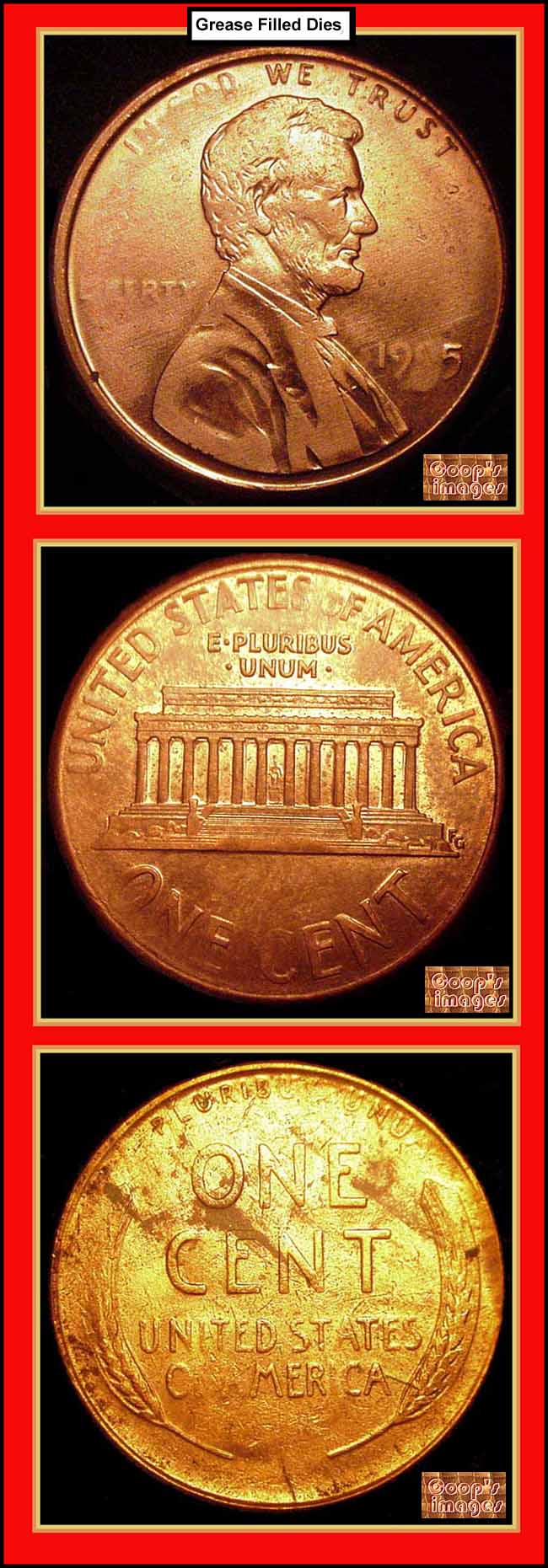 |
|
Pillar of the Community
United States
603 Posts |
Are my eyes playing tricks, but it looks like the "blob" is raised off the coin. Am I wrong, because if it is, its got to be something besides grease right?
|
|
New Member
 United States
15 Posts |
Hey thanks for all your input on this matter! Well, it is sad to know that this 2000 U.S. 10pc Silver Proof Set is lessened in value because of this one quarter. I guess I'll hang on to it and see what the future holds. The "blob" isn't raised on the quarter, its rather leveled or recessed abit.
|
|
Pillar of the Community
United States
2269 Posts |
I always thought the silver proof coins were inspected before they were put in sets.
|
|
New Member
United States
15 Posts |
That was my line of thinking as well. I thought they inspected the silver proof sets before shipment. I don't recall seeing any silver proof sets that had very blanent errors such as mine. I have seen suttle and more common deformities on silver proof sets, such as the "disappearing 3" in the 2003 penny and the "vanishing buffalo leg" on the Kansas quarter. However, I am new to this and I am here to learn. I appricate all the opinions that you guys and gals gave. Because of you, I now know that a grease strike may had caused this deformity.
|
|
Valued Member
United States
280 Posts |
There are error collectors who would be willing to pay extra for this set, but the trick is in trying to find them.
|
|
Bedrock of the Community
United States
14454 Posts |
if error collectors collected strike through grease errors (and I call it an error for lack of a better word) their collections would be massive, most error collectors usually stick to double struck coins,rotated dies, badly off centered coins, or clipped errors and such like that instead of a strike through because they just happen way to often to really even be considered a error instead of an eye sore. Now if its a big Cud on the coin that was struck into the coin that would be different but Struck Through Grease just lessens the detail of the coin and as was stated just basically is just an eye sore to most collectors. I can't speak for all error collectors in my opinion above, I am just speaking of the ones I have heard from about what they collect and I have never heard of them specifically looking for strike through grease errors to add to their collections and have never heard of anyone paying a premium for such a coin. If they get it with the set they may keep it just because its different but I just can't see them paying a premium for these type of errors Edited by Bryan1315
09/24/2007 4:42 pm
|
|
Member
United States
703 Posts |
Proof errors are highly sought after and have a premium. The mint inspects the proofs more closely, they have a much lower mintage, so the proof errors are much rarer that normal circulating coinage errors.
one of my favorite coins is a 1903 proof strike thru.
errrrrrrrror
|
|
Valued Member
United States
145 Posts |
Maybe this guy is the US Mints proof coin inspector these days..   |
|
New Member
United States
15 Posts |
Yes, grease strikes maybe are the most common type of errors in coins, however, I can't say the same for quality of the coins that come out of Silver Proof sets. Thats what I think makes this unique, its the only error Silver Proof State Quarter I've seen that has a grease mark of this magnitude and uncommonality. (So far) Second part of my question that I asked earlier was if it should be professionally slabed. I'm not seeking a profit, I just don't want to lose money in the cost of slabbing a quarter that is in lesser value of the slab process.I'm taking all your opinions and ideas with me to the local PCGS authorized dealer to help make a decision. Thanks again for your time and input on this matter. George |
| |
Replies: 13 / Views: 1,418 |
|







 quarter3.jpg
 quarter4.jpg


 Posted 09/22/2007 10:16 pm





