| Author |
 Replies: 24 / Views: 4,645 Replies: 24 / Views: 4,645 |
|
Valued Member
United States
79 Posts |
Edited by ConfederateHalf
02/10/2015 12:04 am
|
|
|
|
Valued Member
United States
212 Posts |
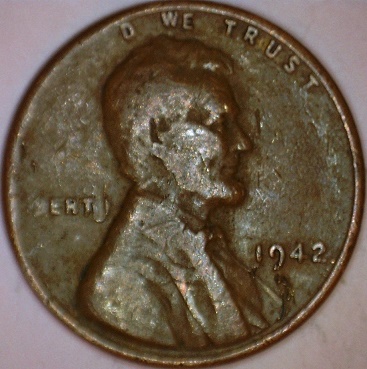
Looks like the coin is pretty beat up. I'm gonna say it's PMD, but I'm not sure. |
|
Pillar of the Community
United States
6478 Posts |
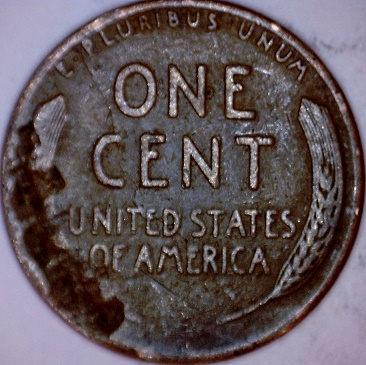
Probably a mixture of a minor Grease Filled Die and and a whole lot of PMD. If we could get a better pic of the reverse it might be a lamination. |
|
Valued Member
 United States
79 Posts |
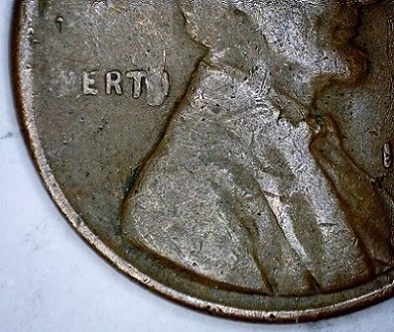
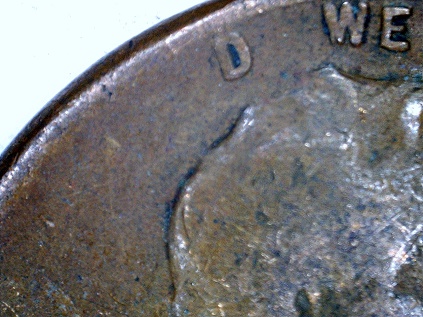
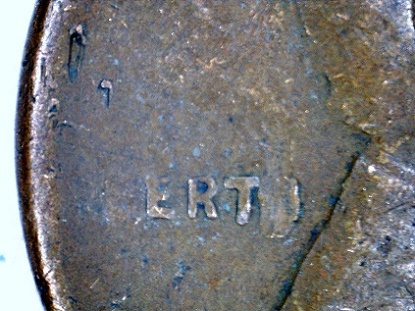
Quote:Probably a mixture of a minor Grease Filled Die and and a whole lot of PMD. If we could get a better pic of the reverse it might be a lamination. Here are some macro pix of the reverse. The thing that is interesting about this coin is that the possible lamination on the reverse is exactly on the other side of the coin in the same position as the possible grease filled area of the obverse. They sit PRECISELY on top of one another with perfect alignment so whatever caused these two (2) errors or defects happened as a result of a SINGLE action. 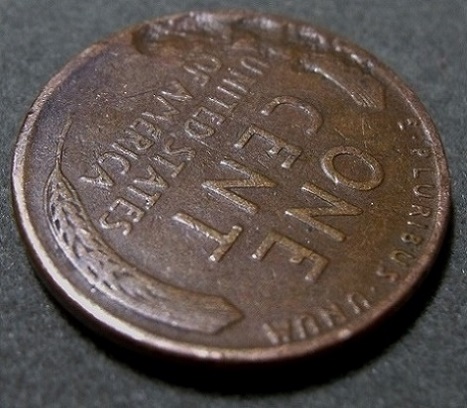 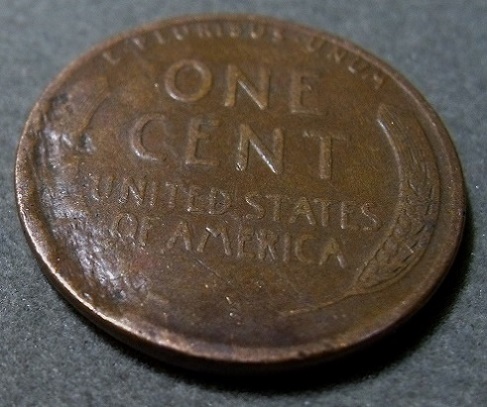 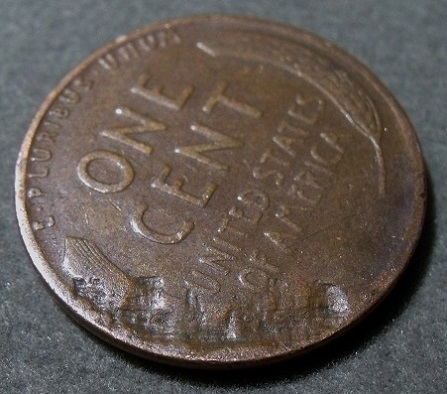 Edited by ConfederateHalf
02/09/2015 11:48 pm
|
|
Valued Member
United States
79 Posts |
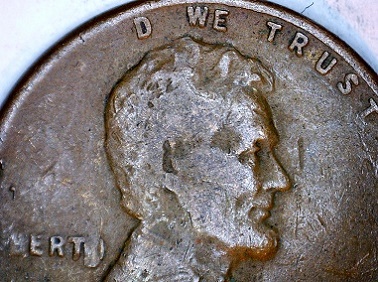
The more I study and think about this coin, the more I am leaning towards the idea that this is a major lamination on the reverse that caused some of the obverse lettering not to strike up at the time of minting. I do not believe the missing letters on the reverse are the result of a Grease Filled Die. It doesn't have the right look. Also, I do not believe in coincidences. The fact that the errors on each side of the coin are diametrically opposed to one another just screams out that all of this damage happened in a single moment. If you look at the rim on the obverse where the letters are missing, you'll notice is is mushier and not as well-defined and raised as the rest of the rim - which also seems to indicate that there just wasn't enough metal present to completely fill the die at the rim on the obverse due to the lamination peel on the reverse. The only damage to the coin that I feel sure is PMD is the obliteration of the letter "Y" in Liberty, but that is far removed from the other features we are focused on here and appears totally the result of circulation wear. Edited by ConfederateHalf
02/10/2015 12:12 am
|
|
Pillar of the Community
United States
6478 Posts |
I am starting to think it might be a strike through because of the weak lettering. Lamination, strike through, PMD, and grease are at the top of my list for this one. I really want an expert to respond to this. |
|
Bedrock of the Community
United States
62064 Posts |
Looks like a Struck Through Grease error on the obverse. The "Y" on LIBERTY looks like it was damaged. The reverse I wonder if it is a struck through debris? On a lamination, you usually see a ghost image where the peel happened and it would show a little remaining. But on your coin it looks like it was struck through a piece of debris. But the glare makes it hard to say which for sure. 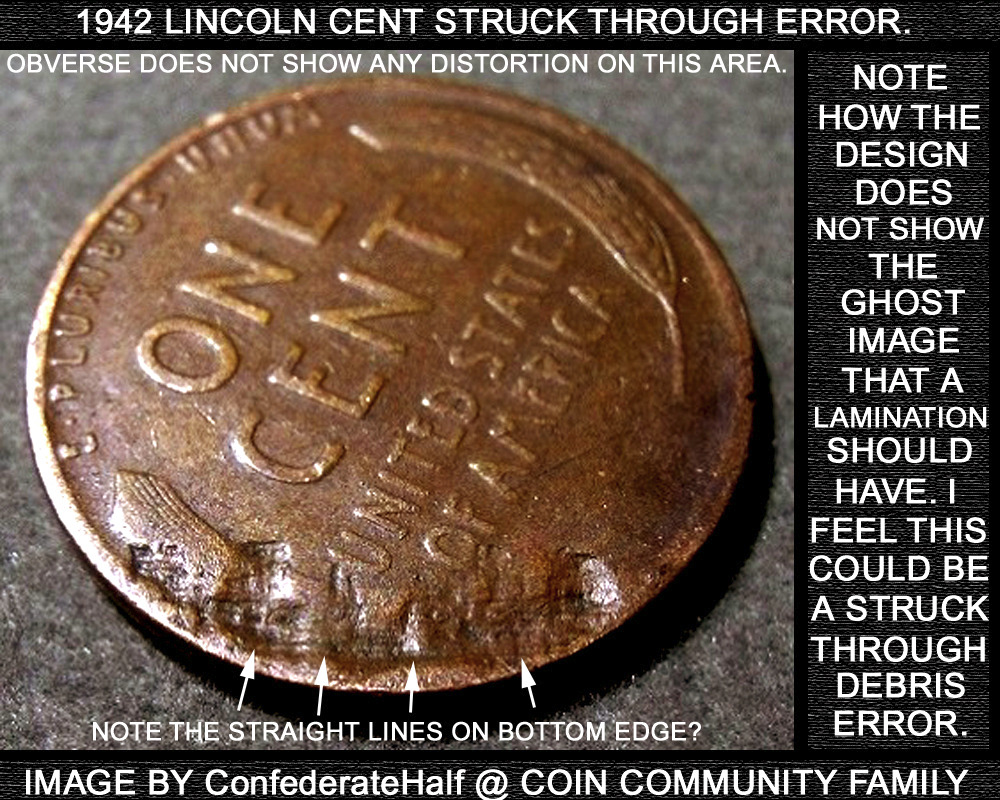 |
|
Valued Member
United States
79 Posts |
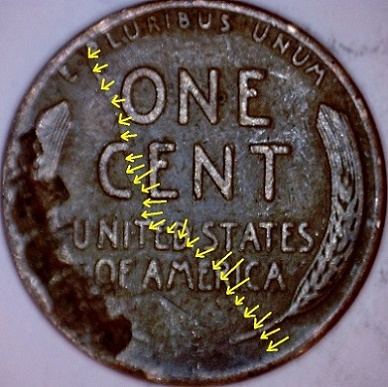
Quote:Looks like a Struck Through Grease error on the obverse. The "Y" on LIBERTY looks like it was damaged. The reverse I wonder if it is a struck through debris? On a lamination, you usually see a ghost image where the peel happened and it would show a little remaining. But on your coin it looks like it was struck through a piece of debris. But the glare makes it hard to say which for sure. Coop - I think you raise a real possibility. I had not considered a "struck through debris" type error to explain the reverse. Question: Would that type of error account for the failure of the lettering and rim to strike up on the obverse directly opposite where the damage to the reverse occured? I would be delighted to hear from more experts here about this coin. It's most odd. Here are four more new pix of the reverse I took to try to give you a better look at gouged area of the reverse. The first 3 pix were taken with the macro setting on my digicam. The last picture was captured on my USB Microscope focused on the possibly struck-through area: 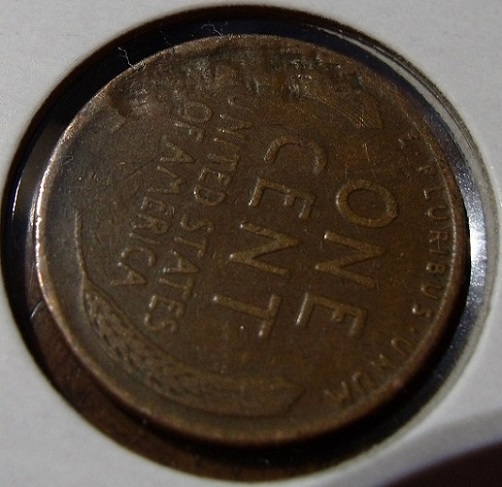 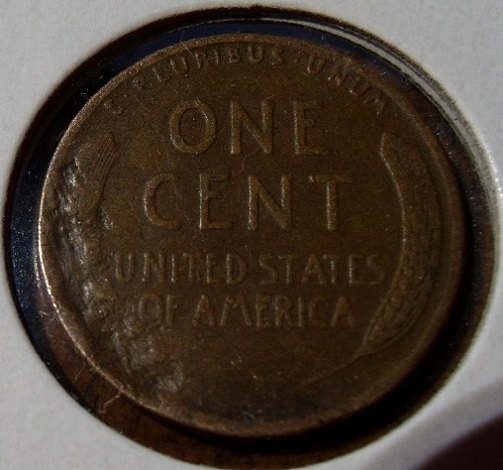 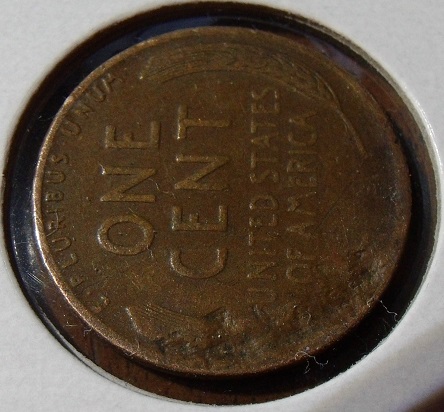 As seen through the USB Microscope: 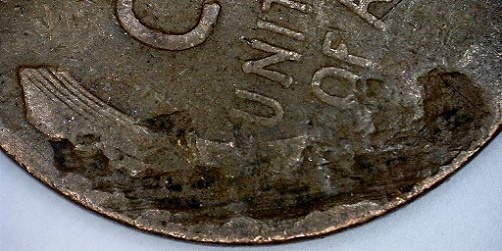 Edited by ConfederateHalf
02/10/2015 11:33 pm
|
|
Pillar of the Community
United States
6478 Posts |
I was the first to raise the possibility of it being a strike through but ok. Lol.
|
|
Bedrock of the Community
United States
62064 Posts |
It might be a piece of wood or something else. Probably not a large premium for this. Probably just a modest amount to a collector of these.
|
|
Pillar of the Community
United States
6478 Posts |
It is a large strike through though. Not a high grade. How would have something got in the dies way too?
|
|
Valued Member
United States
79 Posts |
Quote:
I was the first to raise the possibility of it being a strike through but ok. Lol. Quite right! Sorry for the oversight in giving credit where it was due.  I appreciate your input about this curious Lincoln. |
|
Pillar of the Community
United States
6478 Posts |
Lol, no problem. I am very interested in this cent. I think we are all learning something from it.
|
|
Valued Member
United States
79 Posts |
Quote:
It is a large strike through though. Not a high grade. After looking closely at the reverse with my microscope and loupe  . It really does look like a piece of debris got in there, but what, I haven't a clue. As to grade, some might say F-15, but I'm thinking more like VG-08 or VG-10. Regardless of what it ultimately proves to be worth it represents the most interesting error coin find I've yet found in circulation, so it's a fun coin to have pop out of a coin roll from the bank. Edited by ConfederateHalf
02/11/2015 12:01 am
|
|
Pillar of the Community
United States
6478 Posts |
I would grade it a strong VG-07 in my opinion. The wear and the large dings and scratches bring it down there for me.
|
|
Valued Member
United States
79 Posts |
Also, I'm still curious what everyone thinks about that long jagged line that crosses the entire reverse of the coin. I have studied it closely under magnification and it definitely is NOT a die crack. If this penny were North America, the thing would be the Continental Divide. Everything to the "east" of the division is at a slightly higher elevation. Everything to the left is at a slightly lower elevation. To me, it gives the appearance of a very thin layer of metal having peeled away from the "west" side of the planchet prior to the striking of the coin.
Edited by ConfederateHalf
02/11/2015 12:06 am
|
| |
Replies: 24 / Views: 4,645 |








 Posted 02/09/2015 10:26 pm





