| Author |
 Replies: 11 / Views: 2,006 Replies: 11 / Views: 2,006 |
|
|
Valued Member
Canada
79 Posts |
Please help me understand the marks in the fields. I am very slowly learning to identify cleaned and dipped coins and would like help. Can you please also indicate why you think it is cleaned, not just a one or two word answer. Thanks! 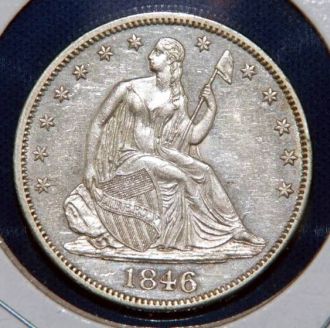 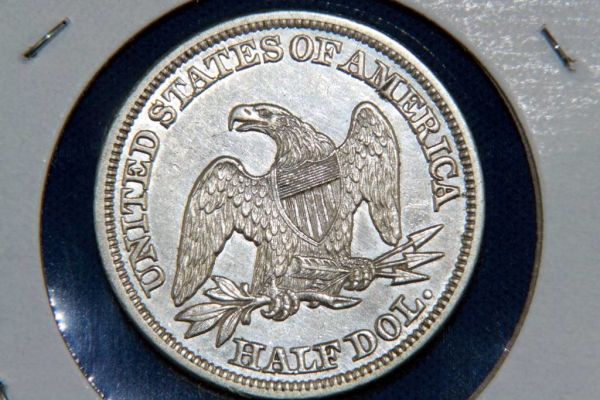 Edited by Peldini
02/12/2015 6:40 pm
|
|
|
|
Pillar of the Community
United States
5825 Posts |
If we're going to see the marks in the fields we'll need larger images WITH the coin removed from the 2x2.
|
|
Pillar of the Community
United States
1566 Posts |
I assume all early 19th century coins have been cleaned at least once. The question is has it been harshly cleaned or recently cleaned.
|
|
Pillar of the Community
United States
2563 Posts |
It's blatantly obvious that this one has been cleaned. Nice higher grade though
|
|
Rest in Peace
United States
18456 Posts |
I'm sure it had a light cleaning long ago. real nice high grade, seated half. this type of cleaning in my opinion does not take away the beauty of the coin. as a matter of fact ; I would put a little acetone on a Q-tip and dab the (M) in America on the reverse, then with tooth pick gently remove that black dirt. again this is just my opinion.
|
|
Pillar of the Community
3772 Posts |
See the different colours on the reverse? The white as background to the '...TED STAT...', compare that to the colour of the field. Yes, the coin has been cleaned.
|
|
Pillar of the Community
United States
8137 Posts |
Those marks look like hairlines, which indicate that the coin may have been cleaned with a brush. The shine of the feilds also doesn't look like original mint luster. I think this coin has been cleaned.
|
|
Pillar of the Community
United States
522 Posts |
I agree, scratches look like hairlines from harsh cleaning. Hairline scratches can be tough to spot in pictures, depending on lighting, etc. They can also be confused with circulation hits and flow lines (mistakes I have made). Another good thing to look for, as T_Bop mentioned, is the remaining 'dirt' in the 'M'. Often, after cleaning, all of the dirt or toning won't be removed and can be found around the lettering and devices. Take a look at the date for example; the metal is darker between the numerals. That's probably because whatever was used to clean the coin couldn't reach there. The same thing is true for the small deposits around the lettering on the reverse. This is not to say that coins don't get dirty. However, with this example -as the other members have said- you're looking for radical differences in surface appearance. Also remember the obvious: this coin is from 1846- in its original state it probably wouldn't look like this- old coins do tone and get dirty.
|
|
Valued Member
United States
139 Posts |
I was really bad at spotting hairline scratches. Well, I still am. I started experimenting with photography and lighting. I found that certain lighting at certain angles make those hairlines light up like neon. My old scanner is particularly good at showing hairlines. Might be worth experimenting with. Oh, and as mentioned above, taking it out of the 2x2 helps greatly.
|
|
Valued Member
 Canada
79 Posts |
Thanks for the help, it did look that way to me as well, I always look for the best coins, but many are cleaned.
|
|
Pillar of the Community
United States
1704 Posts |
A common mistake many collectors make is thinking die polishing lines are hairlines from a past cleaning. It takes time and experience to tell the two apart. Die polishing lies will affect the mint luster of a coin also so a person cannot assume if there is a lack of luster and what appears to be hairline scratches in a photograph that the coin has been cleaned. The only way to be sure of what you are seeing is have the coin in hand.
|
|
Valued Member
United States
300 Posts |
It may be cleaned, but it's sill a nice looking coin.
|
| |
Replies: 11 / Views: 2,006 |
|







 Posted 02/12/2015 6:54 pm





