sold for 126...seller has coin#2 closing in 3 days..nothing there, I can spot(DDO-DDR, struck thru, etc..)...even if a shill bid, NObody in their right mind would fight over these past say 25 bucks..maybe 35, as so many are out there, all at roughly the same price..an odd one, for sure...
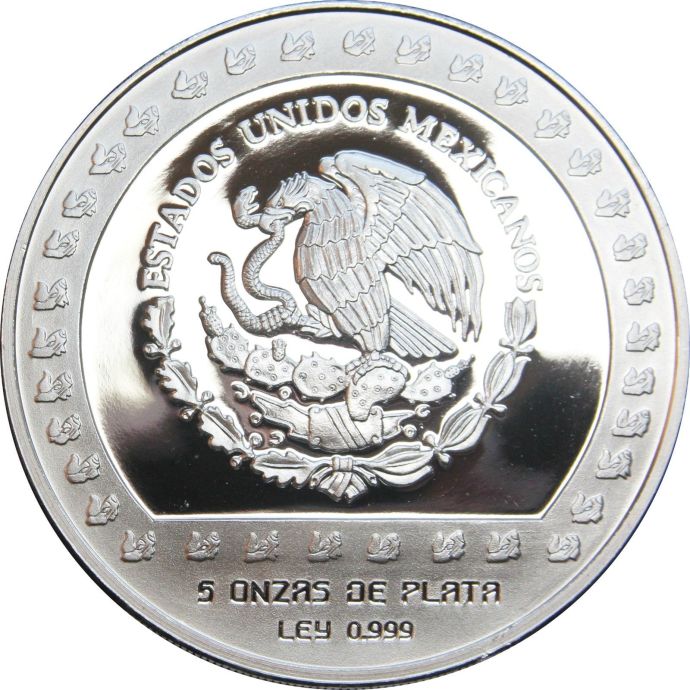
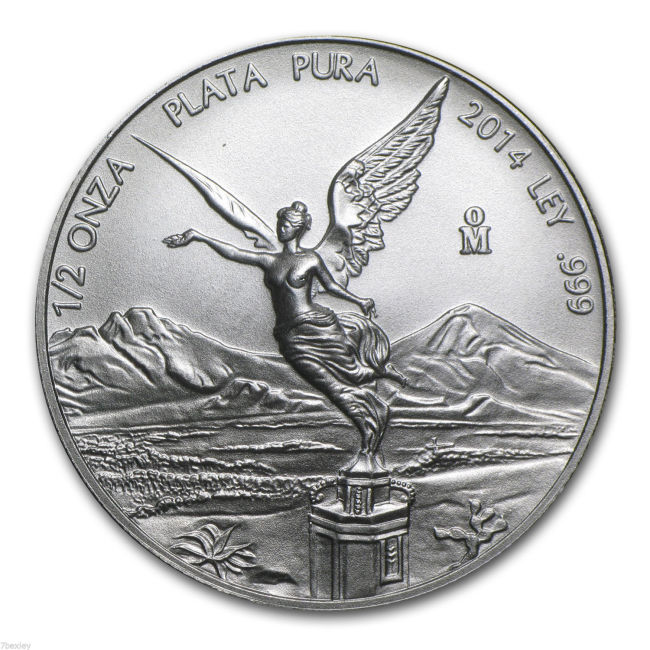
SIDE NOTE.Speaking of Mo Mint items(I've been on a LIBERTAD Binge this week)..have to show THIS, after seeing crappy scrap metal BU versions earlier in the day, I read up on these, and, decided I love the look, and, being a large 5 ounce coin, gotta love THAT..I just bough it...Proofs(not even Don Bailey knows final mintage figures, but, surmise VERY LOW
==============
THE PRE-COLUMBIAN COINAGE PROGRAM OF MEXICO
At the American Numismatic Association's Convention in Baltimore on July28, 1993 The Banco de Mexico held a press conference to announce the beginning of a new commemorative coinage program. This new program would be known as "The Pre-Columbian Coin program".
This event was to coincide with the 500th anniversary of Christopher Columbus discovery of the Americas in 1492. This series of commemorative coins will honor six Pre - Columbian civilizations: the Aztec, Central Veracruz, Mayan, Olmec, Teotihuacan, and the Toltec cultures.
The first series released in 1992 was to honor the Aztecs. This culture originated in the northern part of Mexico at Aztlan, what is now known as Arizona and Sonora. This Nahuatl speaking tribe referred to them selves as the Mexica or Teochca. In the 13th century after a century of nomadic wandering settled on small islands in Lake Texcoco. In 1325 they created the city known as Tenochtitlan, which is now Mexico City.
In the 15th century the Aztecs were only exceed in size by the Incas in Peru. This culture reflected of a highly specialized society with expanded trading, an imperial administration and an agricultural economy.
This Aztec Empire ceased to exist when Cuauhtemoc died. He ruled of the Aztecs in 1521 during the siege of Tenochtitlan and led the fight against Herman Cortes and his Spanish conquistadors. Surrendering after weeks of street fighting, Cuauhtemoc was tortured and put in prison. Later Cortes hanged him on his march to Honduras.
These coin sets are all structured in the same fashion, with a five oz silver coin, a three-piece set of ¼, ½ and 1 oz with the same design. There are also three 1oz coins depicting various historical aspects of the cultures discussed here. The Aztec collection had several changes from the original issues, due to the coinage reform of 1992.
=======================
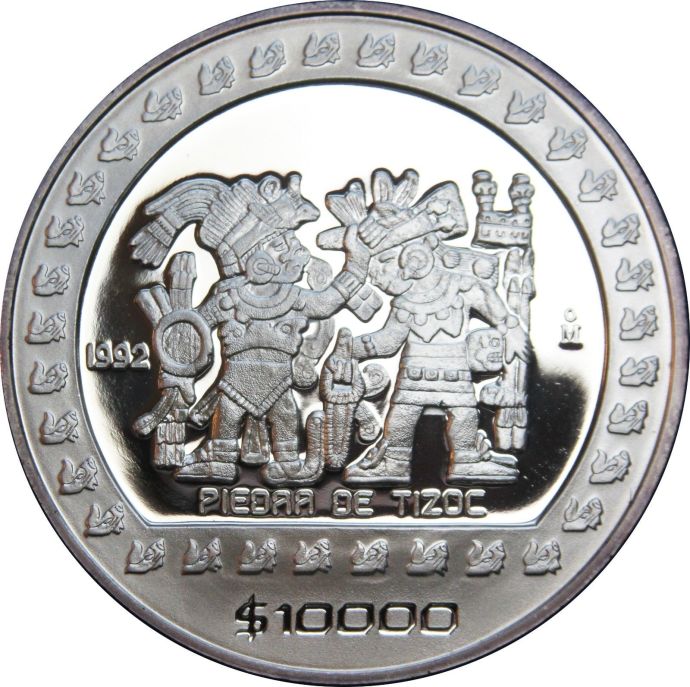
Piedra de Tizoc, (The Tizoc Stone):
This five3-ounce coin represents a huge monolith. It was discovered in the Templo Mayor, which celebrated the victories of Tizoc, (Pierna Enferma), who was the Aztec Emperor from 1482 - 1487. This also symbolizes the ritual passing of the throne from Tizoc to his brother Ahuitzotl, (Perro de Agua) in 1487.
This issues experienced to the same problems withy the denominations and the coinage reform. The 1992 $10,000 in proof has been very elusive to the collectors. Those that I have seen of these are from sets that were put together and sold by a telemarketer in a oak case containing the three piece Guerrero Aguila set, the $250 proof gold, Jaguar de Los Soles, and the proof 1992 $10,000. Thus far I have seen only a few of these sets. These were sold at $1,500.00 per set when issued from the telemarketer, a few sets have the 1993 dated silver proofs in New Peso denomination, but demand a smaller price. .
The 1992 $10,000 in BU is readily available. There is a 1992 $10 in proof known, but no mintage figures are availabe, but only a small quantity are known.
Each of these collections have a three piece gold set that honor an aspect of that particular culture.











 Posted 03/01/2015 6:54 pm


