








 Posted 03/06/2015 11:39 am


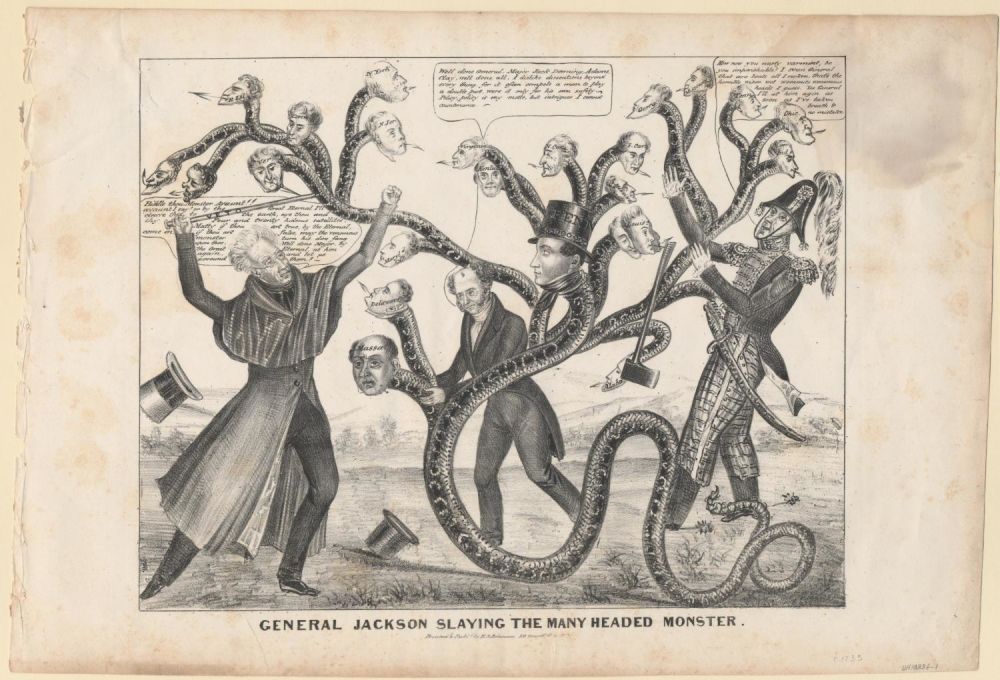
Andrew Jackson was staunchly opposed to paper money, and was responsible for the demise of the Second National Bank in the 1830s. His actions were met both with enthusiastic praise and scathing criticism, resulting in the political cartoon you posted at the bottom, among others.
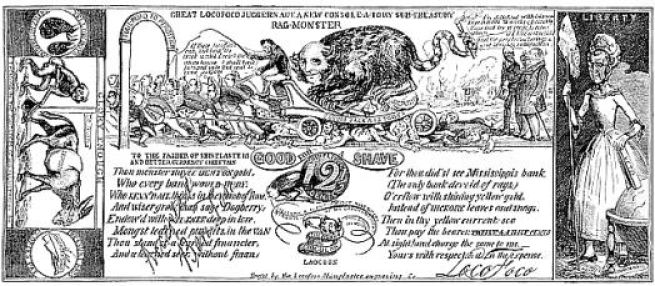
For the top photo, it appears to be a political cartoon from the Panic of 1837, caused by Jackson's economic overreaching. Van Buren had his share of political enemies, and he caught most of the blame for the Panic. This note is one of many political cartoons, given a nominal face value of 12.5 cents as a tongue-in-cheek commentary on the state of the nation.
For more info, I was able to dig up this website:
http://www.common-place.org/vol-10/no-03/lepler/
The note you posted is listed as Fig.11 with some relevant history and an explanation of the cartoon.
In short, this is not an official bank note, but rather a political artifact similar to the "hard times tokens" of the same era of our nation's adolescence.
For the top photo, it appears to be a political cartoon from the Panic of 1837, caused by Jackson's economic overreaching. Van Buren had his share of political enemies, and he caught most of the blame for the Panic. This note is one of many political cartoons, given a nominal face value of 12.5 cents as a tongue-in-cheek commentary on the state of the nation.
For more info, I was able to dig up this website:
http://www.common-place.org/vol-10/no-03/lepler/
The note you posted is listed as Fig.11 with some relevant history and an explanation of the cartoon.
In short, this is not an official bank note, but rather a political artifact similar to the "hard times tokens" of the same era of our nation's adolescence.


