| Author |
 Replies: 14 / Views: 6,843 Replies: 14 / Views: 6,843 |
|
|
Valued Member
469 Posts |
I actually found this in the basement of my grandparents house as a child. Obviously it's crusty as can be, but I was just wondering if there was any liquid I could soak it in for a while that would restore it or anything like that. Thanks! 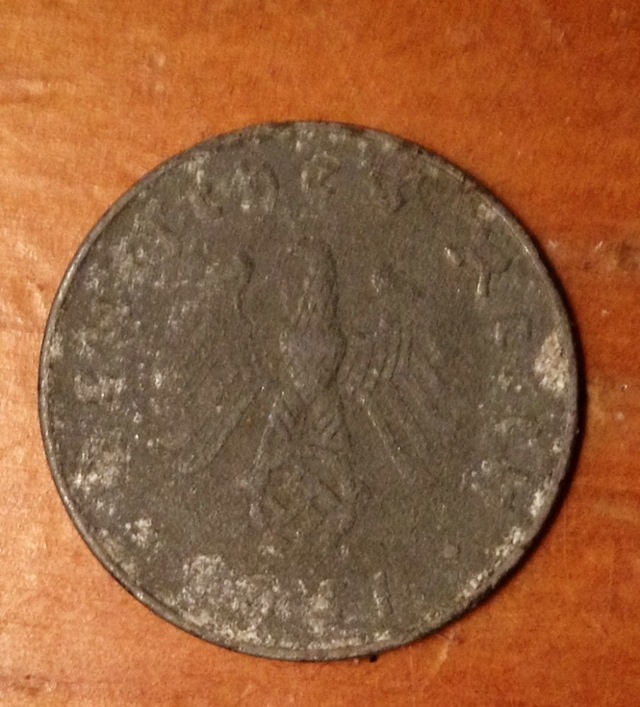 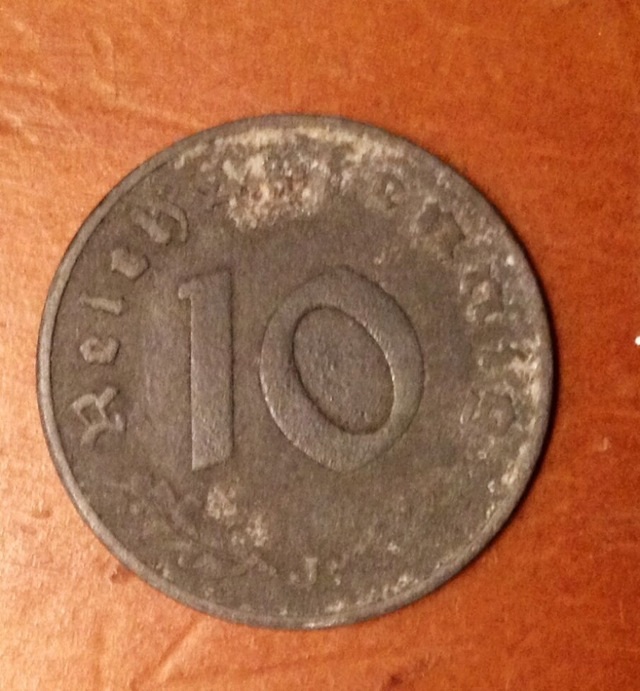 Edited by Pytellc
03/05/2015 5:24 pm
|
|
|
|
Pillar of the Community
United States
1192 Posts |
The old nazi zinc coins. That's like trying to fix a Lincoln Cent that has exposed zinc. It's basically zinc rot, I'm not sure what you can do to stop it. |
|
Bedrock of the Community
Australia
21792 Posts |
Clean it in acetone (which should have little or no benefit on the appearance), then put it in a mylar 2x2, in an archival quality album page.
|
|
Valued Member
 469 Posts |
Ok, do I let it soak or just dip it?
|
|
Moderator
 Australia
17002 Posts |
The trouble with zinc is that it's a very reactive metal. It's a terrible metal to make coins from, actually, because they simply crumble away to dust after a century or so if left buried or otherwise exposed to the elements. It doesn't help that most zinc compounds are white, so corrosion spots tend to stand out like this.
What this boils down to is, while there are plenty of chemicals you could use to remove the corrosion, those same chemicals also react with the metal itself just as strongly. While I haven't dome much experimenting on corroded zinc pieces myself, I'm pretty sure that there's nothing out there that will do the trick.
Acetone will remove "organic" goo like paint or stickytape residue. Organics aren't the problem, here, so an acetone wash or soak isn't going to do very much.
Don't say "infinitely" when you mean "very"; otherwise, you'll have no word left when you want to talk about something really infinite. - C. S. Lewis
|
|
Valued Member
469 Posts |
Thank you, Sap. Guess I'll just go and scrub it in steaming hot water. Maybe hit it with a brush of some kind.
|
|
Pillar of the Community
United States
1192 Posts |
Your coin will be worthless at that point but it's not worth that much anyways. If you get it wet make sure you get it dry before putting it into a flip.
|
|
Valued Member
469 Posts |
Exactly, I couldn't care less about the value of the coin. Just wanted to see if I could make it look any better.
|
|
Pillar of the Community
United States
1761 Posts |
I developed a cleaner. Contact me privately but its $25/bottle plus shipping.
It works well on copper, zinc or brass pieces - high oxidative type metals.
JPL
|
|
Valued Member
469 Posts |
I will keep that in mind, colonialjohn. As of now, that one coin is the extant of my zinc coin collection, so it would not be worth it to buy a $25 bottle of cleaner for a $1 coin. However, when I start amassing more of a collection, I will certainly contact you.
|
|
Valued Member
469 Posts |
After cleaning: 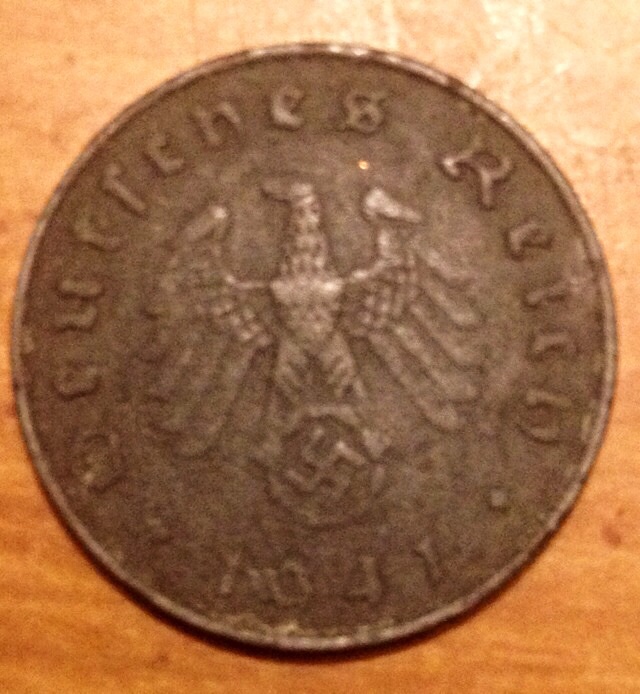 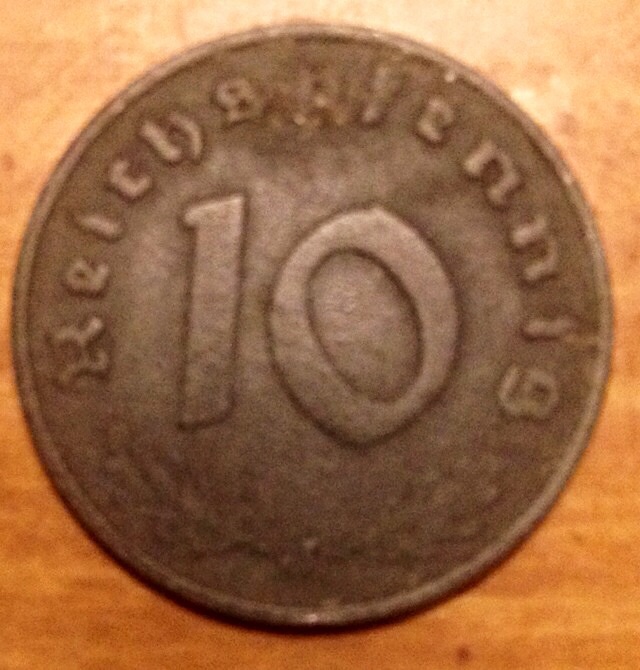 Looks a little better, still corroded. |
|
Valued Member
United States
226 Posts |
Try Vaseline. I have a pile of zinc WWII coins from France, Belgium, Germany, and the Netherlands that are corroded to some degree or other. I have had them since I was a kid in the 60's.
Since they are not really worth anything I tried different ways of trying to make them look better. I found that rubbing them between my fingers with Vaseline, letting them sit for a few days, then wiping off the excess Vaseline and letting them dry, greatly improved their appearance.
|
|
Valued Member
469 Posts |
|
|
Pillar of the Community
United States
616 Posts |
I personally use electrolysis, a method I discovered on the net a few years ago. Basically it's a process where you use a low voltage current to ultra sonically vibrate all of the dirt and corrosion off of the coin. I was skeptical, but had tried every other method I could find and figured why not try it. And without a doubt, it works better in a few minutes than than two week chemical soaks or abrasive cleaners! However, it does require the simple fabrication of an electrolysis device out of a few items that most people have readily available in their "junk drawer" at home. Here is a link to the simple fabrication process. http://www.dirtyoldcoins.com/restor...rolysis.htmlKeep in mind that you are dealing with low voltage electricity so I urge you to follow the detailed instructions in the link above for your own safety. I have done hundreds of crusty coins using this method without incident and with unbelievable results! Hope this helps! |
|
Moderator
Australia
17002 Posts |
I have to say, the boiling water seems to have helped much more than I expected it to. I would agree, though, to dry it as best as possible afterwards; perhaps placing it in a 100 deg C oven for half an hour or so.
Don't say "infinitely" when you mean "very"; otherwise, you'll have no word left when you want to talk about something really infinite. - C. S. Lewis
|
| |
Replies: 14 / Views: 6,843 |
|







 Posted 03/05/2015 6:07 pm





