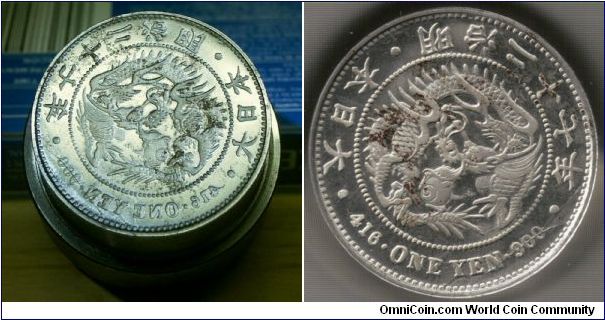
ywan - There is another thread or two that explains the BAD reeded edges, but I don't know how to find them so it may be quicker to explain.
The counterfeit cast coins are often reeded by forcing a stack of coins through a tapered die with groves cut in it. These groves are transferred to the coin.
The process DRAGS metal along as it makes the grove and there is a fold at the top of the REED caused by the metal being pushed up into a ridge. Here is a sletch showing the tell-tale signs of the forgery. The process also causes hollow split ends on the edge that comes out of the die last. These split ends are often ground off leaving a rounded edge that does not belong. So look for a combination of these problems.
Image Insert: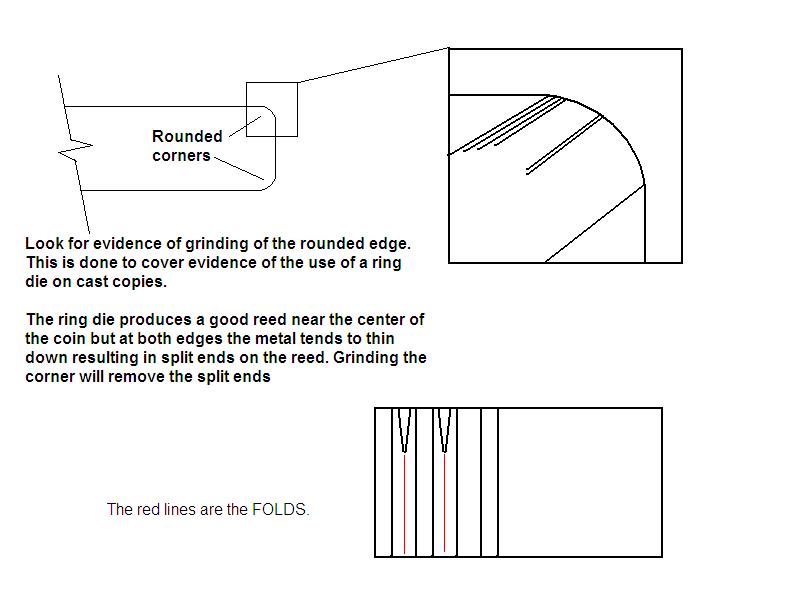 Image:
  REEDSringapplied.jpg
50.71 KB







 Posted 10/18/2007 5:02 pm