| Author |
 Replies: 19 / Views: 2,749 Replies: 19 / Views: 2,749 |
|
Pillar of the Community
United States
1713 Posts |
|
|
|
|
Pillar of the Community
Canada
965 Posts |
|
|
Moderator
 United States
23731 Posts |
10 Yen- Showa 51st year- 1976
5 yen- Showa 32nd year- 1957
1 Yen- Showa 45th year- 1970
Philippines 5S- issued from 1967-1974.
UAE- looks like 1989
|
|
Pillar of the Community
Australia
3841 Posts |
You know I didn't waste time creating the site that Topher mentioned  It's a must for Japanese, Korean, Taiwanese collectors when they want to figure out the years. The 5 yen coin is nice - it's not common these days to find them in the old script font. |
|
Pillar of the Community
Egypt
3470 Posts |
United Arab Of Emirates 1989 AD - 1409 AH
|
|
Pillar of the Community
 United States
1713 Posts |
|
|
Pillar of the Community
Australia
3841 Posts |
Yup, you've got it.  See, that wasn't too hard was it? Geez, I still haven't written a list of country's name in Asian characters, will have to update soon. My partial coin collection http://www.omnicoin.com/collection/gxseriesMy numismatics articles and collection: http://www.gxseries.com/numis/numis_index.htmRegularly updated at least once a month. |
|
Pillar of the Community
United States
1713 Posts |
I still need to know the denomination. And are they chinese?
|
|
Pillar of the Community
Australia
3841 Posts |
50 and 100 yen. The term Showa is only used in Japan.
My partial coin collection http://www.omnicoin.com/collection/gxseriesMy numismatics articles and collection: http://www.gxseries.com/numis/numis_index.htmRegularly updated at least once a month. |
|
Valued Member
Malaysia
59 Posts |
These Japanese coins use chinese characters called kanji. Kanji is part of the Japanese writing system that has both simplified and traditional chinese characters, but some characters have different meaning than original Chinese.
|
|
Moderator
United States
23731 Posts |
One of the ways to tell the difference between Japanese and Chinese coins is that on all Japanese coins there will be three characters at the top of the coin. That read DAI NIHON (loose translation GREAT JAPAN). You can see this on your two coins though the 50 yen is upside down. Below that is the coins denomation 50 yen and 100 yen, etc. On the reverse is the date which is the reign date of the ruling emperor, the first two characters is the emperos name. In this case it's SHOWA (1926-1989) follwed by the number or it can also be written out. The last character is the word NEN which means year.
|
|
Pillar of the Community
Australia
3841 Posts |
Disagree echizento. Dai nihon will be like this: 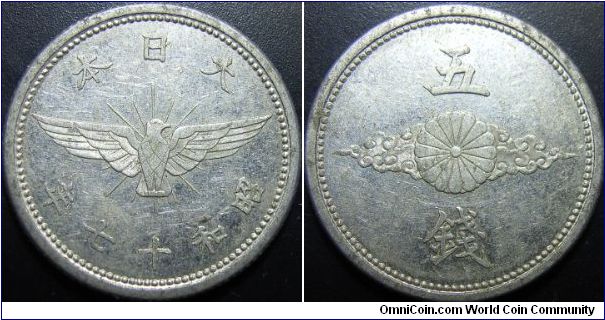 Whereas it should be called as nihon koku 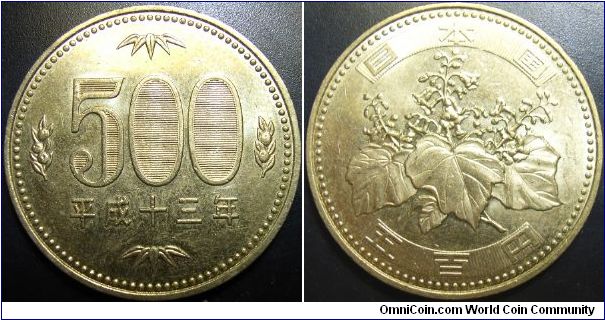 Watch out though, calling Japan as dai nihon will highly insult the Korean and Chinese - that was the time when Japan ruled Korea and terrified China under the Imperial era. |
|
Moderator
United States
23731 Posts |
Edited by echizento
10/29/2007 09:40 am
|
|
Pillar of the Community
Canada
965 Posts |
Thanks for the Japanese reading lessons guys. That's one thing I want to work on in the next year. I've got some basic speaking/comprehension skills, but getting over the initial hurdle of reading characters rather than a western alphabet is tough.
|
|
Valued Member
Malaysia
59 Posts |
|
|
Pillar of the Community
Australia
3841 Posts |
Wow nice link Sakura. I was well aware of the micro letters on the obverse but not on the reverse!
By the way, there is a good reason why I wouldn't encourage people to learn kanji - there are just too many ways to read it. For instance the letter "kuni", when you add words to it, it can become either kuni or koku or "ko" in various other forms. When you have two "kuni" put together, it becomes kuniguni. At least, the only similar term between dai nihon and nihon koku is the word nihon, which just means "Japan". If that was complicated, there are other words that can have more than 5 ways to read it. It is a big mistake to read it as it is. The word "dai" can be read as oo, tai, dai or in rare cases "ya". For instance, if you know the character for Taisho, why isn't it called Daisho or Oosho. Figures. I gave up learning years ago.
|
| |
Replies: 19 / Views: 2,749 |










 Then bookmark that page. I did.

 Posted 10/27/2007 7:20 pm


