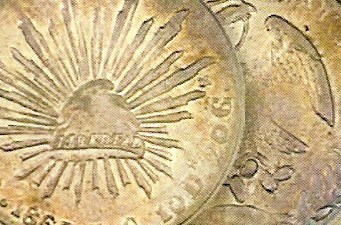
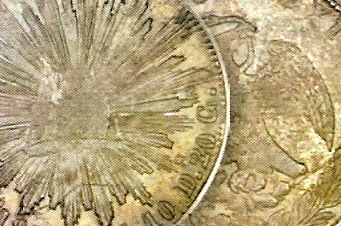
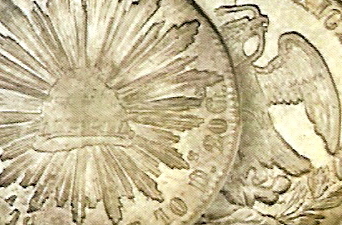
I may not agree with PCGS at all times but they are clearly correct about the three coins being genuine. No worries there at all.
Regarding the grading - they are wasting their time and costing collectors small fortunes for absolutely NOTHING.
Early issues of some branch mints (when dies were individually hand punched) are very difficult to authenticate and grade until you become very familiar with them and their individual histories. The book "Resplandores" is absolute essential for this series. Anyone trying to study the Cap and Ray 8 Reales without the "bible" will spend years just learning the basics. Start with Resplandores and build your data base from there on. There is plenty left to do and build upon.
Many of the branch mints were operated by lessees not by the central government and styles were far from standard. This also accounts for year to year differences in manufacturing methods and what looks like stylistic degradation as opposed to continuous improvement in techniques.
You really need to study each mint by itself to determine a history of how mint techniques evolved and devolved.
The Cap and Ray coins are also exceptionally difficult to grade with the Sheldon scale. The coins made in some mints at certain times are simply NEVER fully struck up. That is just a fact Sheldon and his scale simply do not accommodate. So accurate grading is terribly difficult. You need to start with what a grade portrays. Sheldon was a wear and surface preservation scale. A technically MS coin with ZERO wear might look like a horrible VF because it was never fully struck up to begin with.
Sheldon's scale uses wear as the primary criteria - avoiding the issues of strike and eye appeal. That is why I object to the use of Sheldon's 70 point scale on any series that is so badly effected by striking issues. The 70 point scale is really worthless yet prices follow the stupid point scale. I have seen weakly struck and stained MS 65 coins that looked so bad that a full strike EF was completely superior.
A better approach would be to have three scales - wear - strike and appearance which would combine to yield a composite grade. Sort of the way we did it in the 1950s before this ridiculous system based on surface wear only took over the hobby.
Personally I love the Chihuahua mint because the eagle's are so crude. The dies were made by "craftsmen" who were not very good at their jobs. For me that makes them more interesting - like counterfeits where the same kinds of errors and wild variations are routine. In fact, once the 8R dies were hubbed and the designs were standardized the coins became boring like most modern coins.
I began my life as a collector focused on Cap and Ray coins of the Zacatecas mint simply because the die varieties seemed to be endless. They were my first love as far as coins go.
When Mexico began minting coins of their own they lost a lot of the technical expertise that the Spanish had brought with them. Only Mexico City actually retained a capable staff of mint workers.
The smaller branch mints which produced fewer coins are often much more interesting in terms of design and varieties. However, their coins are also most expensive. The high output mints that did not use hubs like Zacatecas have many more die varieties and they are far less expensive - which was good for a beginning collector. Since they were the most common coins they were also counterfeited most often - a perfect match for an odd kid who loved counterfeit coins.












 Posted 03/28/2015 06:02 am


