| Author |
 Replies: 24 / Views: 3,410 Replies: 24 / Views: 3,410 |
|
New Member
United States
5 Posts |
Thankful to find this forum and all the information here. I recently came upon two coins. They were in the attic of a house I was flipping. They look extremely old, and I haven't a clue as to what they are or their worth. Any insight would be appreciated. 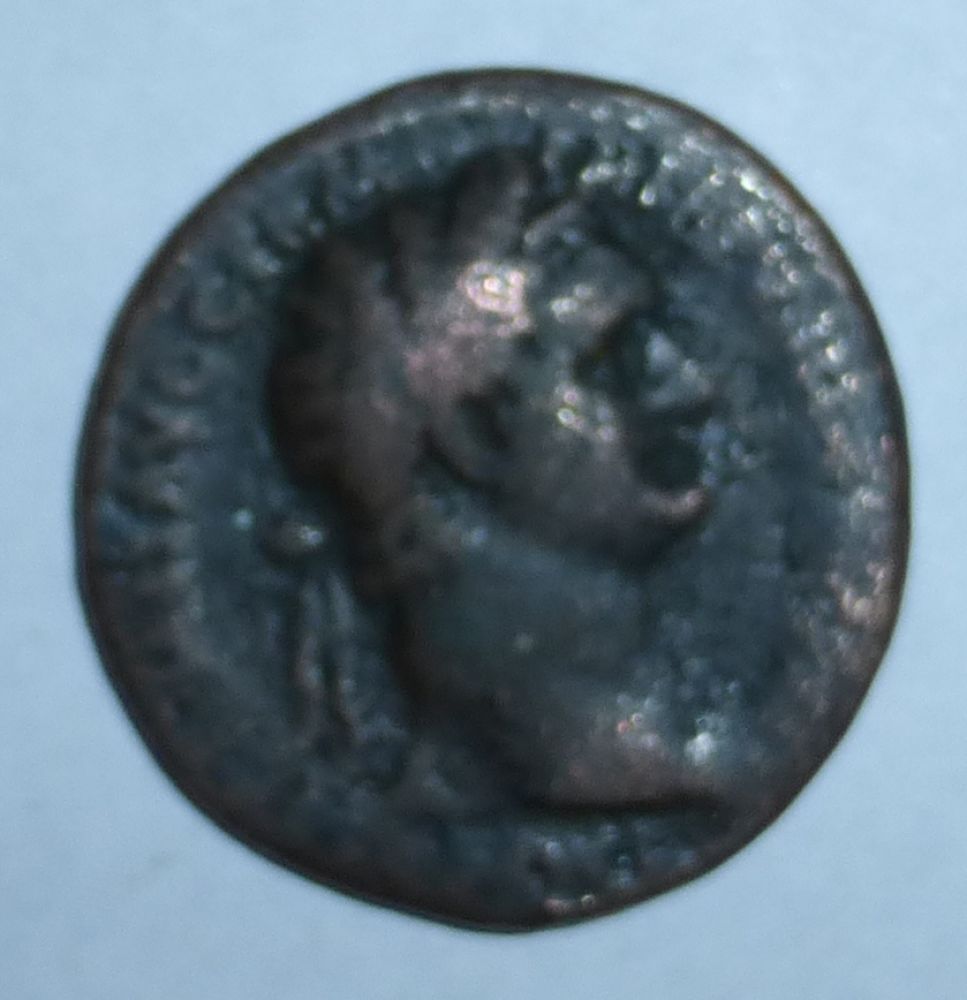 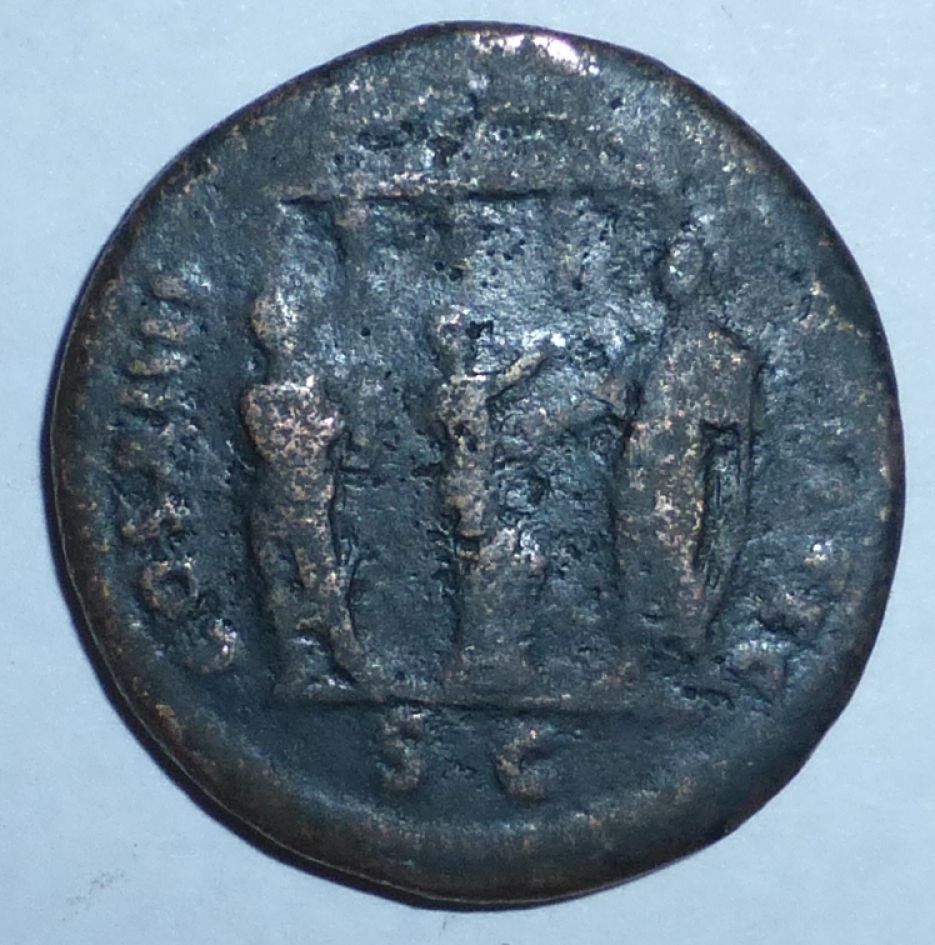 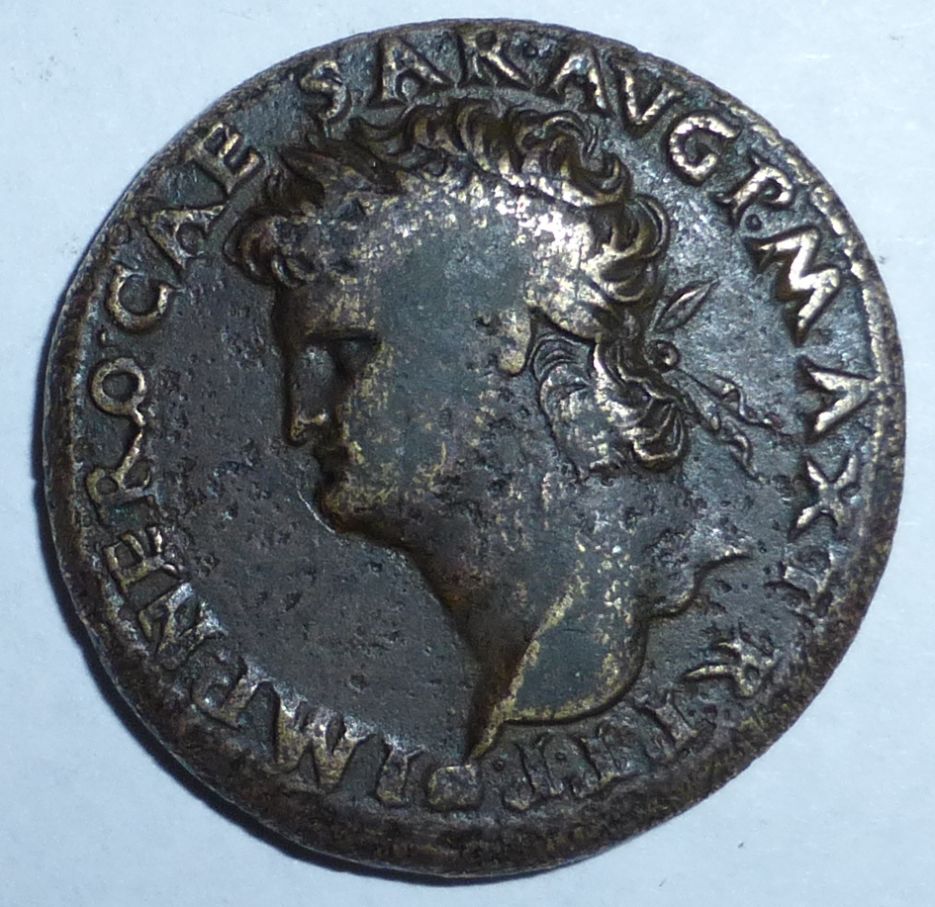 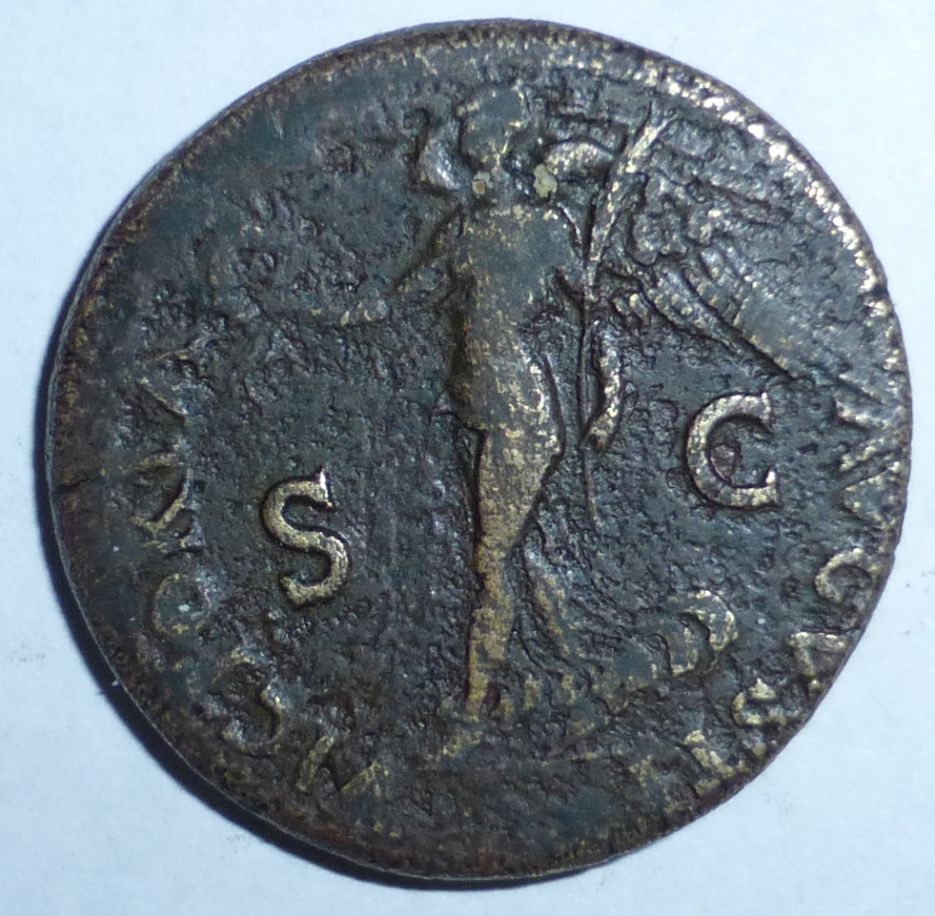 Thanks! |
|
|
|
Pillar of the Community
United States
7376 Posts |
First of all  You coins don't look US, but I could be wrong. Your post might better be suited for the Ancient Greek, Roman forum on the site. Maybe you could re-post it there, or a Moderator could help you move it. |
|
Bedrock of the Community
Australia
21792 Posts |
Roman coins.
first coin: Domitian, bronze Assarion (As,) (out of focus, need sharper pictures),
second coin: Nero, orichalcum (brass) sestertius.
obv. Laureate head of Nero, facing left,
rev. Victory advancing right, holding wreath in extended left hand, wheat stalk in right hand at side "SC" in field.
I need to think about these, for authenticity, but so far, look OK.
What are their diameters and weights?
There are several RIC references (23) for the Nero coin, that is one of the reasons why the denomination has to be identified more accurately.
-------------------------------------------------------------------------------------------------------------------------------------------
Legends for the Nero coin:
obv.: "IMP.NERO.CAESAR.AVG.P.M.TRP.P.P.P"
Imperator Nero Caesar Augustus Pontifex Maximus Tribune Potestate Pater Patrie"
= "Emperor Nero Caeasr Augustus High Priest, leader of the Army, Father of the Country".
rev.:"VICTORIAE AUGUSTII", "S.C" in field either side of Victory.
= " Victory, & Nero rule together"
"S.C"
"Senatus Consulto"
= issued by the Authority of the Senate.
(Copper, bronze and orichalcum (brass) coins were issued by the authority of the Senate, gold and silver coins were issued by authority of the Emperor and never carry the letters "SC").
Edited by sel_69l
03/31/2015 02:21 am
|
|
Moderator
 United States
23522 Posts |
I've moved this to the appropriate forum. If sel offers an opinion, you accept it.  |
|
Moderator
United States
23731 Posts |
to the community They are both Roman Imperial coins that have been IDed by Sel. A clearer picture of the first coin would be helpful, but they both appear to be genuine. |
|
New Member
 United States
5 Posts |
Thanks everyone! I'll get a clearer pic of the first one tomorrow AM and post it in here. Is there any way to gauge the value on these since they're authentic?
|
|
Valued Member
Canada
266 Posts |
Quote:
Thanks everyone! I'll get a clearer pic of the first one tomorrow AM and post it in here. Is there any way to gauge the value on these since they're authentic? Ill guess first one maybe $20-$50? 2nd one maybe $75-200 probably too low though and could be a lot more if they are rarer reverses? Edited by arnoldoe
03/30/2015 11:02 pm
|
|
Pillar of the Community
Spain
629 Posts |
Nero´s coin is a common reverse for an uncommon denomination of a not very common emperor (jejeje...).
I suppose that I must explain a bit:
Value is given by several factors, mainly offer and demand of course but...
Demand is given for the collectors, what they feel about that emperor, that reverse type, that module...
offer is given by scarcity of that kind of coin and of course its better a mint state that a very worn coin...
Now, some historical details...
Nero melted the republican and previous emperors coinage to debase the silver content of the denarius and the aureus.
This measure made rarer the coinage of Augustus, Tiberius, Caligula and Claudius but...
...but after the civil war of year 69, Vespasianus, the final winner wanted to delete from people´s mind the remembering of Nero and others so he did the same with great part of the bronze and brass coinage of Nero and Vitelius replacing it for his own.
But a lot of years later, Emperor Trajan gets involved in a great war agains Decebalus, the king of the Dacians.
At the first phase of the war several legions are completely destroyed till the last soldier, so romans and dacians signed a peace treat...
...to recover themselves.
Trajan needs money, a lot of money so he did the same that made (or tried to made) Nero.
In this time, the most part of the republican and previous emperors coinage that still was circulating is melted to be coined in new lighter denarius.
Later, when Dacia has been destroyed, the great amount of silver and gold that Trajan obtained is coined also.
That are the two reason because Nero´s coins are so scarce...
and Trajan´s so common!
|
|
Valued Member
United States
129 Posts |
A question in response to Athalbert's post: How would Nero, Trajan, or other emperors go about gathering the circulating coinage they intended to melt down? Through government backed exchanges of more debased currency with citizens, or with merchants, or just by retiring the coinage that came in via taxes?
It seems like it would require a considerable effort to coordinate and enforce.
|
|
New Member
United States
5 Posts |
First coin weighs .35 ounces and is 1 & 3/16 inches in diameter. Second one, the Nero coin, weighs .45 ounces and is 1 & 1/8 inches in diameter The image on the front of the first coin is still not great but is the best I can do. 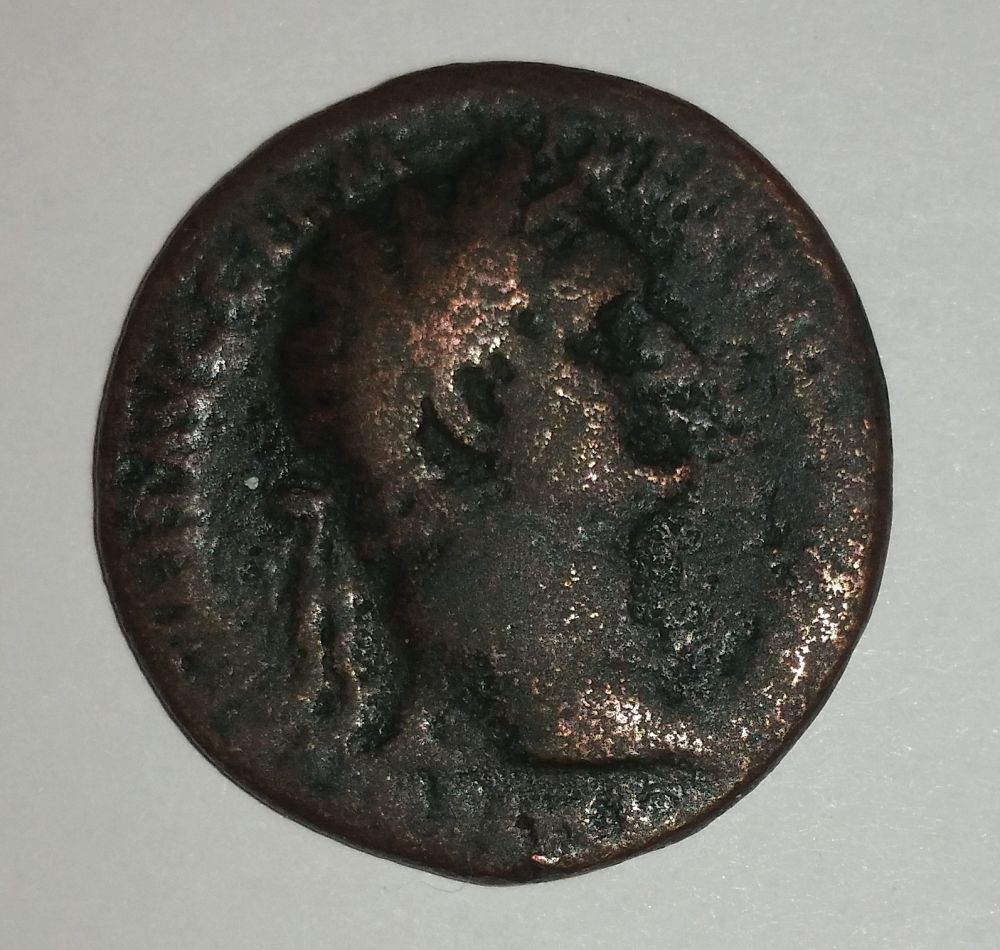 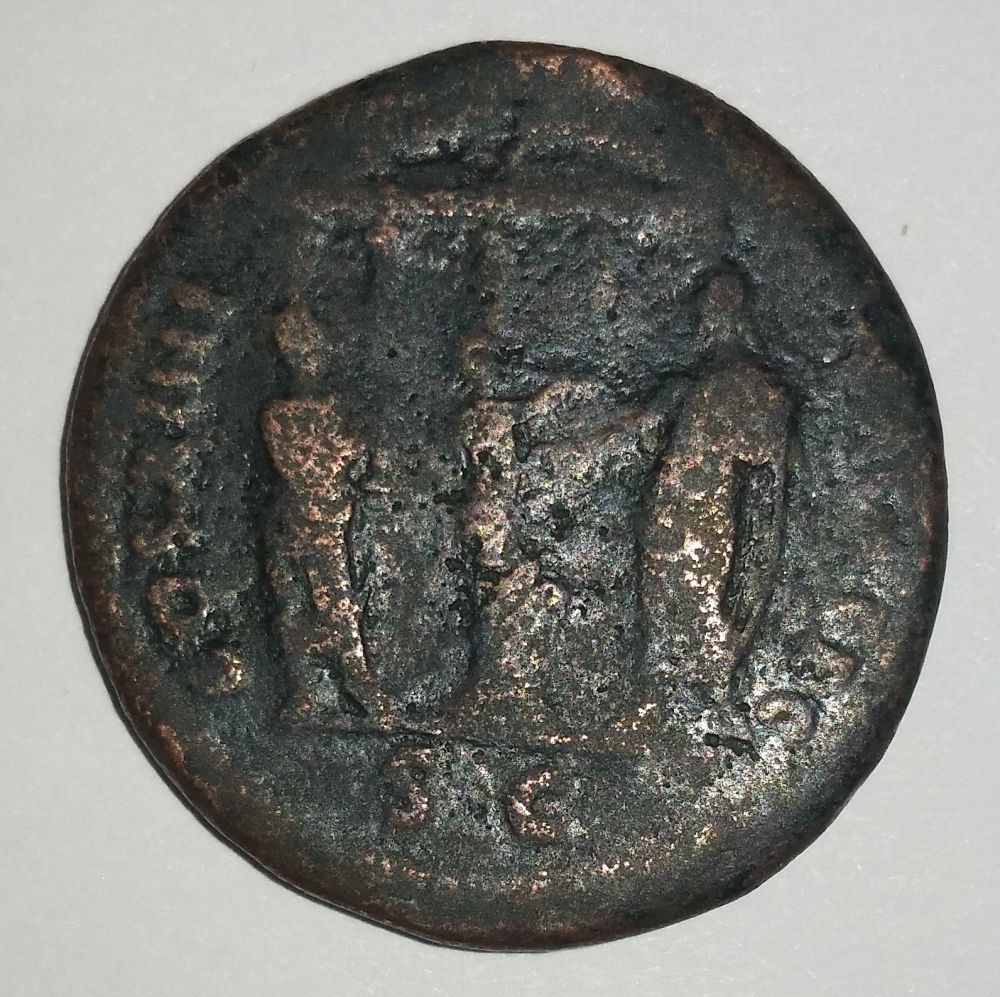 |
|
Pillar of the Community
Spain
629 Posts |
Captainyesterday, you are absolutely right, they tried to do it but thousands and thousands of coins remained hidden or buried precisely because their owners didn´t wanted to gave them...
Why do you think that we can collect ancient cois today?
In ancient times there were no banks, so you buried your money in a place where only you knew...
...but you are not inmortal, you can suffer a heart attack, be killed by robbers, die by eating food in bad conditions, cholera, alzheimer, pestilence, an unexpected attack if you live near the frontier or you are a soldier...
Life was very, very, very hard then...
and, if you die...
Who knows where is the money?
NOBODY.
nobody till when two thousands years later one lucky G.I. Joe looking for german mines with his metal detector finds your money...
Another question...
How did the USA government to withdrawn all silver quarters in 1969?
it was the same problem, how to spoil to your citoyens, but today is easier...
...all your money is in a bank!
Edited by Athalbert
03/31/2015 3:21 pm
|
|
Pillar of the Community
United States
5010 Posts |
welcome k79, great finds...dang. that nero is awesome. I think the wight is right on as well....so far so good.
|
|
New Member
United States
5 Posts |
As soon as I can get a little more info on the first one I plan on selling them. I'm assuming most of you use ebay? |
|
Bedrock of the Community
Australia
21792 Posts |
The assarion of Domitian:
obv.
Laureate head facing right.
legend: ( with a little help from Sear)
"IMP.CAES.DOMIT.AVG.GERM.P.M.TR.P.V111 CENS.PER.P"
= "Imperator Caesar Domitianus Augustus Germanicus Pontifex Maximus (high priest) Tribunate Potestate (leader of the army) Censor Perpetual Pater Patrie, (father of the country)"
rev.:
Domitian standing left, sacfificing over altar, victimarius on left, with goat and lamb; harpist behind, in hexastyle temple.
legend:
"COS.X1111 - LVD.SAEC.FEC", "S.C." in exergue (under the line in the segment below)
Consul, renewed annually, for the 14th time
(I have no idea of the translation 'LVD SAEC FEC')
Senatus Consulto (issued under the authority of the Roman Senate).
This coin can be dated:
Sear reveals that 'TR P V111 COS X111' to be the year AD89.
Similar to RIC 381, which is a dupondius.
Edited by sel_69l
04/01/2015 02:53 am
|
|
Pillar of the Community
Spain
629 Posts |
Perpetuus
Edited by Athalbert
04/01/2015 02:31 am
|
|
Pillar of the Community
Spain
629 Posts |
TR P means "Tribunitia Potestate" or in modern english "Tribunitian Power"...
But not a "tribuni militum" (who is the leader of the army)...
Is "Tribunis Plebis" who has the very useful power of "vetum" on all the rules, laws and norms of the Roman Senate...
Edited by Athalbert
04/01/2015 08:13 am
|
| |
Replies: 24 / Views: 3,410 |










 Posted 03/30/2015 8:21 pm


