| Author |
 Replies: 9 / Views: 2,615 Replies: 9 / Views: 2,615 |
|
|
Pillar of the Community
United States
603 Posts |
I have this 1851 (I think) large cent that is very corroded, and I was going to use olive oil and/or other methods to see what they do. But the reverse looks weird, what does anyone think it could be, a major lamination defect or a result of the corrosion? 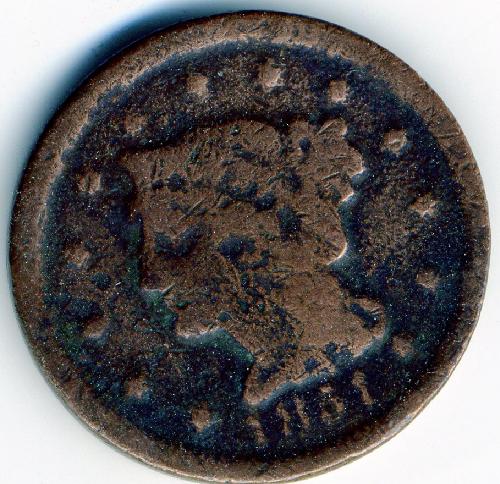 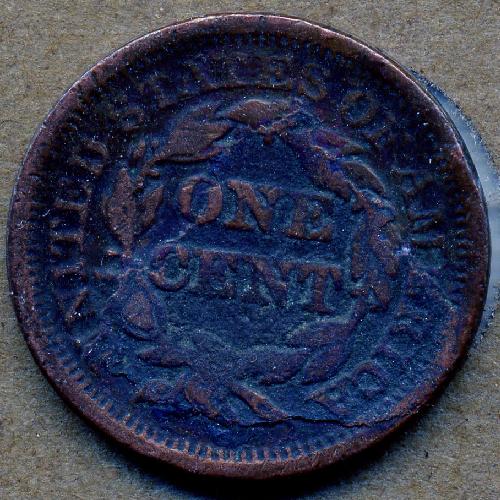 I reversed the colors to show the area a bit better, 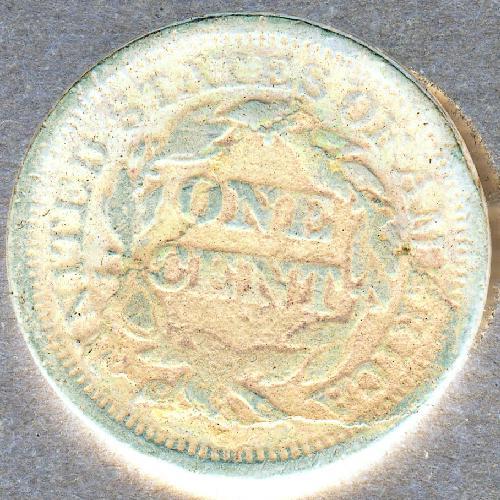 and here is part of the rev showing the area crossing several letters 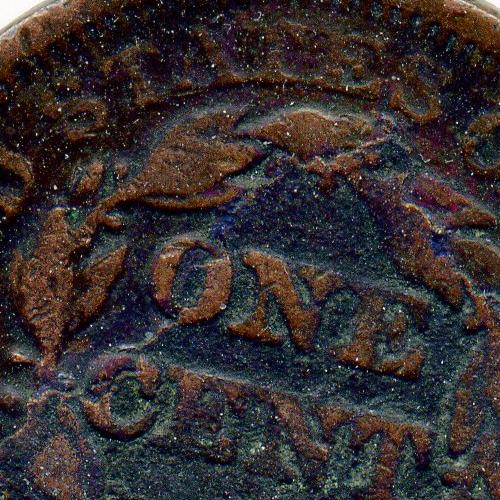 I am confused because the lettering looks just as strong (relativly speaking) on each side of the ridge. |
|
|
|
Pillar of the Community
United States
7123 Posts |
Its very hard to tell ,,but My opinion is that its a result of the corrosion on the coin.
and from the pics the coin is an 1851.
Metalman
|
|
Rest in Peace
United States
2884 Posts |
Looks to me like the coin was buried or suffered some other type of environmental corrosion. Mike  |
|
Pillar of the Community
Canada
1106 Posts |
Maybe glue where somebody ran out of tape to stick it in an album
|
|
Pillar of the Community
United States
2764 Posts |
Don't take my word to the bank, but I think it's HEAVILY corroded, probably burried underground, in an area where there are a lot of water and copper reactive chemical.
I can still make a good conversation piece if you can "make it look better"
|
|
Valued Member
United States
382 Posts |
Yes decayed, decrepid, probably exposed to the elements for 50 years or more. yeah just clean it up with oil and that's it.
Tony
|
|
Pillar of the Community
 United States
603 Posts |
I just remembered my scale, and it is about a gram under weight. I don't know why I didn,t do that first. What I don't get is how the letters of the legend are readable even where the copper has corroded off. I figured they would go first, being higher and very slightly less compressed. I have the same questions about the thin acid bath cents in other threads. Anyone have an answer?
|
|
Valued Member
United States
382 Posts |
I would think corrosion goes to the weakest part, like water, the path of least resistance. The coin is a metal, which is not perfect, it has layers and weak places in it especially old copper like this. These coins were not made with the metallurgy we have today, they just got some copper made the blanks and struck the coins. There are many imperfections in the metals.
Tony
|
|
Bedrock of the Community
United States
62064 Posts |
I'm guessing that the coin was a black at one time and something was used to clean off the devises and the not touch the fields. Kind of like antiquing. If a blackened coin is carried with other change in the pocket it will also make the devices show and leave the fields dark. Just my guess on it. I would NOT use any acid cleaner. I fried on a coin that was found outside for a long time. The cleaner made the whole coin flake off the planchet. So it is best to leave the corrosion along.
|
|
Pillar of the Community
United States
1424 Posts |
defanitely a dug coin
my guess is that there isn't much metal missing along the bottom of the coin but rather that the rest of the coin has been raised by the corrosion and that is why the detail is still there along the rim.
|
| |
Replies: 9 / Views: 2,615 |
|




 Posted 12/09/2007 12:48 am





