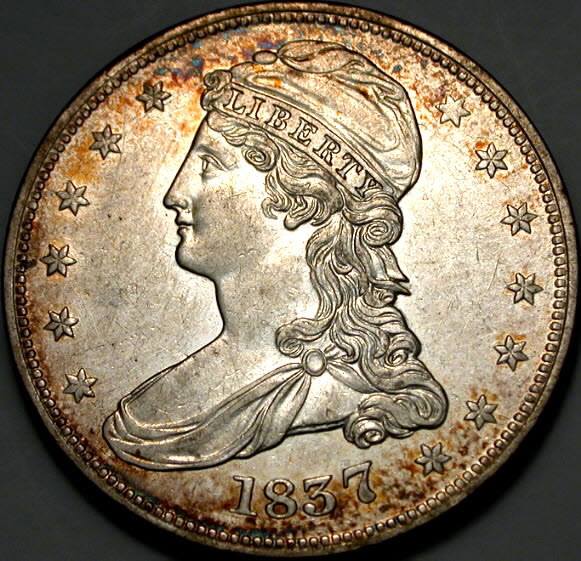
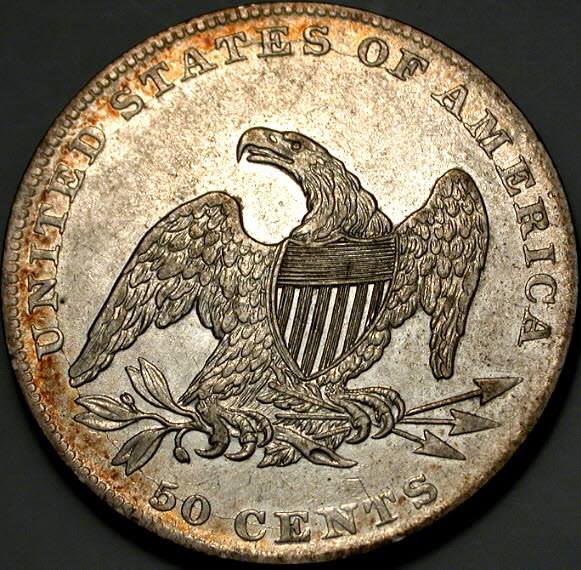
| Author |
 Replies: 18 / Views: 3,130 Replies: 18 / Views: 3,130 |
|
Pillar of the Community
Canada
5417 Posts |
Edited by zxcccxz
05/06/2015 12:26 am
|
|
|
|
Valued Member
75 Posts |
Are you talking about the greenish bits?
|
|
Pillar of the Community
United States
5882 Posts |
It can happen, after slab effect!
|
|
Rest in Peace
United States
18456 Posts |
I think it is pvc contamination and not TONING. I guess the guy who sent it in to NGC didn't request conservation. you would think NGC would have done it on their own.  |
|
Valued Member
Canada
79 Posts |
In my opinion, NGC's standards have been slipping. I would always prefer a PCGS holder over NGC,
|
|
Pillar of the Community
United States
974 Posts |
|
|
Pillar of the Community
United States
7390 Posts |
I've heard the 57th St slabs have some crazy overgrades out there so it dosent surprise me
|
|
Pillar of the Community
United States
1304 Posts |
It was graded because of who submitted it. The coins in the Stacks 57th St holders are for the most part, junk and to be avoided.
|
|
Moderator
 United States
23522 Posts |
Oh, dear. I had a good reason why they'd certify it until I saw it was a "57th Street" coin. There is no justification for this. No way the infestation didn't look just like it does here when they graded it. It offers NGC is a pretty sorry light.
I contacted DLRC to beg them to take the hit and crack this one.
|
|
Bedrock of the Community
United States
17884 Posts |
It has "gunk" on it. How you can look at a picture and divine that the gunk is poly-vinylchloride residue and not of some other composition amazes me. (From reading coin forums one would come to the conclusion that in the history of the world there are only two substances that come in contact with coins, especially circulated coins, is verdigris and PVC.)
Edited by Conder101
05/06/2015 4:18 pm
|
|
Pillar of the Community
United States
946 Posts |
A little off topic on the coin,more so on the "W. 57th collection". Can someone chime in on who/what is behind the collection. I see a lot of 100-900$ range coins in them.
|
|
Moderator
United States
23522 Posts |
Quote:
How you can look at a picture and divine that the gunk is poly-vinylchloride residue and not of some other composition amazes me. I'd rather be wrong calling it PVC than wrong calling it something else. And I'm always open to suggestions regarding what could cause features of precisely the same pale green color and propagation pattern as I know PVC plasticizers do. Normal toning won't. Over the next year or two they will slowly darken and thicken on the Z-axis, ultimately beginning to resemble verdigris. Once that happens, the damage can't be undone. I'd rather know for sure before then. This may be the only time I'm ever qualified to say this, Conder, but apparently I've seen more of this than you. |
|
Pillar of the Community
United States
2669 Posts |
Quote:
I guess the guy who sent it in to NGC didn't request conservation. you would think NGC would have done it on their own. No.. if it's not a requested and paid for line item, they don't do it. It doesn't matter if it needs it or not, even if it's obvious. |
|
Pillar of the Community
United States
1687 Posts |
Quote:
And I'm always open to suggestions regarding what could cause features of precisely the same pale green color and propagation pattern as I know PVC plasticizers do. Normal toning won't. I posted this Bust half in another forum and made a comment about the PVC on it. I was told by another Bust half collector that he's heard/read that coins of these earlier dates were often kept in leather pouches that left wax residue on the coins that would also tend to turn the same color green over time. But I guess the only true way to know for sure would be to have a chemical analysis of the "goo". 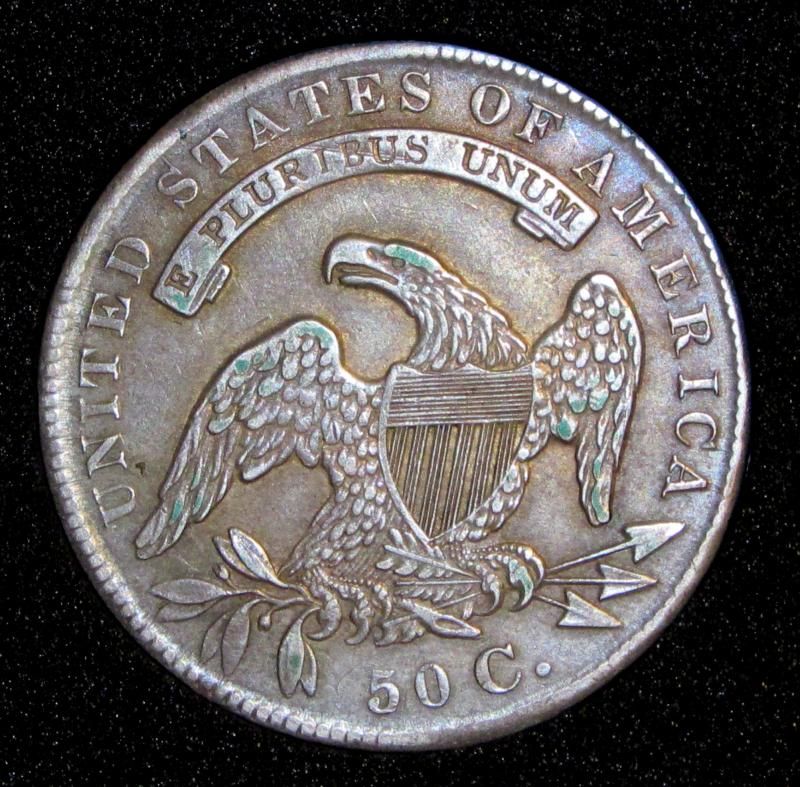 |
|
Pillar of the Community
United States
1704 Posts |
Quote:
I posted this Bust half in another forum and made a comment about the PVC on it. I was told by another Bust half collector that he's heard/read that coins of these earlier dates were often kept in leather pouches that left wax residue on the coins that would also tend to turn the same color green over time. But I guess the only true way to know for sure would be to have a chemical analysis of the "goo". That does look like the waxy substance I have seen on leather in direct contact with brass buttons, rivets, and buckles. It does not affect the brass as much as it weakens the leather around where it is contact with the metal. If the fastener is a snap button and you see this one either part of the snap when you try to unsnap it you will pull most likely the button out of the leather. It all depends how long it has been there. A denatured alcohol bath will remove this "goo" safely with no harm to the coin. Soak in a bowl for an hour then lightly dab at the green spots while still covered in the alcohol. Do not rub back and forth as that will leave hairline scratches and it will come off. Do not take it out of the alcohol as it will evaporate quickly and it will not come off dry without rubbing. Edited by Gyrene7483
05/07/2015 02:27 am
|
|
Moderator
United States
23522 Posts |
Quote:
I posted this Bust half in another forum and made a comment about the PVC on it. I was told by another Bust half collector that he's heard/read that coins of these earlier dates were often kept in leather pouches that left wax residue on the coins that would also tend to turn the same color green over time. But I guess the only true way to know for sure would be to have a chemical analysis of the "goo".
I'm always willing to believe additional evidence. In this specific case, the color is appearing only on areas which might have contacted the wallet, the highest points. That would have appeared anomalous to me, also, if I were considering it to be a PVC infestation. Honestly, that's not where I expect to find PVC. I expect to normally find PVC at the junctions between letters/devices and field, and in nooks and crannies. Bad cases like the coin in the OP can show it in the open fields, perhaps where little nicks have made the original surface (minus patina) more accessible. For your part, though, if it isn't wax residue it's eating away your coin...I don't see anything untoward on your coin's surfaces which alcohol or acetone would remove to the detriment of the coin's look. Might as well give it a shot. If the alcohol removes it, then it was wax residue. |
| |
Replies: 18 / Views: 3,130 |





 Posted 05/06/2015 02:47 am