First Page


 Posted 05/14/2015 07:09 am


Let me reiterate that what I present is my opinion and nothing more than conjecture. And The Royal Mint site has been down, so I am not able to benefit from their findings. However, I've found that I learn a good deal when others correct my misconceptions, and this will likely prove to be the case here.
If I understand correctly, the topic touches on what occurs during the minting process, what occurs afterward and how are they related?
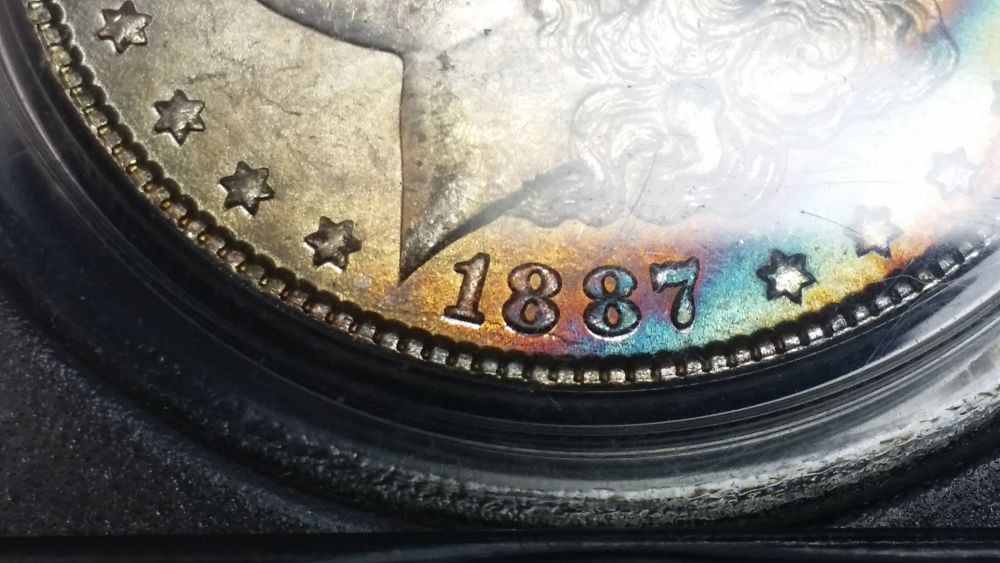
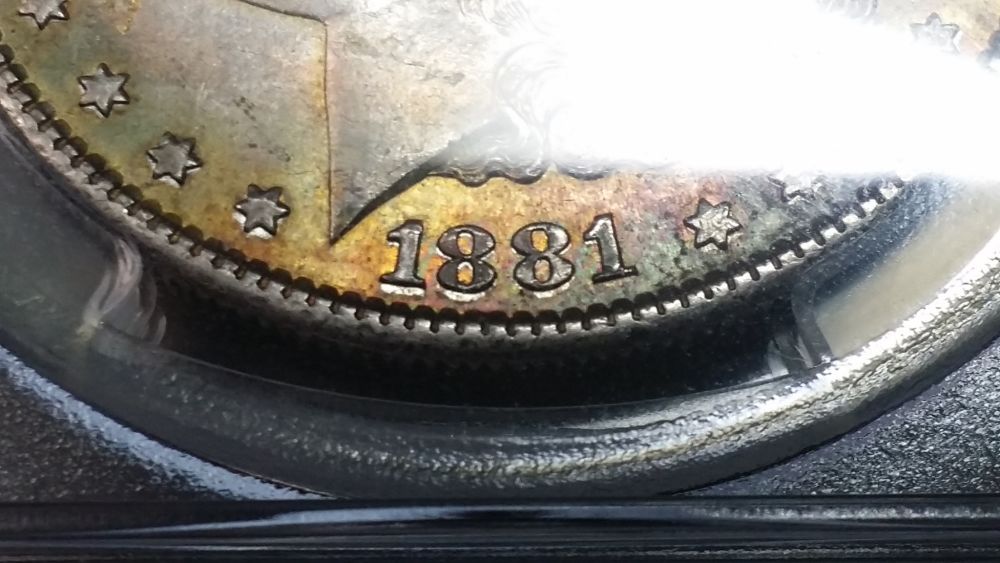
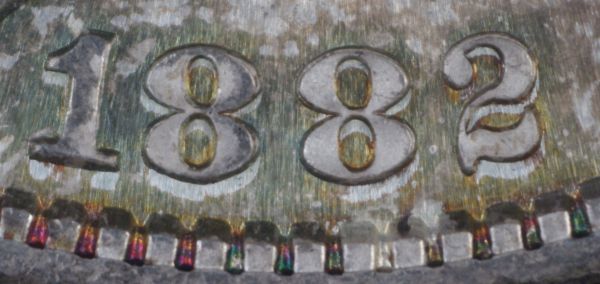
My belief is that in the minting process, the planchet is forged into a new shape with greater work hardening around at the edges where it has to flow into and over the numbers and letters. And it is the work hardening that creates an area of alloy that is more resistant to oxidation than the softer areas of the coin.
Humidity may contribute to variations in the coining process, so it would be interesting to see if the coins made in the humid mints like New Orleans had a greater propensity to show the pullaway effect than a more arid mint like Carson City. However, neither the dies nor the planchet, unlike wooden materials, absorb much water. Conversely, the range of ambient temperatures would be held to the range of comfort for the workers, and this range is both narrow in consideration of possible metal temperatures, and not in the zone that would affect planchet hardness. If anything, highly elevated temperatures would cause the silver/copper alloy to soften or anneal.
My suspicions, like those of SD's are that the strike pressure and the strike speed may have an influence on the coin's crystal structure, and hence it's tendency to tone.
While the evidence is convincing that the areas rimward to the features show a resistance to toning, due precisely to the fact that forcing metal into a smaller passage requires greater pressure and results in higher metal flow velocities, I know little about a coin's ability to resist toning based on the strike speed and pressure, but I would not doubt there is a correlation.
Normally in science, experimentation is considered, but few of us want to work some metal and then observe it for 40 years. And any introduction of agents that act more quickly to tone the metal would act more aggressively to tone the metal, defeating our efforts to distinguish the narrow range of a coin's reactivity to oxidation.
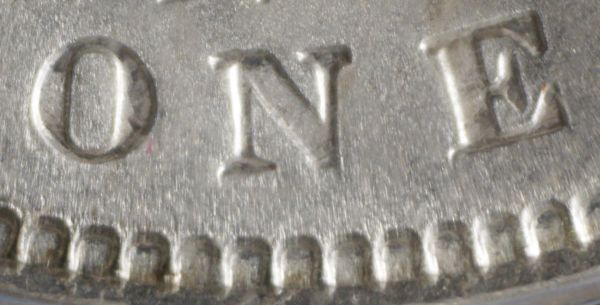
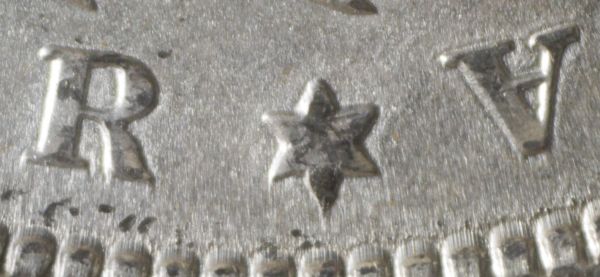
For those that just want pictures let me share another example - only coincidently of the same date.
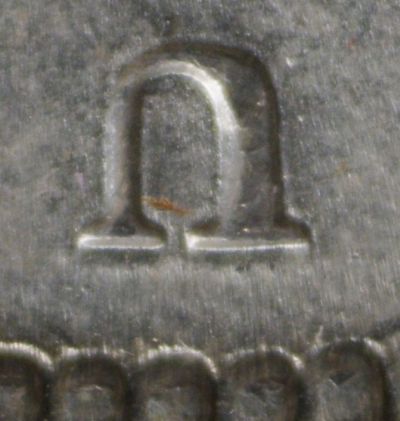
And to add spice to the stew of discussion, let me introduce the "equal and opposite effect" i.e. that of hardened coin metal on the die. This example is the 1889 VAM-11. Note that the erosion of the die has caused a rippling affect on the rimward side of the features.
If I understand correctly, the topic touches on what occurs during the minting process, what occurs afterward and how are they related?
My belief is that in the minting process, the planchet is forged into a new shape with greater work hardening around at the edges where it has to flow into and over the numbers and letters. And it is the work hardening that creates an area of alloy that is more resistant to oxidation than the softer areas of the coin.
Humidity may contribute to variations in the coining process, so it would be interesting to see if the coins made in the humid mints like New Orleans had a greater propensity to show the pullaway effect than a more arid mint like Carson City. However, neither the dies nor the planchet, unlike wooden materials, absorb much water. Conversely, the range of ambient temperatures would be held to the range of comfort for the workers, and this range is both narrow in consideration of possible metal temperatures, and not in the zone that would affect planchet hardness. If anything, highly elevated temperatures would cause the silver/copper alloy to soften or anneal.
My suspicions, like those of SD's are that the strike pressure and the strike speed may have an influence on the coin's crystal structure, and hence it's tendency to tone.
While the evidence is convincing that the areas rimward to the features show a resistance to toning, due precisely to the fact that forcing metal into a smaller passage requires greater pressure and results in higher metal flow velocities, I know little about a coin's ability to resist toning based on the strike speed and pressure, but I would not doubt there is a correlation.
Normally in science, experimentation is considered, but few of us want to work some metal and then observe it for 40 years. And any introduction of agents that act more quickly to tone the metal would act more aggressively to tone the metal, defeating our efforts to distinguish the narrow range of a coin's reactivity to oxidation.
For those that just want pictures let me share another example - only coincidently of the same date.
And to add spice to the stew of discussion, let me introduce the "equal and opposite effect" i.e. that of hardened coin metal on the die. This example is the 1889 VAM-11. Note that the erosion of the die has caused a rippling affect on the rimward side of the features.