Here is a neat example of Clashed Dies on a 2011-P Rutherford B. Hayes Presidential $1 coin. Submitted by Bill Gladden of MI.
I wrote about this one for
Numismatic News in 2011. This is what I wrote:
"Two coins that I felt were very interesting and of a timely nature were a 2011-P Rutherford B. Hayes
Presidential dollar and a 2011-P
ATB Olympic quarter both of which boast strong Clashed Dies. Both coins also represent the latest and last designs to be released for this year for their respective series.
The Rutherford dollar displays spectacularly strong clash marks on both the obverse and reverse. This is one of those coins where there is no reason for me to add arrows to the images to point out the anomalies - they just reach out and grab you on both the obverse and reverse.
The Olympic quarter is perhaps less spectacular because the clash marks are restricted to the obverse of the coin but here too there in no need to point them out. You can see clash marks all over the obverse in the fields and throughout Washington's portrait that represent many of the low points of the reverse motif "clashed" into the obverse with the strongest marks below Washington's chin and ear. What is perhaps educational about this coin is that the fact that reverse shows no signs of a clash, which demonstrates that sometimes clash marks do not transfer to both dies during a clash due to the geometry of one or the other die's design or the fact that sometimes the Mint catches the clash on just one die, replaces it and lets the other continue in use.
Die clashes are the result of a failure of a feeder system to deposit a planchet between the dies during a press cycle. When this occurs the dies clash or smash into each other imparting some of each die's design into the opposing die to a greater or lesser degree.
In general, clashed die varieties do not attract the same kind of interest on modern coins that Doubled Dies, Repunched Mintmarks, Overdates, etc. do. However they are a lot of fun to find and collect even if they aren't as heavily promoted and cataloged as the more popular variety types. Nonetheless, that could be changing. Interest does seem to be growing in this area, albeit slow but steady. One group of collectors who may eventually put the stronger and more radical die clashes on the map are the folks that run a relatively new website dedicated to clashed dies here:
http://www.maddieclashes.com. Both coins featured here were submitted by Bill Gladden of Michigan who found several of each of them in original rolls."
I'll show the Olympic quarter in my next post.
Click To Enlarge Images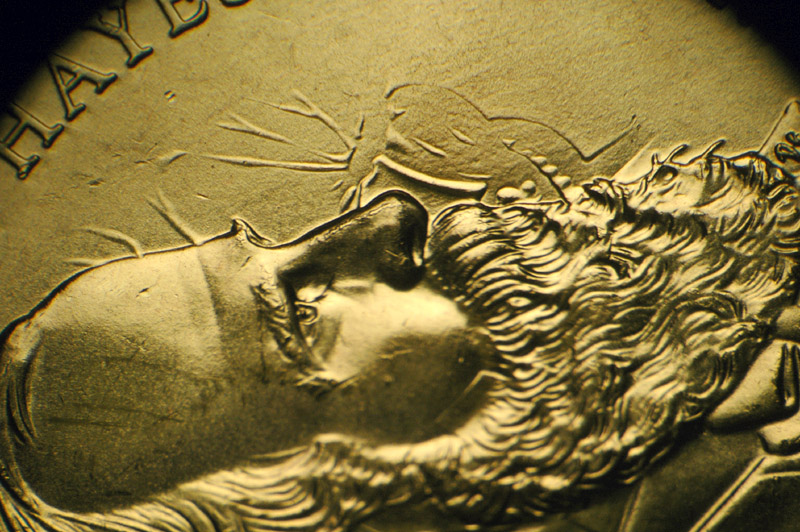
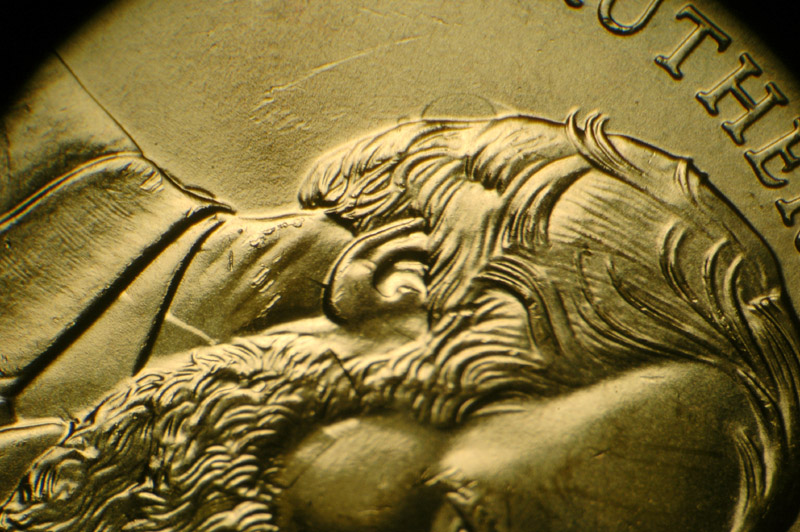
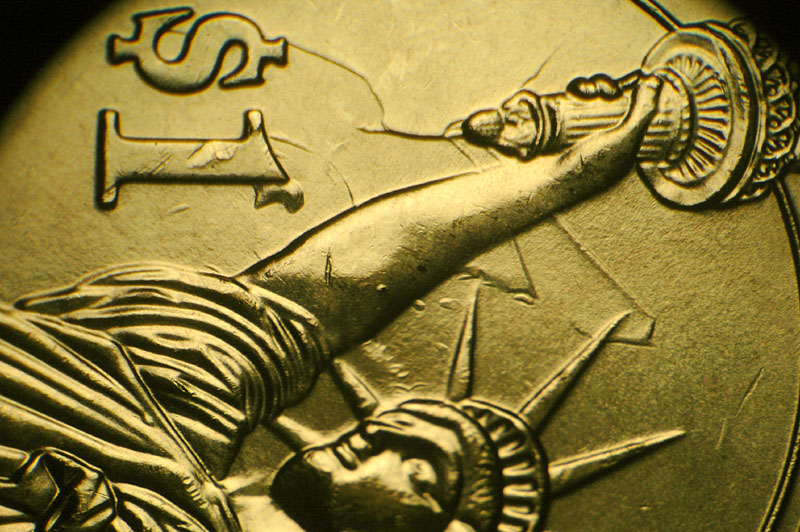







 Posted 05/10/2015 11:56 pm





