| Author |
 Replies: 12 / Views: 1,702 Replies: 12 / Views: 1,702 |
|
|
New Member
18 Posts |
 I was just wondering, how dose someone know how an error is created and what kind of proof do they have to show for it? Is it a coin or could it be a visual thing, as if they seen it as it is being created. Another, question could there be a coin out there that show proof of what are or somehow explained on what it really is?(speaking of errors) 
|
|
|
|
Pillar of the Community
United States
1414 Posts |
First and foremost you have to be able to spot common errors and know their correct names. Also, you have to be able to distinguish between Mint Errors and PMD (Post Mint Damage) to a degree. If you are unsure it's best to get opinions in forums such as this by posting details about the coin, possible error and pictures. Some of the experts here can supply some nice links for you to learn from. I don't know any off the top of my head. Thanks. Jeff |
|
Pillar of the Community
United States
526 Posts |
|
|
Pillar of the Community
United States
3644 Posts |
 great site and he would know... |
|
Pillar of the Community
United States
1414 Posts |
Wow, I need to read on this site lol, thanks BJ Neff. Jeff
|
|
Bedrock of the Community
United States
62064 Posts |
You could spend days looking at this location BJ posted. One thing that can happen on damaged coins is that if it was damaged with a nail/punch, the opposite side will show that damage. 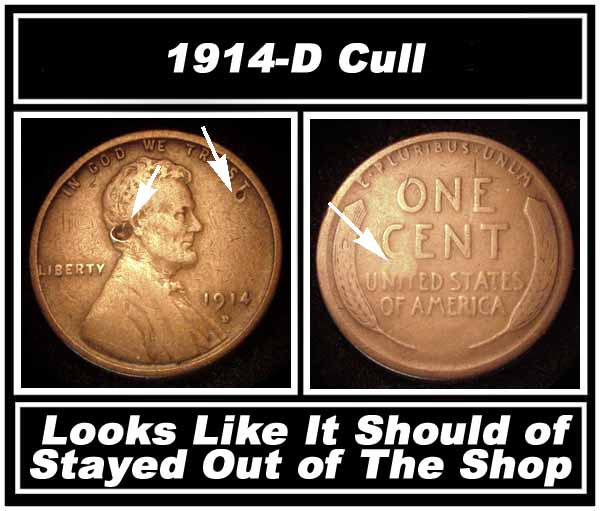 Note the punched inward marks on the obverse and the reverse shows dent pushing outward. A sure sign the coin was altered. So if the coin is not altered ( PSD) then it should most the time be flat. (altered coins are often out of round/bent/twisted) There are some cases where the event happened during the strike, but know what to look for will help with your determination. If you question a coin post it here to be sure that you are not returning a coin that maybe an error back into circulation. A lot of common events happen to coins. Die wear/cracks/chips/die gouges/clashes/breaks/rim Cuds and other common events usually don't peak the interest of collector, but extreme examples do receive attention. But to me, an error is often just a one time event. |
|
New Member
 18 Posts |
|
|
Pillar of the Community
United States
1781 Posts |
You'll want to check out the CONECA website and my Educational Image gallery. The links are in my sig below.
|
|
Pillar of the Community
 United States
4622 Posts |
Proof? As in a high-speed camera recording the production of every coin? No...
What there is, is a detailed knowledge of the minting process (as it has evolved over the years), which allows the expert to exclude things that simply cannot occur within the mint.
-----Burton 50+ year / Life / Emeritus ANA member (joined 12/1/1973) Life member: Numismatics International, CONECA Member: TNA, FtWCC, NETCC, EveryCountry (online) coin club Owned by three cats and a wife of 40+ years (joined 1983) Author: 3rd Edition of the Sample Slabs book, https://www.sampleslabs.info/ |
|
Moderator
 United States
23522 Posts |
Quote:
What there is, is a detailed knowledge of the minting process (as it has evolved over the years), which allows the expert to exclude things that simply cannot occur within the mint.
This, in a nutshell. The key to understanding errors is understanding precisely what happens during a normal strike. That understanding makes errors far more simple, and would cut traffic in this forum by 2/3ds. |
|
Valued Member
United States
110 Posts |
Now how about if you get 3 errors on the same coin now would that peak interest?
|
|
New Member
12 Posts |
what are you trying to say superdave, I know I wouldn't want that. I learn a lot with from those 2/3.
|
|
New Member
12 Posts |
speaking of high speed cameras. wouldn't it be awesome if there was a frame by frame of a coin being stamped, aww man that would be something to see
|
| |
Replies: 12 / Views: 1,702 |
|







 Posted 05/31/2015 10:56 am





